In many Indian homes, the choice of cooking oil is not just about taste. It is about health, trust, and traditions that have been followed for generations. Among the many terms seen on oil labels today, one phrase often stands out and raises curiosity: kachi ghani. People hear it from elders, see it on bottles, or associate it with traditional wooden presses, but the exact meaning is not always clearly understood.
At OwnFresh, we believe that knowing what goes into your food is as important as the food itself. This blog explains what kachi ghani truly means, why this method of oil extraction has been respected in Indian households for centuries, and how understanding it can help families make better oil choices in today’s modern lifestyle.
Table of Contents
Meaning of kachi ghani in simple terms
The term kachi ghani comes from traditional Indian oil extraction practices.
- Kachi means raw or unprocessed
- Ghani refers to a traditional oil press
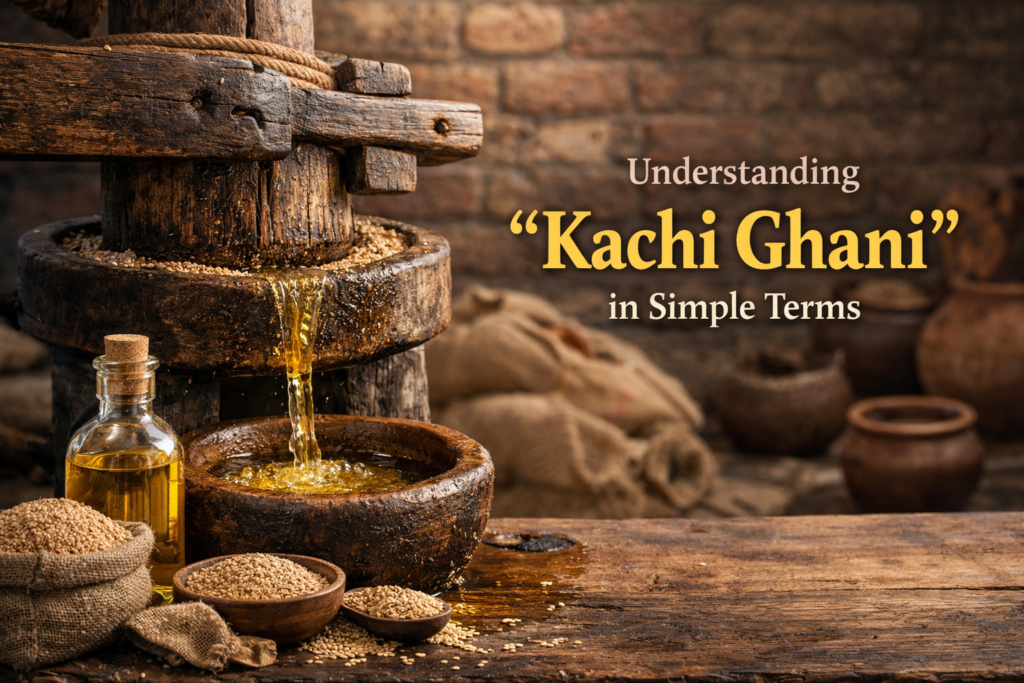
Together, kachi ghani means oil extracted from seeds using a slow, low-heat, traditional pressing method, without heavy processing or chemical treatment.
In simple words, kachi ghani oil is made by gently crushing oilseeds at controlled temperatures so that their natural goodness remains intact. The focus is on minimal heat, minimal interference, and maximum respect for the raw ingredient.
This is very different from modern industrial oil extraction, where speed, volume, and shelf life often take priority over natural quality.
Origin and traditional relevance in Indian culture
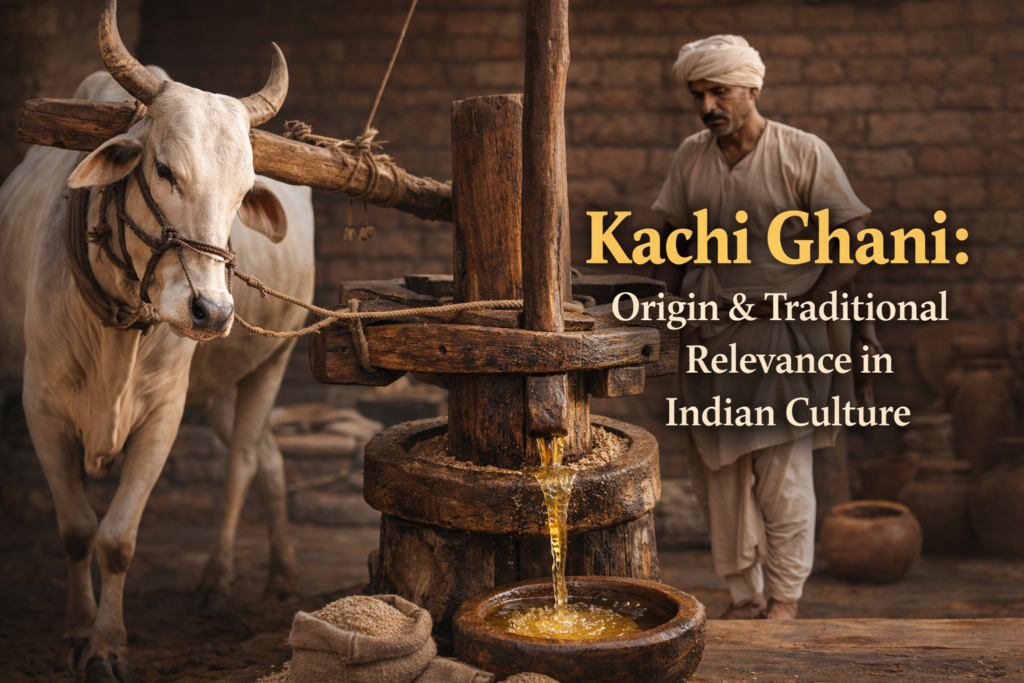
Oil extraction using ghani systems has been part of Indian life for thousands of years. Before factories and refineries existed, villages had local oil presses where mustard, groundnut, sesame, and coconut seeds were crushed fresh.
In many regions, this process was done using wooden or stone ghanis powered by bullocks or manual rotation. Families often waited for their turn, watched the oil being extracted, and took it home fresh.
This was not just a production method. It was a part of daily life.
- Oils were made in small batches
- Seeds were sourced locally
- Freshness was valued over long shelf life
- Oil was used both for cooking and home remedies
Because of this close connection, people trusted the oil they consumed. They knew its source, process, and purity.
Kachi ghani became a symbol of honest food something made slowly, naturally, and with care.
Step by step explanation of the kachi ghani extraction process
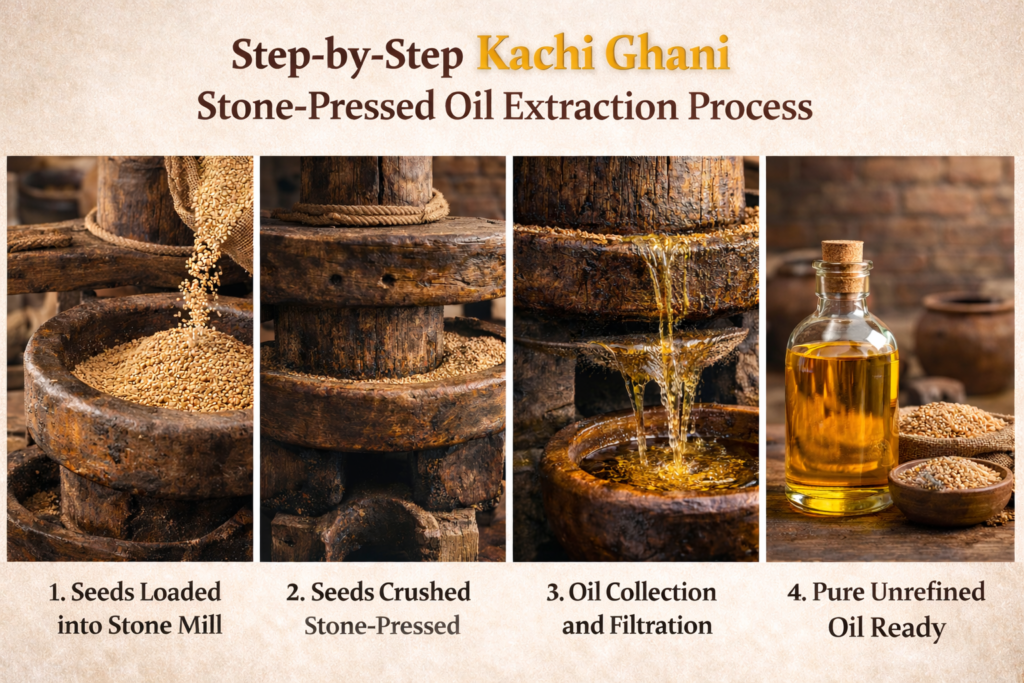
To truly understand why kachi ghani oils are different, it helps to look at how they are made.
Step 1. Careful selection of oilseeds
The process begins with selecting good quality oilseeds such as mustard, groundnut, sesame, or coconut. Clean, mature seeds are essential because the oil reflects the quality of the seed itself.
Traditionally, damaged or poor seeds were rejected because there was no refining step later to hide defects.
Step 2. Cleaning and drying
The seeds are cleaned to remove dust, stones, or impurities. In some cases, mild sun drying is done to reduce moisture, which helps in smooth extraction.
No chemical treatment is used at this stage.
Step 3. Slow crushing at low temperature
The heart of the kachi ghani process lies here.
Seeds are crushed slowly using a ghani, which may be wooden or modern cold-press equipment designed to mimic traditional methods. The key is that the temperature is kept low during crushing.
Low temperature matters because:
- Excess heat destroys natural nutrients
- Heat affects natural flavour and aroma
- High temperature alters the oil structure
In kachi ghani extraction, friction heat is controlled so that the oil remains close to its natural state.
Step 4. Natural oil separation
As the seeds are crushed, oil gradually separates from the paste. This oil is collected without the use of solvents or chemicals.
The leftover seed cake is often used as animal feed or for agricultural purposes, just as it was traditionally.
Step 5. Basic filtration and settling
The extracted oil is allowed to settle naturally. Any fine particles sink to the bottom. Sometimes, simple cloth filtration is used.
There is no bleaching, deodorising, or chemical refining involved.
This results in oil that retains its natural colour, aroma, and nutritional character.
How kachi ghani oils are different from refined oils
Understanding this difference is essential for making informed kitchen choices.
Processing method
Kachi ghani oils are extracted using slow, low-heat mechanical pressing.
Refined oils are produced using high heat, chemical solvents, and multiple industrial steps designed to extract maximum oil from seeds quickly.
Nutritional impact
Kachi ghani oils retain natural components such as:
- Natural fatty acid balance
- Seed-specific nutrients
- Traditional flavour compounds
Refined oils lose many of these elements during processing and are later stripped of smell, colour, and sometimes taste.
Taste and aroma
Kachi ghani oils have a natural aroma that reflects the seed used. For example, mustard oil smells sharp and strong, just as it traditionally should.
Refined oils are neutral in smell and taste, which may suit some cooking styles but removes character from food.
Transparency and trust
With kachi ghani oils, the process is straightforward and easy to understand.
Refined oils involve multiple steps that are invisible to the consumer, making it harder to judge what remains in the final product.
Nutritional and health importance of kachi ghani oils
Indian cooking traditionally balanced taste and health. Oils were not just energy sources but carriers of nutrition.
Kachi ghani oils support this balance in several ways.
Better nutrient retention
Because the extraction avoids extreme heat and chemicals, the oil retains more of its natural properties. This supports better absorption and digestion when used in daily cooking.
Natural fatty acid profile
Traditional oils like mustard, sesame, and groundnut have fatty acid compositions that Indian bodies have adapted to over generations.
Using oils close to their natural form supports this familiarity.
Support for traditional cooking practices
Many Indian recipes rely on oil not just for frying but for tempering, slow cooking, and flavour building.
Kachi ghani oils perform well in these roles because their natural structure remains intact.
Gentle on digestion when used in moderation
While all oils should be consumed in balance, traditionally extracted oils are often considered easier to digest when compared to heavily processed alternatives.
Why Stone-Pressed oils are trusted in Indian kitchens
The trust in Stone-Pressed or kachi ghani oils comes from lived experience, not marketing.
Grandparents did not read nutrition labels, but they observed outcomes energy levels, digestion, and overall well-being.
Some reasons for continued trust include:
- Familiar taste that signals purity
- Visible extraction process in older times
- Long cultural association with home remedies
- Use in religious and ceremonial cooking
Even today, many families prefer these oils for everyday meals, especially for children and elders.
Common myths and misunderstandings around kachi ghani oils
As awareness grows, so do misconceptions. Let us clear a few common ones.
Myth 1. Kachi ghani oils are always unfiltered and dirty
Reality: Traditional filtration methods are simple but effective. Natural settling and cloth filtering remove impurities without damaging the oil.
Myth 2. They cannot be used for regular cooking
Reality: Kachi ghani oils are suitable for daily cooking, including sautéing and traditional frying, when used correctly.
Myth 3. Strong smell means poor quality
Reality: Natural aroma is a sign that the oil has not been deodorised. For oils like mustard or sesame, aroma is expected.
Myth 4. Shelf life is too short to be practical
Reality: When stored properly in cool, dark conditions, kachi ghani oils remain stable for reasonable periods, just like oils used traditionally.
How to identify genuine kachi ghani oil while buying
With growing demand, it is important to choose carefully.
Check processing details
Look for clear information about cold pressing or traditional extraction. Genuine producers are transparent about their method.
Observe colour and aroma
Natural oils usually have a seed-specific colour and smell. Completely colourless and odourless oils are usually refined.
Avoid vague labels
Terms like pure or premium alone do not guarantee kachi ghani extraction. The method should be clearly stated.
Trust consistency
Natural oils may show slight batch variations. This is normal and often a sign of minimal processing.
Why traditional methods still matter in modern lifestyles
Modern life is fast, but our bodies have not changed as quickly as our food systems.
Traditional methods like kachi ghani remind us to slow down and respect natural processes.
They matter today because:
- They reduce over-processing
- They preserve food in its closer-to-nature form
- They align with mindful eating habits
- They reconnect us with food awareness
Choosing such oils is not about rejecting modernity. It is about combining modern convenience with traditional wisdom.
At OwnFresh, this balance is at the heart of how we look at food: honest ingredients, clear processes, and respect for what generations before us already understood.
Making better oil choices as an Indian family
Understanding kachi ghani helps families ask better questions.
Instead of asking only which oil is cheapest or most advertised, we can ask:
- How is this oil made
- What happens to the seed during processing
- Does this oil match our cooking style
- Would our elders recognise this as real oil
These questions lead to better decisions, not just for taste, but for long-term well-being.
Frequently asked questions
What does kachi ghani actually mean?
Kachi ghani means oil extracted using a traditional low-heat pressing method where seeds are crushed gently without heavy processing or chemicals.
Is kachi ghani oil healthier than refined oil?
Kachi ghani oils generally retain more natural nutrients and flavour because they avoid high heat and chemical refining.
Can kachi ghani oil be used for everyday cooking?
Yes. It is suitable for daily Indian cooking when used in proper quantity, just as it was traditionally.
Why does kachi ghani oil have a strong smell?
The smell is natural and comes from the seed itself. It indicates that the oil has not been deodorised or overly processed.
How should kachi ghani oil be stored?
Store it in a cool, dark place, away from direct sunlight, and keep the container tightly closed.
Does Stone-Pressed mean the same as kachi ghani?
They are closely related. Kachi ghani refers to the traditional concept, while Stone-Pressed describes the controlled low-temperature process used today.
Can children and elders consume food cooked in kachi ghani oil?
Yes. Many Indian households prefer traditionally extracted oils for family meals, especially for elders and children.