In India, coconut oil has long been a kitchen staple used for cooking, hair care, or skin care. In recent times, many people also ask: can coconut oil help with weight loss? At OwnFresh, we believe in balanced health and realistic expectations. While coconut oil does have some interesting properties, it is not a magic bullet for weight loss. In this blog, we explore what science says, how coconut oil might support weight-management efforts, and how to use it sensibly.
What is special about coconut oil

Coconut oil is a type of fat derived from the coconut kernel. One reason it caught attention in weight-loss discussions is its content of what are called medium-chain triglycerides (MCTs). MCTs, a specific form of fat, are metabolized differently in the body compared to most other fats.
Because of this, there’s a theory that coconut oil may burn more like fuel, possibly raising metabolism and reducing fat storage more than conventional oils. That’s the basis for the idea that coconut oil might support weight loss.
That said coconut oil remains a fat source, with high calorie content per gram. If used recklessly, it can add to total calorie intake.
What research says about coconut oil and weight loss
The scientific evidence for coconut oil helping with weight loss is mixed and modest at best. Here’s what we know (or don’t know) so far.
• Possible increase in fat burning or metabolism but limited effect
Some studies have found that fats such as MCTs (present in coconut oil) may boost fat burning and slightly increase metabolism.
However, these results are often small and many rely on MCT oils that are richer in specific medium-chain fats than typical coconut oil.
Therefore, while coconut oil might turn into energy quicker than some fats, this doesn’t guarantee substantial or sustained weight loss on its own.
• Limited evidence for reduction in appetite or calorie intake
One reason coconut oil is touted for weight loss is the claim that it can increase feelings of fullness, which might reduce overall calorie consumption.
But in controlled human studies, coconut oil hasn’t consistently shown advantage over other oils in reducing hunger or calorie intake. For instance, a study comparing coconut oil with olive oil in breakfast meals concluded coconut oil was not more effective at suppressing appetite.
Thus, relying on coconut oil to automatically curb appetite may lead to disappointment.
• Modest or no significant effect on weight over time
Several studies measuring actual weight or fat-loss outcomes with coconut oil use found mixed results. Many did not show meaningful weight loss compared with diets using other fats.
That said, a few small studies reported modest reductions in waist circumference or body-fat when coconut oil replaced other saturated fats, but these were small experiments and not enough to make broad claims.
In short: coconut oil might modestly support fat metabolism or fat-distribution, but it is not a guaranteed weight-loss agent.
• Healthy fat but with caveats
Coconut oil contains saturated fat. While some studies report improvement in “good” HDL cholesterol when compared to certain fats, there are concerns about saturated fat intake and heart health if consumed excessively.
Hence, even if incorporating coconut oil, moderation and overall diet quality remain crucial.
Where coconut oil may support a healthy weight-management plan
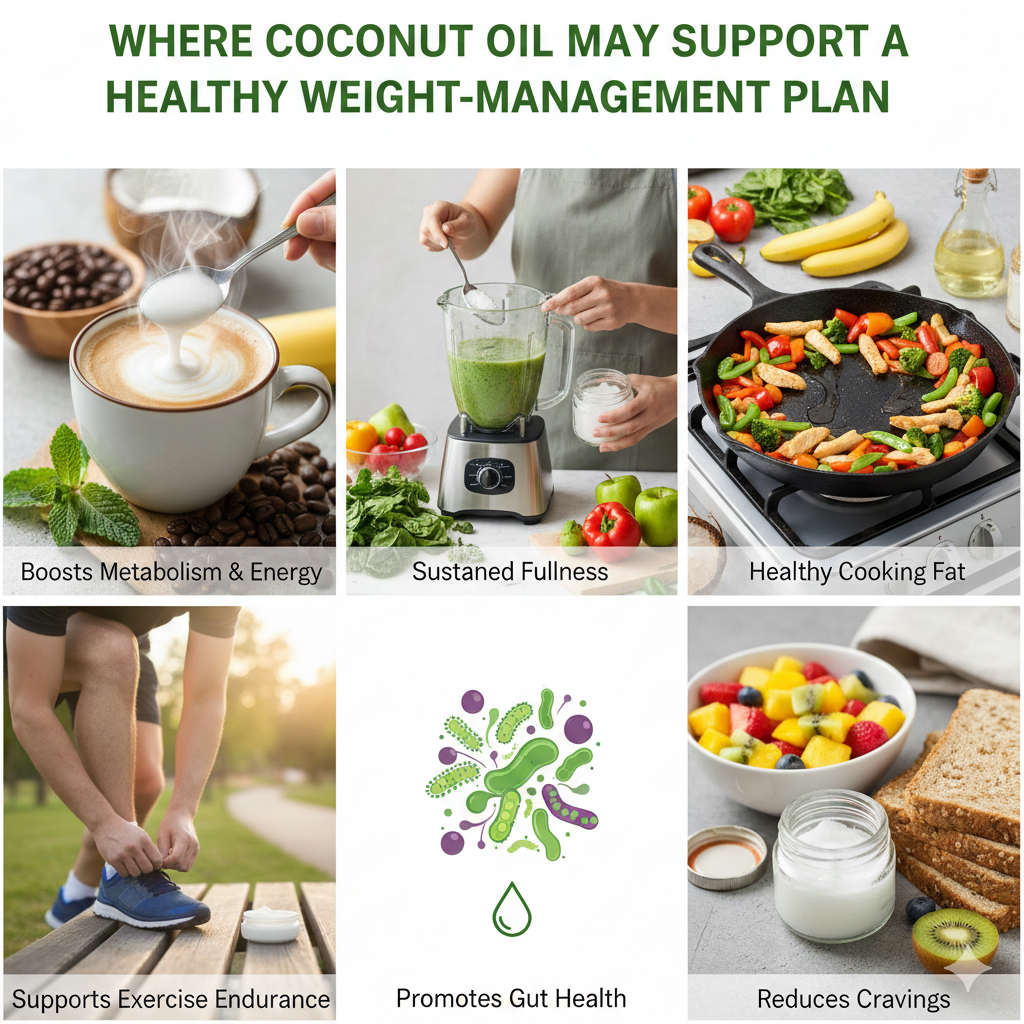
Given the mixed evidence, should you discard coconut oil when trying to lose or maintain weight? Not necessarily. In fact, when used mindfully, coconut oil can fit into a balanced, healthy lifestyle. Here’s how it might help and how to ensure it does not work against you.
✅ Use as a modest healthy fat option rather than excess oil
In the Indian cooking context, replacing very heavy oils or ghee with coconut oil in moderate amounts can be reasonable. Because of its MCT content and slightly different fat metabolism, coconut oil could be a better choice than heavier saturated-fat sources when used in small quantities.
✅ Combined with calorie control and balanced meals
Weight loss fundamentally depends on a calorie deficit: burning more calories than consumed. Coconut oil alone won’t create that deficit. But if you pay attention to portion size, balance your meals with vegetables, proteins, whole grains and use coconut oil judiciously, you may benefit from its potential metabolic boost without overshooting calories.
✅ May help with satiety when paired with balanced diet
While coconut oil does not guarantee appetite suppression, a meal with adequate fat such as a controlled amount of coconut oil plus protein and fibre may help you feel more satiated than a low-fat, high-carb meal. This can help avoid overeating, especially when combined with mindful eating.
✅ Might support waist-circumference management over time
Some small studies suggest that replacing other fats with coconut oil may help slightly reduce abdominal fat or waist circumference. If that potential holds combined with regular physical activity coconut oil could be a mild supportive factor in a broader weight-management plan.
What to watch out for why coconut oil is not magic
Because of its popularity, coconut oil is often marketed as a “fat burning elixir.” But such claims can be misleading if we ignore basic nutrition and lifestyle principles.
- Coconut oil is calorie-dense: every gram of fat carries 9 kcal. If you add coconut oil on top of your normal food portions (without reducing other calories), you may end up consuming excess energy which works against weight loss.
- Saturated fat and heart health concerns: frequent, high intake of saturated fat as in too much coconut oil may elevate “bad” cholesterol in some individuals, increasing risk of cardiovascular problems.
- Mixed, limited scientific evidence: Much of the research showing benefits uses large amounts of purified MCTs (not ordinary coconut oil), or is conducted in small groups. Generalising these results to regular coconut oil and real-life diets is risky.
- It is not a substitute for healthy eating and exercise: Coconut oil or any single food cannot replace the basics of weight loss: balanced diet, portion control, physical activity and healthy habits.
How to use coconut oil wisely if you want to manage weight
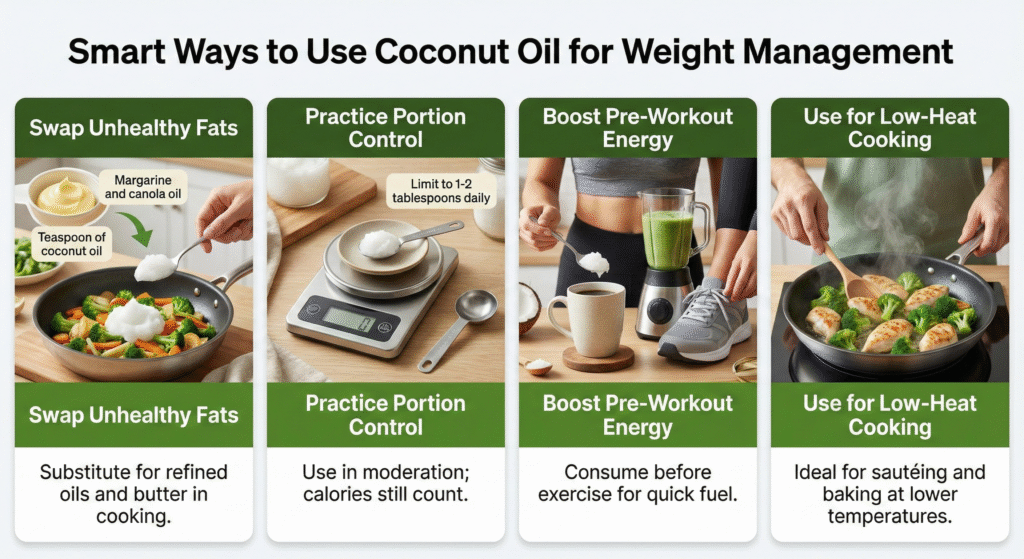
If you still want to include coconut oil in your diet while focusing on weight control here are some practical, balanced ways:
- Use a small amount: Instead of large spoonfuls, use minimal oil in cooking just enough for sautéing or light cooking.
- Replace heavier fats: If your regular diet includes lots of ghee, butter, or deep-fried foods, replacing some of those with a modest amount of coconut oil may help lower overall saturated fat burden.
- Combine with a balanced diet: Ensure plenty of vegetables, lean protein, whole grains or pulses. Don’t treat coconut oil as a fat replacement licence to eat extra food.
- Maintain physical activity: Activity matters. Even if coconut oil slightly boosts metabolism, regular physical movement remains crucial.
- Watch overall fat & calorie intake: Be aware of total calories, and avoid over-indulging in coconut-oil-based cooking or snacks.
- Consult a doctor or nutrition expert: Particularly if you have heart issues, high cholesterol, or other metabolic concerns check if coconut oil fits your health profile.
What we at OwnFresh think a balanced view
At OwnFresh, we believe in realistic, simple, and balanced wellness. Coconut oil is humble, traditional, and widely available and can be a part of a healthy diet. But it should be viewed as a moderate fat option, not a weight-loss miracle.
If you combine moderate use of coconut oil with healthy food choices, portion control, regular exercise and good lifestyle habits it might support your weight-management journey. But it is not a substitute for a holistic approach.
We encourage you to treat coconut oil sensibly, enjoy its aroma and cooking benefits, but not expect it to magically melt fat.
Frequently asked questions (FAQs)
1. Can I just add coconut oil to my food and expect quick weight loss?
No. By itself, coconut oil is unlikely to bring quick weight loss. It has calories like any other fat. For weight loss, the overall diet calorie intake, portion size and physical activity matter more than any single ingredient.
2. Does coconut oil speed up metabolism significantly?
Some small studies suggest that the MCTs in coconut oil may slightly increase fat burning or metabolic rate. But the effect is modest, not dramatic and research is limited.
3. Will coconut oil reduce belly fat specifically?
There are a few small studies that reported reduction in waist circumference or abdominal fat when coconut oil replaced other fats. But such results are modest and not guaranteed. Coconut oil cannot target fat in specific body areas on its own.
4. Is coconut oil better than other cooking oils for weight loss?
Not necessarily “better” but in moderation, coconut oil can be one of the healthy fat options. What matters more is overall calorie intake, fat quality, and balance with other nutrients.
5. Are there health risks if I consume coconut oil regularly for weight loss?
If consumed in large amounts regularly, coconut oil’s saturated fat content may raise “bad” cholesterol (LDL) in some individuals, potentially affecting heart health. So moderation is key.
6. Should I avoid coconut oil if I am trying to lose weight?
Not necessarily. You don’t need to avoid it entirely, use it moderately, as part of balanced meals and a healthy lifestyle. Avoid thinking of it as a magic weight-loss potion.
7. How much coconut oil is safe for daily use if I want to manage weight?
There is no universal amount. But using small amounts for cooking so that total daily calorie and fat intake stays within recommended limits is sensible. Over-use can add unwanted calories and saturated fat load.
8. Does coconut oil help more if I follow a low-carb or ketogenic diet?
Some studies of MCTs suggest benefits when paired with low-calorie or ketogenic diets. But coconut oil is not pure MCT results may vary. If considering such diets, it’s wise to consult a nutrition or medical expert.
At OwnFresh, we believe in honesty and balance. Coconut oil has some properties that can support health and possibly modest fat-metabolism but it is no substitute for a healthy lifestyle. Use it wisely and mindfully, combine it with balanced food, portion control and regular activity and you give your body the best chance for long-term wellbeing.
Here’s to health, balance, and mindful choices!