We often hear the word “cholesterol” tossed around in family conversations, usually accompanied by a worried look from an elder or a stern warning from a doctor. In India, where food is not just sustenance but a language of love, the idea of cutting back on oil or changing how we cook can feel like we are stripping the joy out of our meals.
But here is the good news: eating for a healthy heart does not mean eating boiled, tasteless food. In fact, traditional Indian wisdom has always held the secrets to a balanced body. It is only in recent times, with the influx of refined products and fast-paced lifestyles, that we have drifted away from the roots of wellness.
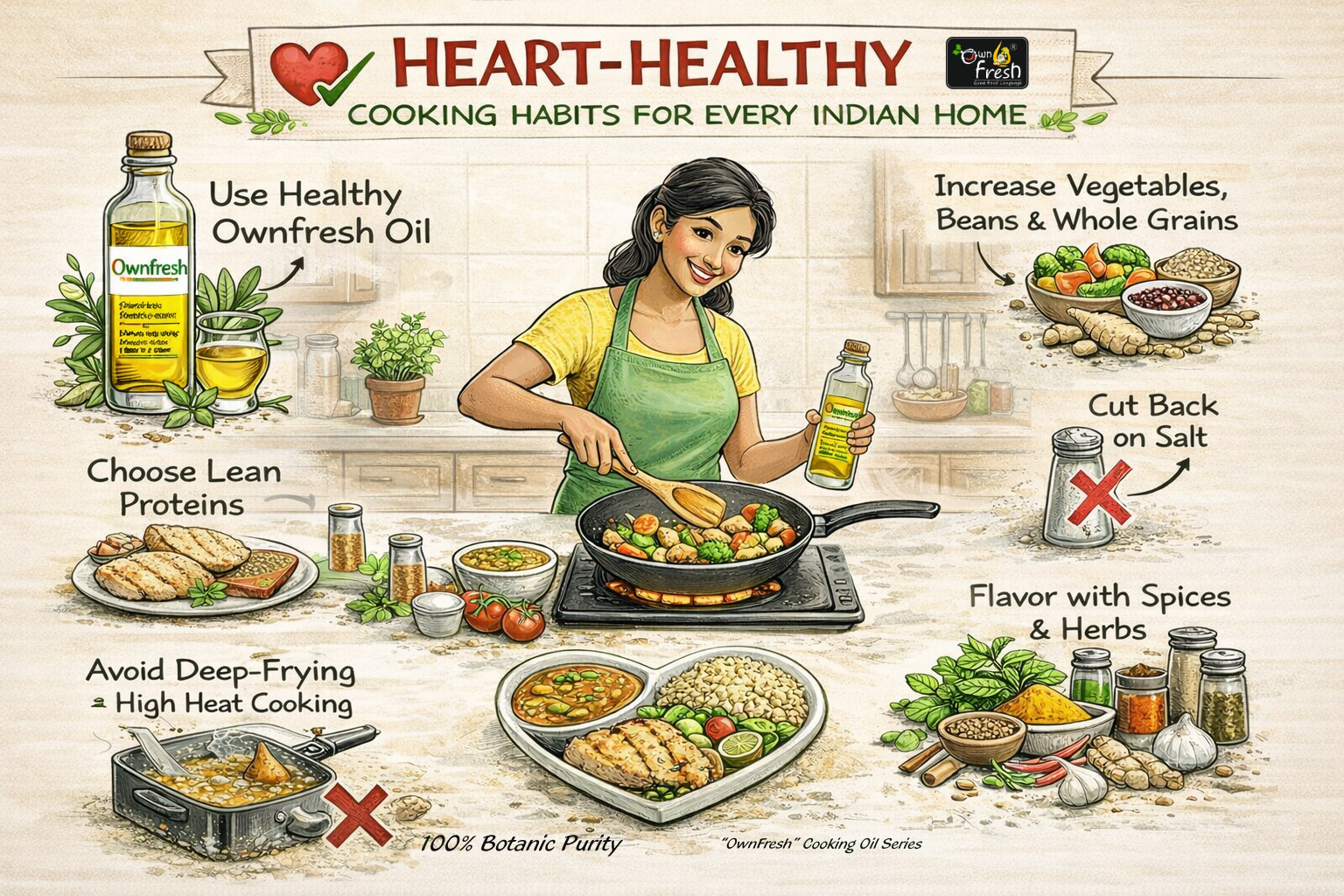
By adopting heart-healthy cooking habits, we can enjoy our meals while looking after our health.
At OwnFresh, we believe that nature has already provided everything we need. By making small, thoughtful changes in our kitchen choosing the right oils, understanding our ingredients, and tweaking our methods we can protect our hearts without compromising on the taste of that comforting dal or that Sunday special sabzi.
Table of Contents
Embracing heart-healthy practices can significantly improve our overall well-being.
Understanding cholesterol is vital, especially when focusing on heart-healthy living.
Understanding cholesterol in simple terms
Incorporating heart-healthy ingredients can make a big difference.
Before we jump into the kitchen, let’s clear up what cholesterol actually is. Think of cholesterol as a waxy substance found in your blood. It is not inherently “evil.” In fact, your body needs it to build healthy cells and make hormones.
However, the problem starts when there is too much of the wrong kind. Imagine your blood vessels are like the water pipes in your house. If you keep pouring sticky grease down the drain, eventually, the pipes will clog, and the water won’t flow properly.
The good and the bad
- LDL (Low-Density Lipoprotein): This is often called the “bad” cholesterol. It is the sticky grease that builds up in your arteries (the pipes) and causes blockages.
- HDL (High-Density Lipoprotein): This is the “good” cholesterol. Think of it as the cleaner that travels through your blood, picking up the excess bad cholesterol and taking it back to your liver to be broken down.
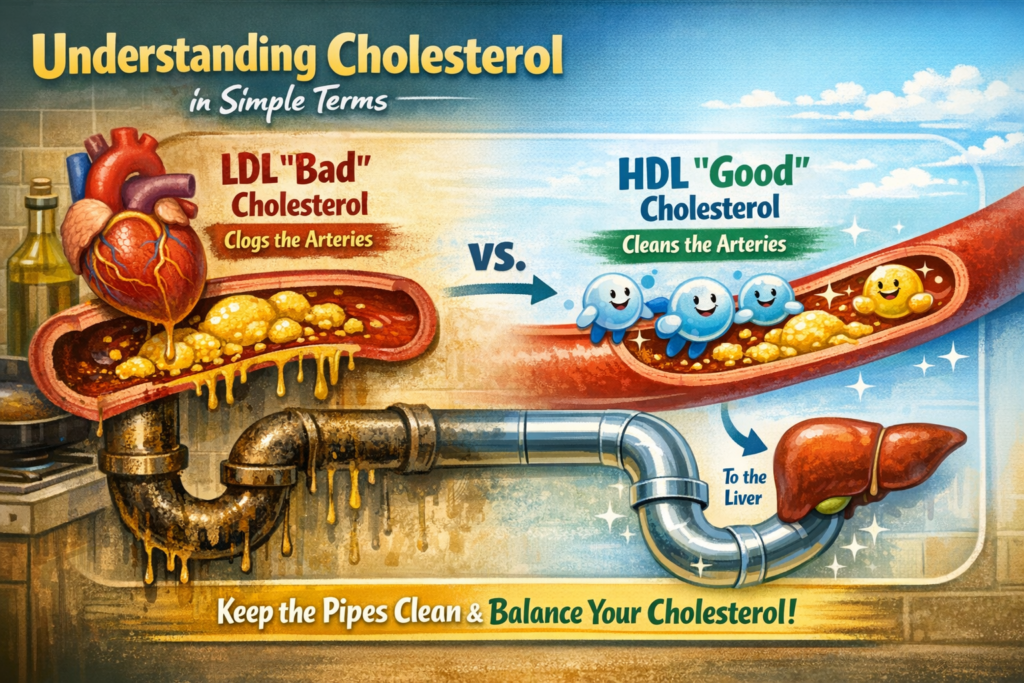
Our goal in the kitchen is simple: we want to keep the pipes clean by lowering the bad LDL and helping the good HDL do its job.
The role of oil in Indian cooking
Oil is the soul of Indian cuisine. Whether it is the tadka in your sambar, the glaze on your paratha, or the base of a rich gravy, we use oil every day. Because of this, the quality of oil you use is the single most important decision you make for your family’s heart health.
For decades, we have been bombarded with advertisements for “refined” oils that promise to be “light” and “heart-friendly.” But if we look back at what our grandparents used, they didn’t use chemically refined fluids. They used fresh, filtered oils extracted from nuts and seeds.
Why refined oils can be tricky
Refined oils go through a high-heat chemical process to strip away the natural aroma, color, and “impurities.” Unfortunately, this process also strips away natural nutrients and can introduce inflammatory compounds. When an oil is stripped of its natural character, it might look clean, but it often lacks the goodness your body recognizes.
The return to traditional oils
This is where the concept of “purity” comes in. Traditional oils like groundnut (peanut), mustard (sarson), sesame (til), and coconut have been used in India for thousands of years.
- Mustard oil: Rich in monounsaturated fats (MUFA) and Omega-3 fatty acids, which are great for the heart. It is perfect for North and East Indian cooking.
- Groundnut oil: A staple in Western and Southern India, it has a high smoke point and a balanced fat profile, making it stable for frying and sautéing.
- Sesame oil: Known for its antioxidants, it helps manage blood pressure and cholesterol levels.
- Coconut oil: While it has saturated fats, traditional Stone-Pressed coconut oil contains medium-chain triglycerides (MCTs) which are burned for energy rather than stored as fat.
Stone-Pressed vs. heat-extracted
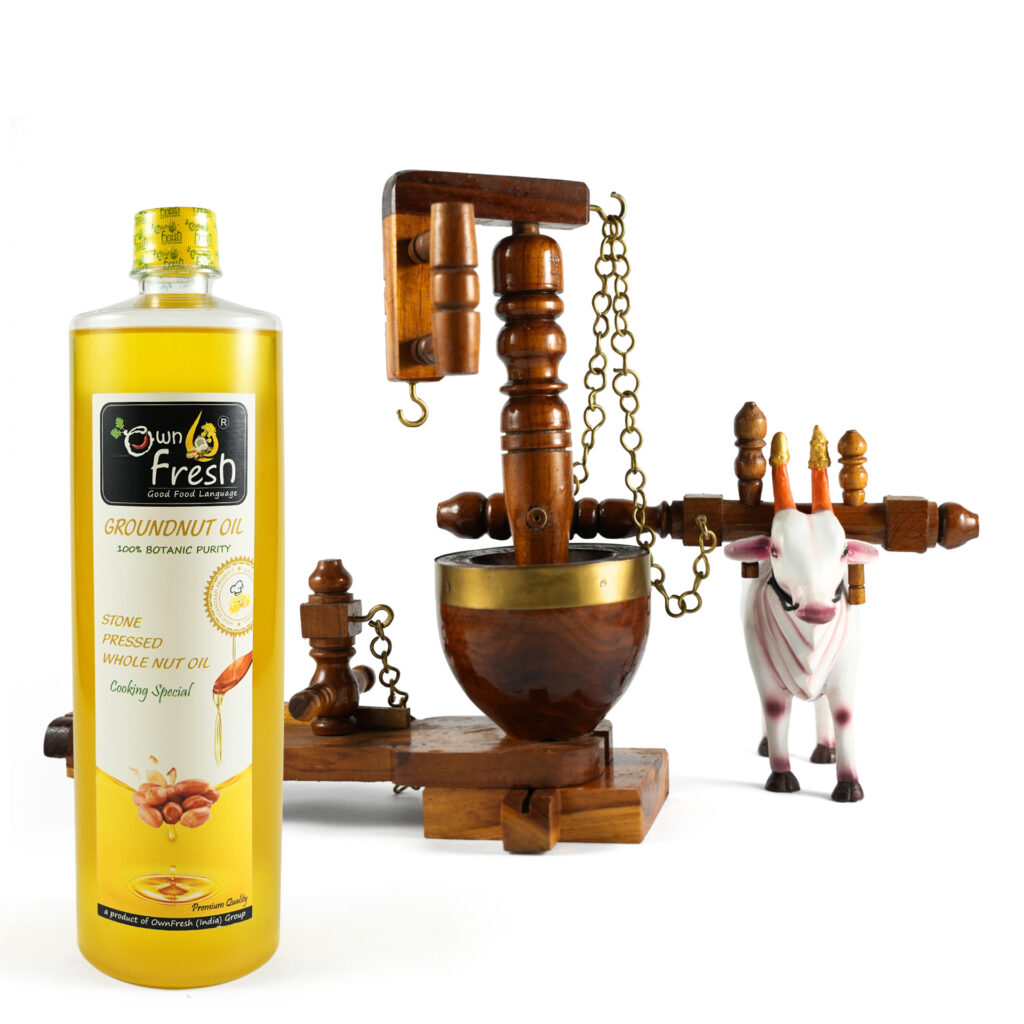
The method of extraction matters just as much as the seed. Stone-Pressed oils (often called kachi ghani or wood-pressed) are extracted by crushing seeds slowly without using heat. This preserves the natural antioxidants, vitamins, and good fats. Using a smaller quantity of high-quality, Stone-Pressed oil is far better for your cholesterol than using generous amounts of cheap, refined oil.
Smart cooking techniques for a healthier heart
You have chosen the right oil. Now, how do you use it? Even the best oil can become unhealthy if used incorrectly. Here are some practical shifts you can make in your daily cooking.
Mastering the art of tadka
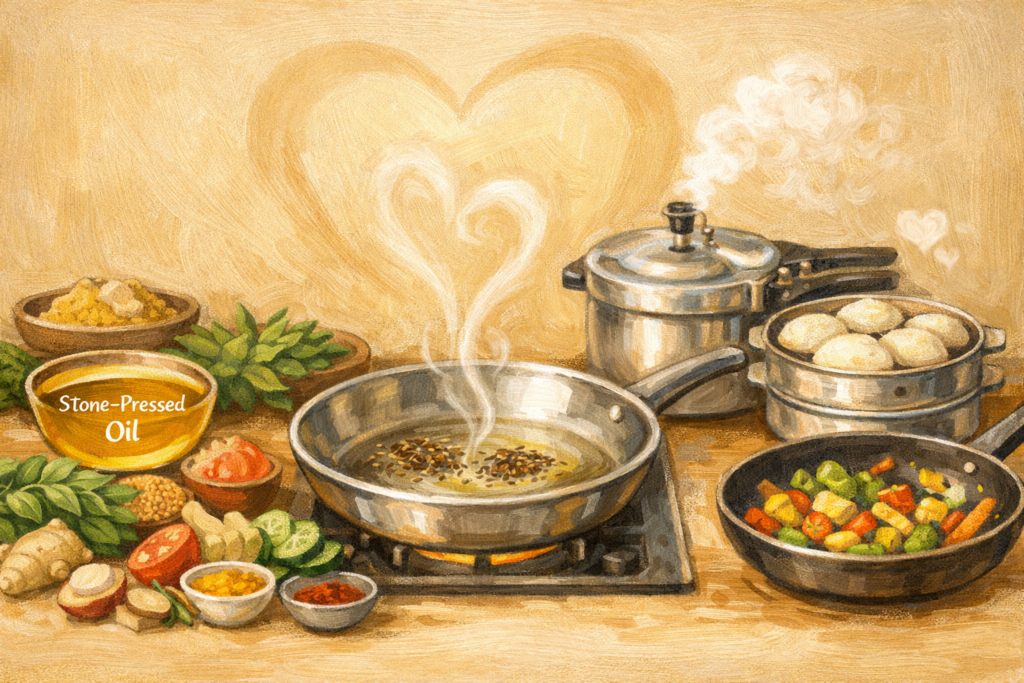
The tadka or tempering is where the magic happens. It releases the essential oils of spices like cumin, mustard seeds, and curry leaves.
- The mistake: Many of us heat the oil until it is smoking heavily before adding spices. This burns the good fats and turns them toxic.
- The fix: Heat the oil gently. Add your spices when the oil is just hot enough to make them sizzle, not burn. You can also try “dry roasting” spices for flavor and adding just a teaspoon of raw Stone-Pressed oil or ghee at the very end to round off the dish.
Steam and sauté instead of fry
We love the crunch of deep-fried foods. But deep frying increases the calorie density of food significantly.
- Pressure cooking: This is a heart-hero technique. It retains nutrients and cooks food quickly without needing much fat. Dals and vegetable stews cooked in a pressure cooker need very little oil.
- Steaming: Idlis, dhoklas, and steamed vegetable salads are excellent because they use zero oil during the cooking process. You can add a drop of oil later for taste if needed.
- Sautéing: Instead of drowning vegetables in oil to cook them, use a non-stick or heavy-bottomed stainless steel pan. Add a teaspoon of oil, toss the veggies, and then splash some water and cover the lid. The steam will cook the vegetables, and the oil will just be there for flavor.
The issue of reheating oil
This is a golden rule for heart health: never reuse cooking oil. When you fry puris or pakoras and save the leftover oil for the next day’s sabzi, you are inviting trouble. Reheating oil changes its chemical structure, creating trans fats, the worst enemy of your heart. Trans fats raise bad cholesterol and lower good cholesterol.
- The fix: Estimate the oil you need accurately. If you have a little left over, it is safer to discard it than to consume the toxins it contains.
Ingredients that fight cholesterol
Your cooking oil is the medium, but the ingredients are the medicine. The Indian pantry is stocked with natural cholesterol-fighters.
Soluble fiber is your best friend
Soluble fiber acts like a sponge in your digestive system. It absorbs cholesterol and carries it out of the body before it can enter your bloodstream.
- Oats and barley: Great for breakfast.
- Beans and lentils (Dals): Rajma, chana, moong, and toor dal are powerhouses of fiber and protein. Eating a bowl of thick dal everyday is one of the best things you can do for your heart.
- Vegetables: Okra (bhindi), eggplant (baingan), and carrots are rich in sticky fiber that traps cholesterol.
The magic of spices
- Turmeric (Haldi): The active compound, curcumin, prevents the oxidation of cholesterol, which stops plaque from building up in arteries.
- Garlic: Eating a raw clove of garlic or adding crushed garlic to your food can help lower total cholesterol levels.
- Fenugreek (Methi): Soaking methi seeds overnight and drinking the water, or using the seeds in cooking, helps reduce triglycerides.
- Coriander seeds (Dhaniya): Known in Ayurveda to help aid digestion and clear bad fats from the body.
Nuts and seeds
A handful of almonds or walnuts is not just a snack; it is heart therapy. They are rich in Omega-3 fatty acids. Flaxseeds (alsi) are another cheap and effective superfood. You can roast and powder them to sprinkle over your curd or dal.
Common kitchen mistakes to avoid
Even with the best intentions, we sometimes fall into traps that sabotage our health.
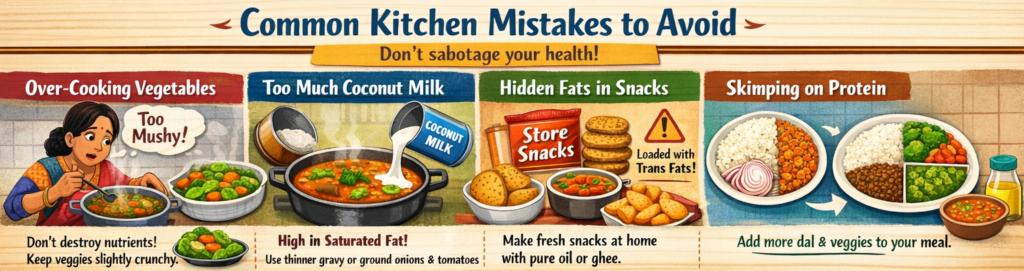
- Over-cooking vegetables: Indians have a habit of cooking vegetables until they are mushy. This destroys the fiber and vitamins. Keep your veggies slightly crunchy to retain their cholesterol-fighting power.
- Using too much coconut milk: While coconut oil has benefits, rich, thick coconut milk gravies are very high in saturated fats. If you love coastal curries, try using a thinner milk or grinding roasted onions and tomatoes to thicken the gravy instead.
- ignoring hidden fats: Biscuits, rusks, and savory snacks (namkeen) from the store are often made with cheap palm oil or hydrogenated vegetable fats (vanaspati). These are trans-fat bombs. It is always better to make fresh snacks at home using pure oil or ghee.
- Skimping on protein: A diet high in refined carbohydrates (lots of white rice and sugar) can raise triglycerides. Balance your plate. If you have rice, ensure half the plate is filled with dal and green vegetables.
A day of heart-healthy eating
What does a cholesterol-friendly day look like for an Indian family? It doesn’t look like a salad bar; it looks like home.
- Morning: Start with a glass of warm water with lemon or soaked fenugreek water.
- Breakfast: Idli with sambar (heavy on veggies), or vegetable upma made with minimal oil, or oatmeal porridge with cinnamon and almonds.
- Lunch: Two rotis (made of whole wheat + gram flour mix), a bowl of palak dal, a side of bhindi stir-fry (cooked in little mustard oil), and fresh salad.
- Evening Snack: Roasted makhana (fox nuts) or a fruit.
- Dinner: Keeping it light is key. Moong dal khichdi with a teaspoon of ghee, or grilled fish/chicken with vegetables.
Lifestyle: the partner to your diet
Food is powerful, but it works best when paired with movement. You don’t need a gym membership to manage cholesterol.
- Walk: A brisk 30-minute walk every day helps raise your “good” HDL cholesterol.
- Stress: Chronic stress triggers cholesterol production. Practices like yoga or simply spending time with family without screens can lower stress hormones.
- Sleep: Poor sleep disrupts how your body metabolizes fat. Aim for 7-8 hours of rest.
Conclusion
Managing cholesterol is not about fear; it is about returning to mindfulness. It is about remembering that the food we eat becomes a part of us. When we choose pure, unrefined ingredients and cook them with care, we are sending a message to our bodies that we value them.
At OwnFresh, we encourage you to look at your kitchen shelves today. Read the labels. Smell the spices. Ask yourself if what you are cooking with is nourishing your heart or stressing it. A few simple swaps a Stone-Pressed groundnut oil instead of a refined packet, a handful of nuts instead of a biscuit, a steamed dish instead of a fried one can add years of health to your life.
Eat fresh, live pure, and let your heart beat strong.
FAQs
1. Which cooking oil is best for reducing cholesterol? There isn’t one single “magic” oil, but Stone-Pressed oils are generally best. Oils like mustard oil, groundnut oil, and sesame oil are excellent for Indian cooking because they have healthy fats and antioxidants. Olive oil is great for salads but not for deep frying. The key is to rotate your oils to get benefits from all of them.
2. Is ghee bad for cholesterol? Not necessarily. Pure desi ghee contains healthy fats and vitamins A, D, E, and K. Consuming a moderate amount (about 1 teaspoon per meal) is considered safe and beneficial in Ayurveda. The problem arises if you consume it in excess or combine it with a sedentary lifestyle.
3. Can I still eat eggs if I have high cholesterol? Yes, eggs are nutritious. Most of the cholesterol is in the yolk, but eggs also have many essential nutrients. For most people, eating an egg a day is safe. If your doctor has advised strict restriction, you can stick to egg whites, which are protein-rich and cholesterol-free.
4. Does eating garlic really help lower cholesterol? Yes, studies and traditional wisdom suggest that garlic can help lower levels of bad cholesterol and keep blood thin. Eating a raw clove in the morning or using generous amounts of crushed garlic in your dal and sabzi is a heart-healthy habit.
5. How can I make my curries thick without using too much oil or cream? You can thicken gravies using healthy alternatives like melon seed (magaj) paste, poppy seed (khus khus) paste, roasted gram flour (besan), or simply by blending some of the sautéed onions and tomatoes into a smooth paste.
6. Is eating rice bad for my heart? White rice has a high glycemic index, which can increase triglycerides if eaten in large amounts. You don’t have to stop eating rice, but try to control the portion. Alternatively, switch to brown rice, red rice, or millets like foxtail millet, which are higher in fiber and better for heart health.
7. How much oil should a person consume per day? A general guideline for a healthy adult is about 3 to 4 teaspoons (15-20ml) of visible fat (oil or ghee) per day. This includes the oil used in cooking vegetables, dals, and kneading dough.