Understanding the real debate
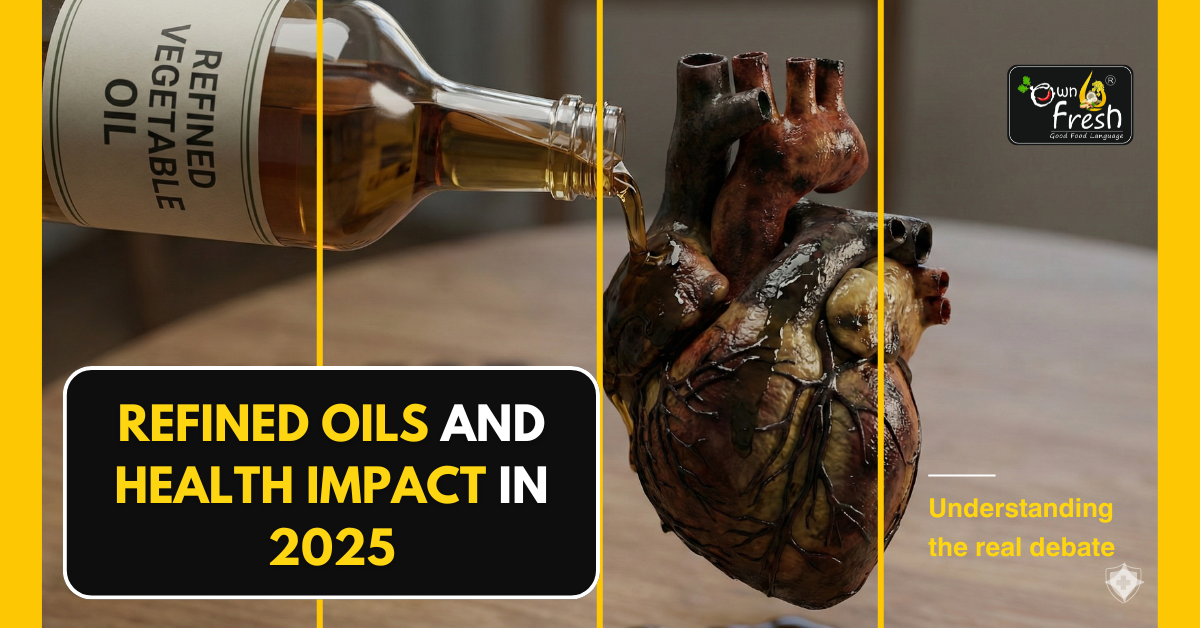
In 2025, the discussion around cooking oils was stronger than ever. On one side, refined vegetable oils continue to dominate supermarket shelves, backed by claims of being light, modern, and heart-friendly. On the other side, stone-pressed Kachi Ghani oils are making a steady return to Indian kitchens, supported by traditional wisdom and growing health awareness. The impact of refined oils on health is a significant part of this debate.
Key statistical insights
1. India’s edible oil consumption has risen sharply
India’s annual per capita edible oil consumption has nearly tripled in the last two decades, from about 8.2 kg per person in 2001 to nearly 23.5 kg per person today, which is almost double the Indian Council of Medical Research (ICMR) recommended upper limit of 12 kg per year. Higher edible oil intake is linked with rising rates of obesity, cardiovascular conditions, fatty liver, and type-2 diabetes.
2. Edible oil market scale
India consumes around 25–26 million tonnes of edible oil annually, while domestic production meets only about 40–45% of this demand highlighting a large reliance on refined and imported oils.
3. High overall disease burden in India
Cardiovascular diseases (CVD) remain a leading cause of death in India, with heart disease contributing to a large share of annual fatalities. Around 2.4 million Indians die each year from heart disease, and coronary heart disease prevalence in urban areas ranges from 7 – 13%.
4. Heart disease accounts for a substantial portion of deaths
According to global health estimates, cardiovascular diseases are responsible for about 31% of all deaths worldwide, making heart-related conditions one of the most common causes of mortality.
5. Daily oil habits matter
Research in heart health highlights that repeated reheating and oxidation of refined oils may contribute to higher LDL (“bad”) cholesterol, chronic inflammation, obesity, and elevated risk for heart attacks and strokes over time.
6. Oil intake and cardiovascular risk
Medical experts note that consuming excessive amounts of refined and heavily processed oils is associated with factors that contribute to cardiovascular disease including increases in LDL cholesterol, oxidative stress, and chronic inflammation.
For many Indian families, the confusion is genuine. Are refined oils really suitable for daily use. Or are stone-pressed Kachi Ghani oils a safer and more balanced choice for long-term health.
At OwnFresh, we believe cooking oil is not just about taste or price. It is about what we consume every single day. This blog explains the refined oil debate in 2025 and passing on the baton to 2026 and clearly compares refined oils with stone-pressed Kachi Ghani oils in simple, practical terms.
Why refined oils became so popular?
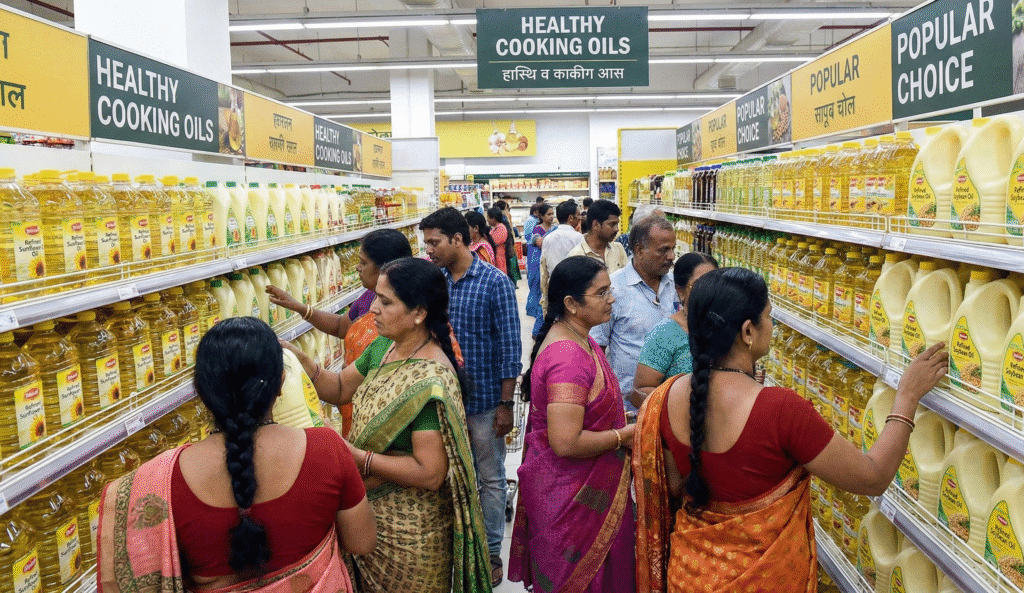
Refined oils gained popularity mainly because of industrial food systems and fast-paced urban lifestyles. These oils look clear, have no strong smell, and come with a long shelf life. For large-scale food production and distribution, refined oils appear convenient.
Some medical bodies and institutions continue to promote refined oils because:
- They are easy to standardise for large populations
- Their taste is neutral and suits many recipes
- They appear lighter in colour and texture
- They are widely available and affordable
However, convenience does not always mean better nutrition, especially when oils are consumed daily for years.
How refined vegetable oils are produced?

Refined oils are not made through a simple process. They go through multiple industrial stages such as degumming, bleaching, and deodorizing.
During degumming, natural gums and phospholipids are removed. Bleaching uses chemicals or activated earth to remove natural colour pigments. Deodorizing involves heating the oil at very high temperatures to eliminate smell and taste.
Before these steps, many refined oils are extracted using chemical solvents to maximise oil yield from seeds.
While these processes improve appearance and shelf stability, they significantly change the oil’s natural structure.
https://www.youtube.com/@OwnFreshOfficial
Nutrient loss during refining
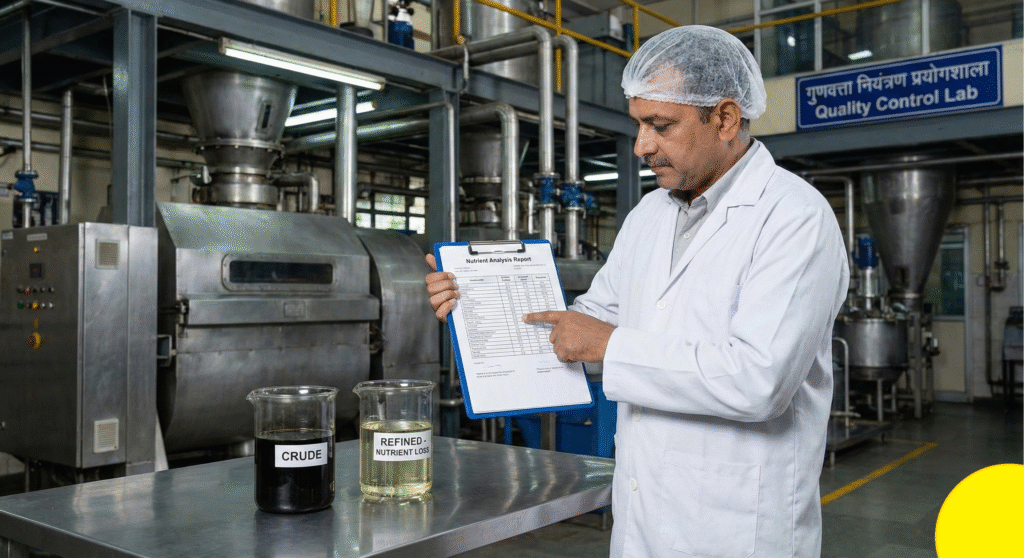
One of the biggest concerns raised by nutrition experts is nutrient loss.
Naturally extracted oils contain fat-soluble vitamins, antioxidants, and protective plant compounds. When oil passes through repeated high heat and chemical processing, many of these nutrients are reduced or destroyed.
The final refined oil mostly provides calories, with very limited natural nutrition remaining. This is why long-term daily consumption of refined oils is questioned by many health professionals.
Omega – 6 imbalance and modern diets
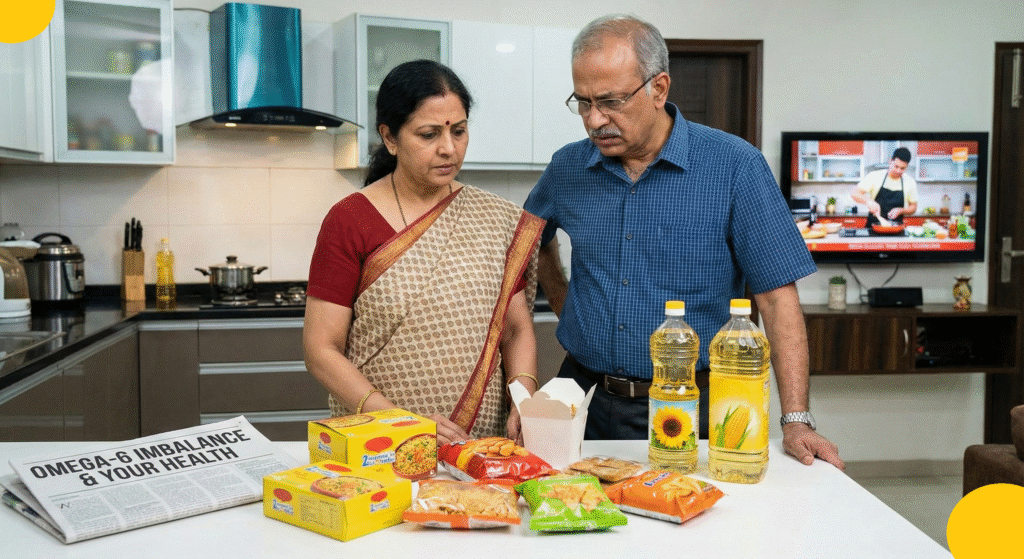
Omega – 6 fatty acid imbalance is a major topic in global health discussions today.
Most refined vegetable oils are high in omega – 6 fats. While omega – 6 is essential, excess intake without proper balance can create stress in the body.
Modern Indian diets already include packaged snacks, bakery items, and outside food, all of which commonly use refined oils. When the same oils are also used daily at home, omega-6 intake can easily become excessive.
Many nutritionists link this imbalance to long-term inflammatory concerns.
Solvent extraction and chemical residue concerns
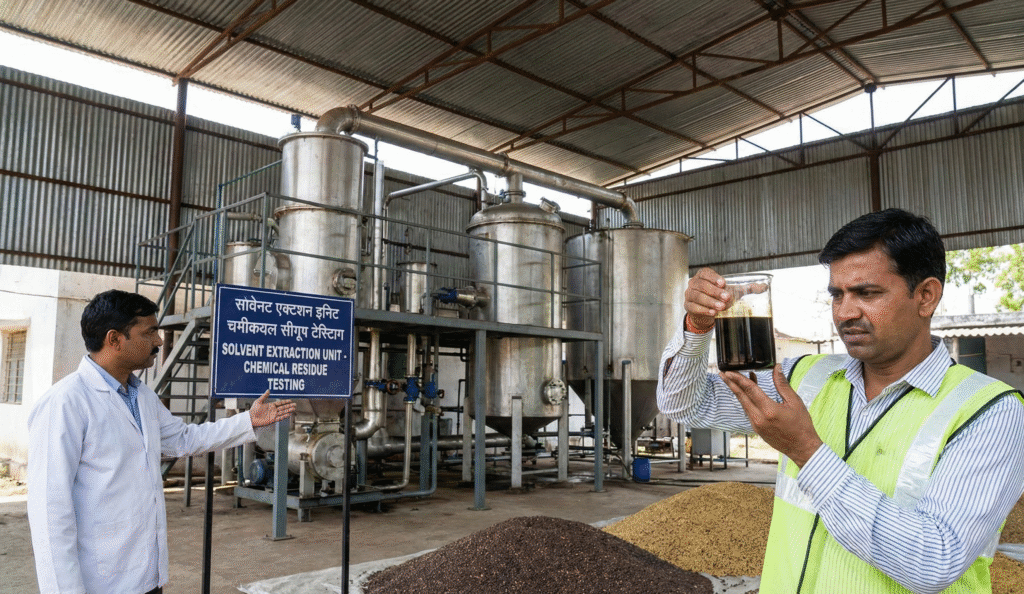
Refined oils are often extracted using chemical solvents. Although manufacturers claim that residues are removed, some experts remain cautious about long-term exposure.
This concern is especially relevant for children, elderly individuals, and people with sensitive digestion.
Stone-pressed Kachi Ghani oils are extracted using traditional mechanical pressure, without chemical solvents. This makes them closer to their natural form and reduces such concerns.
High heat processing and harmful compounds
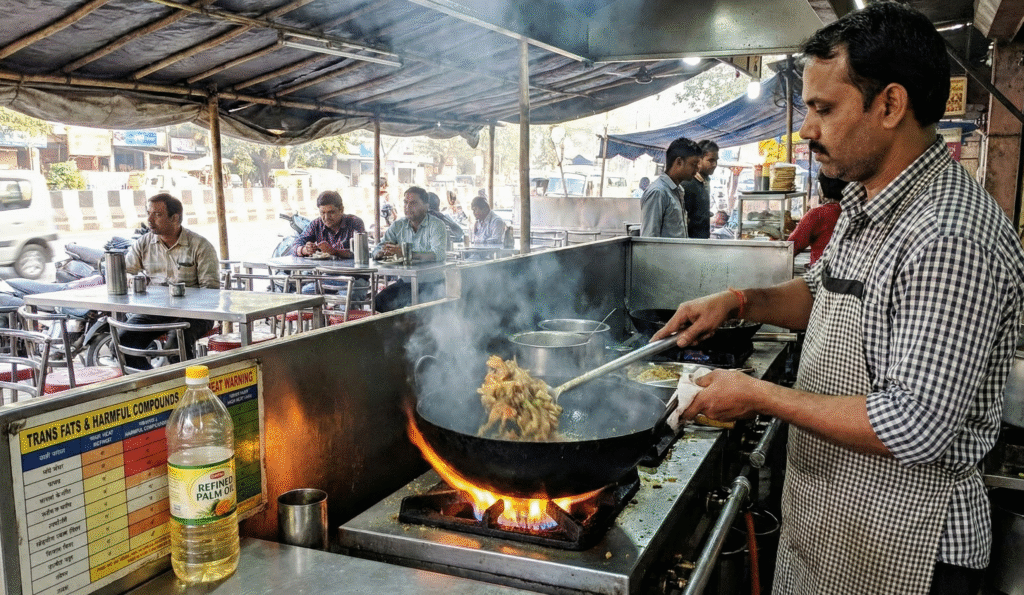
During refining, oils are exposed to extremely high temperatures. Such intense heat can alter the oil’s molecular structure.
This process may lead to the formation of unwanted compounds that are not present in traditionally extracted oils.
Additionally, refined oils are often marketed as suitable for very high-temperature cooking, which encourages deep frying and overheating.
The risk of repeatedly reheating oil
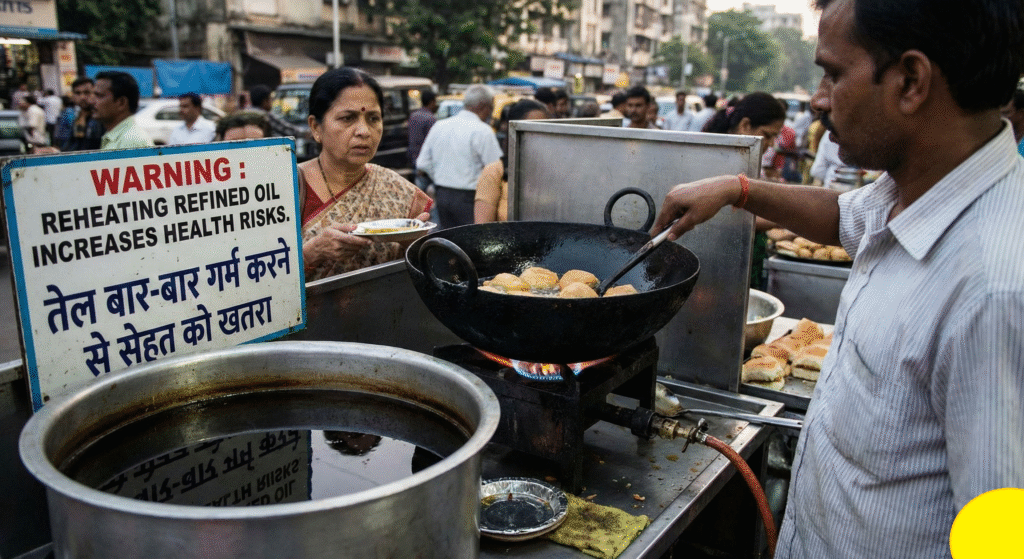
One serious issue in Indian cooking practices is oil reuse.
In homes, restaurants, and street food setups, refined oils are often reheated multiple times for frying. Each reheating cycle causes oxidation and breakdown of fatty acids.
This leads to the formation of harmful by-products, making reused oil a major health concern. Many experts strongly advise against reusing any cooking oil.
Why refined oils are still supported by some institutions
Support for refined oils does not necessarily mean they are ideal.
Most recommendations focus on short-term markers such as cholesterol levels or calorie intake. Real-life cooking habits, oil reuse, and long-term daily exposure are often not fully considered.
This is where traditional Indian practices and modern dietary guidelines sometimes differ.
Stone – pressed Kachi Ghani oils | Traditional wisdom with modern relevance
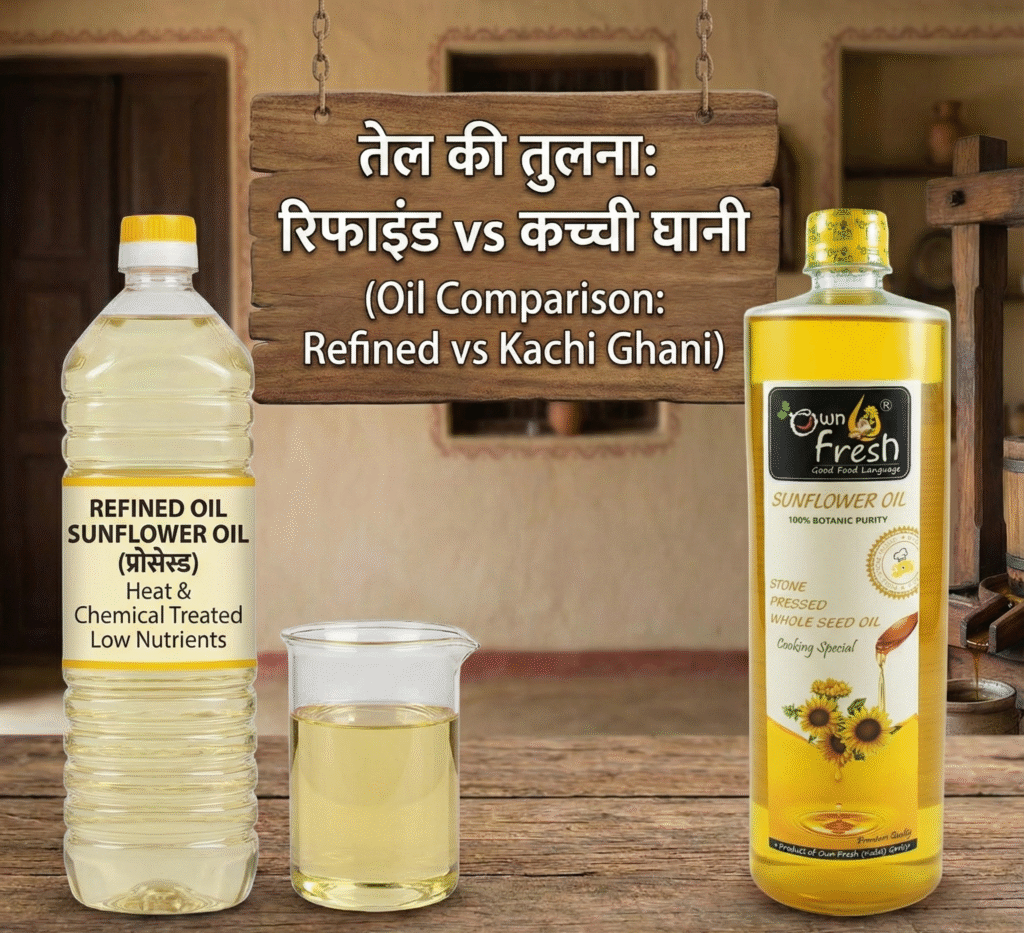
Stone-pressed Kachi Ghani oils are extracted at low temperatures using traditional wooden or stone ghani methods. This process helps preserve the oil’s natural aroma, taste, and nutritional profile.
Mustard, groundnut, sesame, and coconut oils retain their natural character. These oils are not made neutral or odourless.
For Indian kitchens that value digestion, flavour, and balance, stone-pressed Kachi Ghani oils fit naturally into everyday cooking.
Refined oils vs Ownfresh’s stone – pressed Kachi Ghani oils. A clear comparison
Extraction method
Refined oils use chemical solvents and multiple refining stages.
Our Stone-pressed Kachi Ghani oils are output of single pressing using traditional mechanical pressure.
Nutritional quality
Refined oils lose most natural nutrients during processing.
Our Stone-pressed Kachi Ghani oils retain natural antioxidants and beneficial compounds.
Heat stability
Refined oils have high smoke points but degrade quickly when reused.
Our Stone-pressed Kachi Ghani oils remain stable at moderate cooking temperatures.
Indian cooking suitability
Refined oils encourage deep frying and reuse.
Our Stone-pressed Kachi Ghani oils suit daily cooking, tadka, and traditional recipes.
Are stone-pressed Kachi Ghani oils suitable for daily cooking?
Yes, when used correctly.
Indian cooking mostly involves tempering, slow cooking, pressure cooking, and shallow frying. Our Stone-pressed Kachi Ghani oils work well for these methods.
Extremely high heat is rarely necessary in everyday Indian meals.
Healthier oil practices for Indian households
Healthy oil use is not only about choosing the right oil, but also about correct habits.
Follow oil rotation
Using different stone-pressed oils helps maintain fatty acid balance.
Match oil to the cooking method
Not every oil suits every recipe.
Avoid oil reuse completely
Never reuse oil after frying.
Use oil in moderation
Even good-quality oils should be used mindfully.
OwnFresh approach to stone – pressed Kachi Ghani oils
At OwnFresh, we see stone-pressed Kachi Ghani oils as a responsible everyday choice.
We respect traditional extraction methods while maintaining consistent quality. Our focus is on transparency, conscious cooking, and long-term wellness rather than shortcuts.
Stone – pressed Kachi Ghani oils are not a trend. They are a return to balanced Indian cooking.
Final thoughts
The refined oil vs Kachi Ghani debate in the coming 2026 should be based on awareness, not fear.
Refined oils may suit industrial needs, but for daily home cooking, their long-term impact deserves attention.
Stone – pressed Kachi Ghani oils, when used in moderation and with proper cooking practices, offer a safer and more balanced option for Indian households.
Mindful cooking has always been the strength of Indian kitchens. Choosing the right oil is an important part of that tradition.
Frequently asked questions
Are refined oils safe for occasional use?
Occasional use is unlikely to cause immediate harm. The concern is regular, long-term consumption.
Can stone-pressed Kachi Ghani oils be used for all types frying?
Yes, for deep, shallow and moderate frying. Oil reuse should be strictly avoided.
Why do refined oils look very clear?
The refining process removes natural colour and aroma.
Is using only one oil enough?
Oil rotation is recommended for better nutritional balance.
Why is reheating oil harmful?
Repeated heating breaks down oil structure and forms harmful by-products.
Are stone – pressed Kachi Ghani oils heavy on digestion?
When used in proper quantity, they align well with traditional Indian diets.
Which oil is better for children and elderly?
Most experts suggest limiting refined oils and using balanced, traditionally extracted oils, maintaining mindful oil rotation.
Sources:
Indian Council of Medical Research (ICMR) – dietary fat intake guidelines
National Centre for Disease Control (India)
World Health Organization (WHO) – cardiovascular disease statistics
Business Standard – India edible oil consumption and import data
National Institutes of Health (NIH) / PubMed cardiovascular and dietary fat research