If you close your eyes and think of an Indian kitchen from thirty or forty years ago, a few distinct aromas likely come to mind. The earthy scent of cumin roasting, the sharp tang of mustard seeds popping, and perhaps, underlying it all, the rich, nutty fragrance of fresh sesame oil.
For centuries, before refined packets took over our supermarket shelves, sesame oil or Til ka Tel was the quiet guardian of health in Indian households. It wasn’t just a cooking ingredient; it was a medicine cabinet staple, a beauty secret, and a ritualistic necessity. From the diyas lit during Diwali to the Sunday morning champi (head massage) your grandmother insisted on, sesame oil was everywhere.
At OwnFresh, we believe that some traditions shouldn’t be lost to time. We believe in the philosophy of “farm-to-bottle” knowing exactly where your food comes from and how it was made. Today, we are peeling back the layers on one of our most treasured offerings: Stone-Pressed Sesame Oil.
What exactly is it? Why is the extraction method so critical? And why are health experts and grandmothers alike urging us to bring it back into our daily lives? Let’s take a deep, comprehensive journey into the world of this golden liquid.
1. What is Stone-Pressed Sesame Oil?
To understand the value of stone-pressed oil, we first have to unlearn what we know about modern factory oils.
In the commercial edible oil industry, efficiency is often the enemy of nutrition. Industrial processing involves high heat, chemical solvents like hexane, and heavy filtration to produce an oil that is colorless, odorless, and shelf-stable for years. Unfortunately, this process also strips away the soul of the seed its nutrients, its flavor, and its natural healing properties.
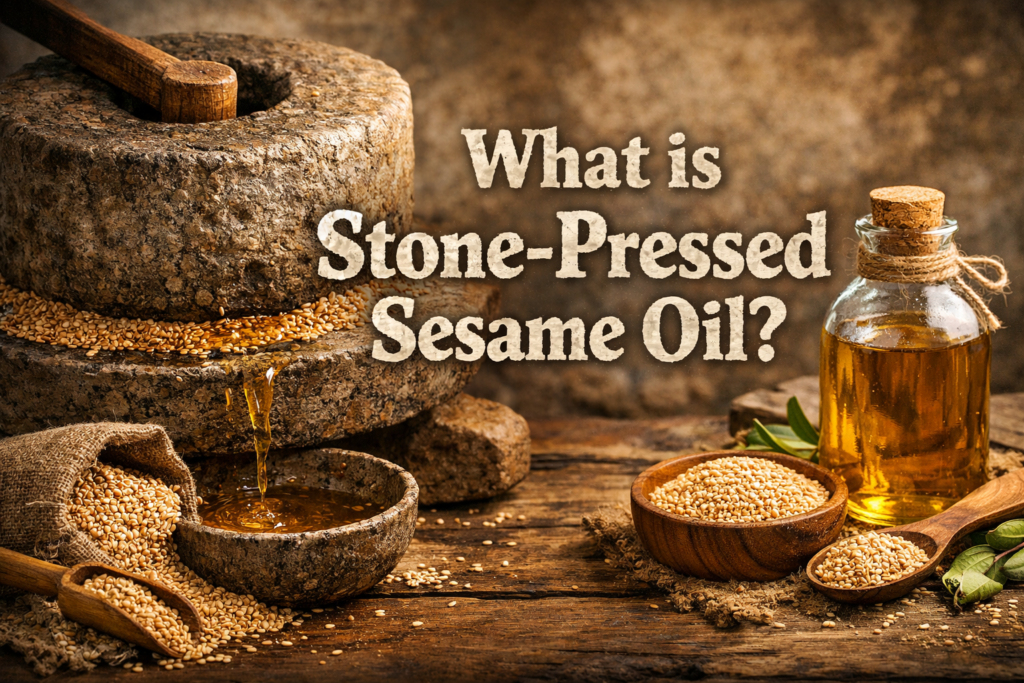
Stone-Pressed Sesame Oil, often referred to as Kachi Ghani or wood-pressed oil, is the complete opposite. It is oil in its most honest form.
The Traditional ‘Ghani’ Method
Imagine a large wooden or stone mortar and a heavy pestle made of wood (often heavy babul or tamarind wood). The sesame seeds are placed inside, and the pestle rotates slowly, crushing the seeds at a steady, rhythmic pace.
This method is crucial for two reasons:
- Low Temperature: The slow rotation ensures that the temperature never rises above 50°C (approx. 122°F). This classifies it as “Cold Pressed.” High heat destroys delicate antioxidants and vitamins; stone pressing protects them.
- No Chemicals: The oil is extracted purely by mechanical pressure. No chemical solvents are used to pull out every last drop. What you get is the yield that nature intended, not what a chemical factory forced out.
At OwnFresh, we honor this method. We source the finest sesame seeds directly from trusted farmers, ensuring that the journey from the soil to your spoon is clean, ethical, and 100% natural.
2. The Nutritional Powerhouse: What’s Inside?
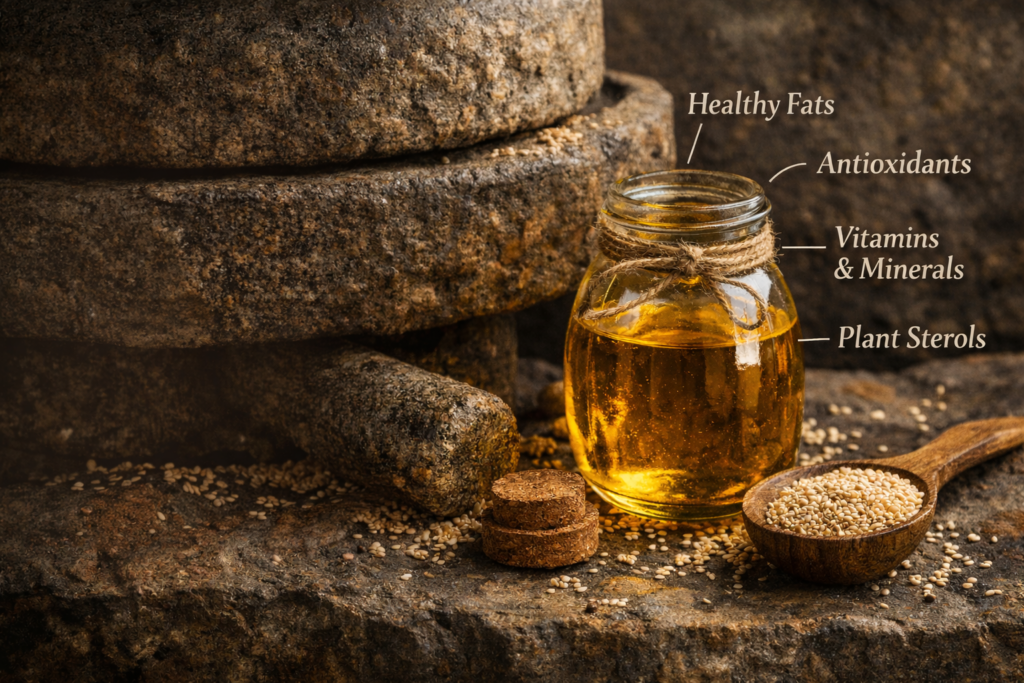
Why do we call it “Liquid Gold”? It’s not just about the color. Stone-pressed sesame oil is chemically complex in the best way possible. Because it hasn’t been refined or bleached, it retains a full spectrum of bio-active compounds.
Here is a breakdown of what you are actually putting into your body:
The Good Fats (Heart’s Best Friend)
Sesame oil is a balanced source of fats. It is rich in Polyunsaturated Fatty Acids (PUFA) and Monounsaturated Fatty Acids (MUFA). specifically Omega-6 fatty acids (Linoleic acid) and Omega-9 (Oleic acid). These are the “healthy fats” that are essential for maintaining a healthy heart and keeping bad cholesterol in check.
The Unique Antioxidants: Sesamol & Sesamin
This is where sesame oil truly shines. It contains two powerful lignans unique to it: Sesamin and Sesamol.
- Sesamol has immense antioxidant properties, helping to fight free radicals in the body. Free radicals are unstable atoms that damage cells, causing aging and disease. Sesamol steps in as a shield.
- Sesamin helps in regulating metabolism and has been linked to anti-inflammatory responses.
Vitamins and Minerals
- Vitamin E: A potent antioxidant that is fantastic for skin and immunity.
- Vitamin K: Essential for bone health and blood clotting.
- Phytosterols: Plant compounds that have a structure similar to cholesterol and can actually help block cholesterol absorption in the gut.
3. Health Benefits: More Than Just a Cooking Oil
In Ayurveda, sesame oil is rated as the premier oil, often called The King of Oils. It is considered “tridoshic” able to balance the Vata dosha effectively. But you don’t have to be an Ayurvedic expert to reap the benefits. Here is how it impacts your modern life.
1. A Guard for Your Heart
Heart disease is a growing concern in India. Switching your cooking oil is one of the easiest preventative measures you can take. The high levels of PUFA and MUFA in stone-pressed sesame oil help lower LDL (bad cholesterol) while maintaining HDL (good cholesterol). The antioxidants also prevent the oxidation of cholesterol, which is a key factor in the buildup of plaque in arteries.
2. Stronger Bones
We often think of milk for calcium, but did you know sesame seeds are a powerhouse of calcium and zinc? While the oil contains less calcium than the whole seed, stone-pressing retains minerals like Zinc and Copper. Zinc is vital for bone mineral density. Including this oil in your diet can be a great support system for bone health, especially for the elderly.
3. Digestive Health & Constipation Relief
Grandmothers often suggested a teaspoon of sesame oil for a rumbling stomach, and they were right. The oil lubricates the intestines, acting as a gentle, natural laxative. It eases the passage of food and can be a simple home remedy for mild constipation.
4. Boosting Immunity
With the changing seasons, our immunity often takes a hit. The combination of Vitamin E, copper, and zinc in stone-pressed sesame oil supports the production of white blood cells, which are the body’s first line of defense against infections.
5. Oral Hygiene (Oil Pulling)
Have you heard of Gandusha? It’s the ancient Ayurvedic practice of oil pulling swishing a tablespoon of oil in your mouth for 10-15 minutes before spitting it out. Stone-pressed sesame oil is the top choice for this. It binds with bacteria and toxins in the mouth (which are often lipid-covered) and pulls them out. It’s known to reduce plaque, whiten teeth naturally, and promote healthier gums.
4. Culinary Uses: The Indian Kitchen’s Secret Weapon

Many people worry that sesame oil has a strong flavor. While it’s true that toasted sesame oil (common in Chinese cooking) is overpowering, raw, stone-pressed Indian sesame oil has a mild, nutty, and slightly earthy flavor that enhances dishes without taking over.
Here is how you can use OwnFresh Stone-Pressed Sesame Oil in your daily cooking:
The Art of the ‘Tadka’ (Tempering)
In South India and parts of Maharashtra, sesame oil is the standard for tempering. Try using it for your sambar, chutneys, or dal. When mustard seeds and curry leaves hit hot sesame oil, the aroma released is distinct warm, inviting, and deeply appetizing. It adds a depth of flavor that refined oil simply cannot match.
Pickles that Last
Ever wonder why Nani’s mango pickle lasted for a year without spoiling? The secret is raw sesame oil. It acts as a natural preservative. The oil floats on top, creating a seal that prevents air and moisture from spoiling the pickle. Plus, as the pickle ages, the oil absorbs the spices, becoming a flavorful condiment in itself.
Gunpowder & Podis
If you love Idli-Podi (gunpowder), you know it’s incomplete without a drizzle of oil. Using raw stone-pressed sesame oil here transforms the dry spice mix into a rich, nutty paste that coats the idli perfectly. It makes the spices easier to digest and adds a layer of healthy fat to the meal.
Stir-Fries and Sabzis
For dry vegetable preparations (like Bhindi fry or Aloo Gobi), sesame oil is excellent. It has a high smoke point (around 177°C to 210°C depending on quality), making it safe for sautéing and stir-frying. It coats the vegetables beautifully, giving them a glossy finish and a subtle crunch.
Winter Warmth
Sesame oil is considered “warming” in nature. In colder months, cooking with sesame oil helps keep the body warm from the inside out. It is a traditional winter staple in many parts of North India for this very reason.
5. Beyond the Plate: Wellness and Self-Care
At OwnFresh, we often tell our customers: “If it’s safe enough to eat, it’s safe enough to put on your skin.” Stone-pressed sesame oil is a versatile beauty elixir.
Abhyanga (Self-Massage)
There is perhaps no better oil for body massage than sesame oil. Its chemical structure allows it to penetrate the skin deeper than most other oils.
- How to use: Warm the oil slightly. Massage it into your skin using long strokes on your limbs and circular motions on your joints. Leave it on for 20 minutes before a warm bath.
- Benefits: It improves blood circulation, detoxifies the skin layers, and relaxes muscle stiffness. It is famously used to pacify Vata (dryness and anxiety) in the body.
Skin Protection & Anti-Aging
The antioxidant Sesamol effectively prevents the appearance of wrinkles and fine lines by fighting oxidation. Furthermore, sesame oil provides a low level of natural sun protection. While it shouldn’t replace your SPF, a layer of sesame oil on the skin acts as a barrier against environmental pollutants and harsh winds.
The Glorious ‘Champi’ (Hair Care)
Premature graying is a common complaint today. Traditional wisdom suggests that regular massage with sesame oil can help darken hair and prevent premature graying.
- Dandruff Control: Its antifungal properties make it excellent for a dry, flaky scalp.
- Deep Conditioning: It treats heat-damaged hair. Apply it to the ends of your hair to prevent split ends.
Baby Massage
For centuries, Indian mothers have massaged their babies with sesame oil. It is gentle, warming, and helps strengthen the baby’s developing bones and muscles. It also helps induce better sleep for the little one which means better sleep for you, too!
6. Stone-Pressed vs. Refined: The Reality Check
It is important to visualize the difference to understand what you are buying.
| Feature | Stone-Pressed (OwnFresh) | Refined Sesame Oil |
| Extraction Method | Crushed slowly in wooden/stone press at room temperature. | Extracted using high heat (200°C+) and chemical solvents (Hexane). |
| Nutrients | Intact (Vitamins E, K, Antioxidants). | Mostly destroyed by heat; sometimes fortified artificially. |
| Flavor & Aroma | Nutty, earthy, distinct aroma. | Neutral, odorless, bland. |
| Color | Deep golden or amber. | Pale yellow or almost clear. |
| Chemicals | Zero. 100% Natural. | Bleaching agents, deodorizers, and solvent residues may exist. |
| Viscosity | Thick and rich. | Thin and watery. |
When you choose refined oil, you are essentially choosing a “dead” oil a lubricant with calories but little nutritional soul. When you choose Stone-Pressed, you are choosing a “living” food.
7. How to Choose and Store Your Oil
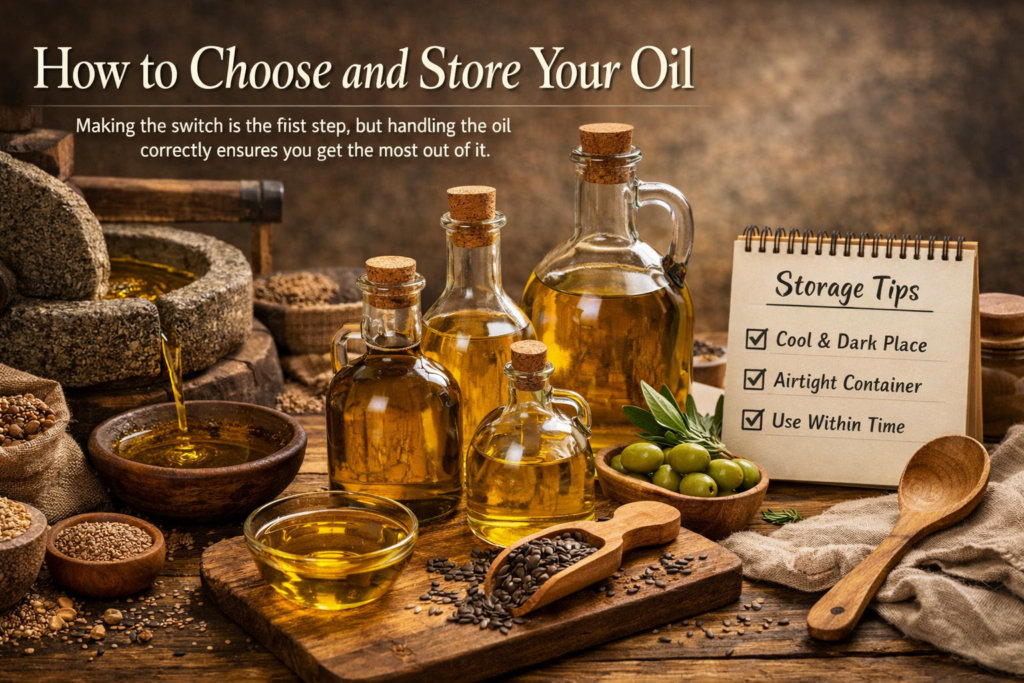
Making the switch is the first step, but handling the oil correctly ensures you get the most out of it.
The “OwnFresh” Quality Check
When buying sesame oil, look for these signs:
- Sediment: A little bit of sediment at the bottom of the bottle is actually a good sign. It shows the oil was just filtered through cloth and not chemically clarified.
- Aroma: It should smell like sesame seeds. If it smells like nothing, it’s likely refined.
- Packaging: Light destroys oils. Always prefer oils packed in dark glass bottles or tins, or store them in a dark cupboard. At OwnFresh, we prioritize packaging that preserves the integrity of the oil.
Storage Tips
- Keep it Cool: You don’t need to refrigerate it, but keep it away from the stove or direct sunlight. A cool, dark pantry is perfect.
- Use it Fresh: Because stone-pressed oils lack artificial preservatives, they have a shelf life of about 6 to 12 months. Buy in quantities you can consume within a few months to ensure peak freshness.
- Tight Cap: Oxygen can make oils go rancid. Always close the cap tightly immediately after use.
8. Conclusion: A Return to Roots
In our fast-paced modern lives, we often look for the “next big thing” in health imported avocados, expensive berries, or complex supplements. But sometimes, the biggest health upgrade is sitting right there in our past.
Stone-pressed sesame oil is not a new discovery; it is a forgotten friend. It brings the wisdom of our ancestors into our modern kitchens. It offers a way to cook that is delicious, a way to heal that is natural, and a way to live that is sustainable.
At OwnFresh, we are proud to be the bridge between the farm and your home. When you open a bottle of our Stone-Pressed Sesame Oil, you aren’t just pouring fat into a pan; you are pouring purity, health, and a little bit of history.
Ready to make the switch? Your heart, your skin, and your tastebuds will thank you.
Frequently Asked Questions (FAQs)
Q1: Can I use Stone-Pressed sesame oil for deep frying?
A: Yes, you can, but with care. Stone-pressed sesame oil has a high smoke point, making it suitable for deep frying. However, to preserve its maximum nutritional value (like antioxidants), it is best used for stir-frying, tempering (tadka), or sautéing. For deep frying, try not to reuse the oil too many times.
Q2: Is sesame oil good for oily skin?
A: Surprisingly, yes. Sesame oil is non-comedogenic, meaning it does not clog pores. It has anti-inflammatory properties that can actually help soothe acne-prone skin. However, if you have very oily skin, apply it as a massage oil and wash it off with a gentle cleanser after 30 minutes rather than leaving it on overnight.
Q3: How is Stone-Pressed oil different from Cold-Pressed oil?
A: They are very similar! “Cold-pressed” is the technical term for extracting oil without heat. “Stone-pressed” or Wood-pressed refers to the specific traditional machinery (Ghani/Chekku) used. Stone/Wood pressing is the best method of cold pressing because the heavy pestle crushes seeds slowly, preserving more natural flavor and nutrients compared to modern steel cold-press machines.
Q4: Can I use this oil for my baby’s massage?
A: Absolutely. Stone-pressed sesame oil is a traditional favorite for baby massage in India. It is warming, nourishing, and helps strengthen bones and muscles. Just ensure the oil is pure and unadulterated (like OwnFresh) to avoid any skin irritation. Always do a small patch test on the baby’s skin first.
Q5: Why is OwnFresh sesame oil darker than the one I buy at the supermarket?
A: That darkness is the color of purity! Supermarket oils are often refined and bleached to look transparent. Our Stone-Pressed sesame oil retains the natural pigments and sediments of the sesame seed, resulting in a deeper golden or amber color. This indicates that the nutrients and flavor are intact.
Q6: Does sesame oil expire?
A: Since stone-pressed sesame oil contains no artificial preservatives, it has a natural shelf life. Typically, it stays fresh for 6 to 12 months if stored correctly. Keep it in a cool, dark place away from direct sunlight to maintain its freshness for as long as possible.
Q7: Can I use sesame oil for “Oil Pulling”?
A: Yes, it is the most recommended oil for oil pulling in Ayurveda. Swishing 1 tablespoon of stone-pressed sesame oil in your mouth for 10-15 minutes helps reduce oral bacteria, plaque, and improves gum health. Spit it out afterwards and rinse with warm water.