In many Indian homes, the heart of cooking is not just the stove or the spices, it is the oil. From the first tadka in the morning to the final drizzle over a comforting dinner, cooking oil quietly shapes both flavour and health. Yet, when conversations around heart health begin, oils are often the first ingredient to be blamed or feared.
The truth is more balanced and far more reassuring.
Heart health is not about completely avoiding oils. It is about choosing the right oil, understanding how it behaves during cooking, and respecting traditional wisdom that values purity and moderation. Indian kitchens have followed these principles for generations, long before modern nutrition labels existed.
At OwnFresh, we believe that traditional stone pressed Kacchi Ghani oils, when used thoughtfully, fit naturally into a heart-conscious lifestyle. This article explores how cooking oils affect cardiovascular health, why fat quality matters more than fat fear, and how everyday Indian cooking can remain both delicious and heart-friendly without complicated rules or drastic changes.
Table of Contents
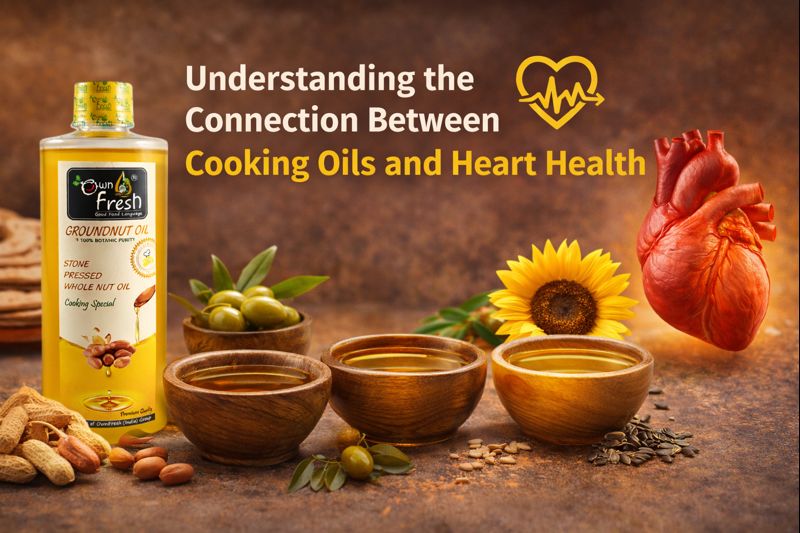
Understanding the connection between cooking oils and heart health
Heart health is influenced by many factors: diet, activity, stress, sleep, and genetics. Cooking oil plays a role because it is one of the most consistent sources of dietary fat in Indian meals.
Fats are essential for the body. They help absorb vitamins, support hormones, protect organs, and provide sustained energy. Problems arise not because fats exist in the diet, but because the type, quality, and quantity of fat are not balanced.
When oils are repeatedly overheated, chemically altered, or overly refined, they can contribute to unhealthy cholesterol patterns and inflammation. On the other hand, fresh, stable, naturally extracted oils used in sensible amounts support normal body functions, including heart health.
Indian cooking traditionally relied on oils that were:
- Locally sourced
- Minimally processed
- Used according to season and dish
This wisdom aligns well with modern understanding of cardiovascular wellness.
How cooking oils influence the heart in simple terms
To understand how oils affect the heart, it helps to look at what happens after oil enters the body.
When consumed, fats are broken down and transported in the blood as cholesterol and fatty acids. These fats can either:
- Support healthy blood vessels and cell function, or
- Contribute to plaque formation when the balance is disturbed
The outcome depends on:
- The type of fat
- The freshness and stability of the oil
- How the oil is cooked
- Overall diet balance
Oils that remain stable during cooking and contain beneficial fats tend to support better cholesterol balance. Oils that break down easily or contain damaged fats may stress the heart over time.
Types of fats explained for Indian home cooks
You do not need to memorise scientific terms to cook wisely. Think of fats in three broad groups.
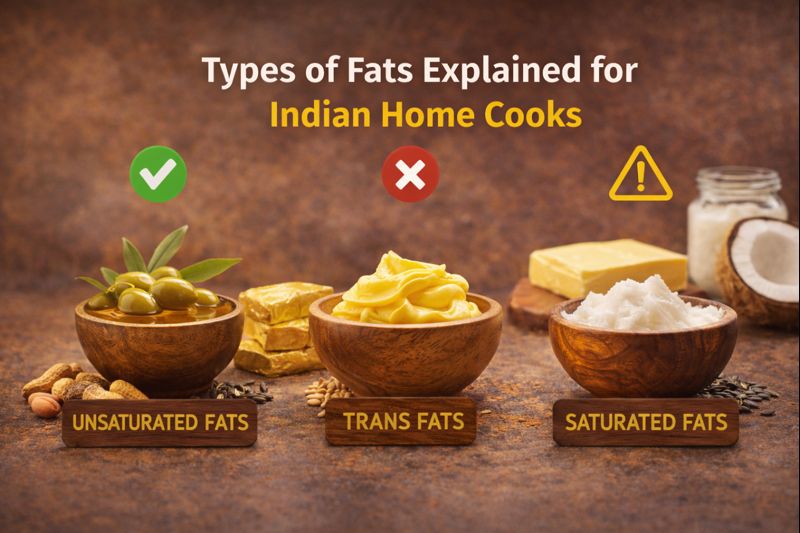
Saturated fats – not villains, but to be used wisely
Saturated fats are often misunderstood. They are naturally present in foods like ghee, coconut, and certain traditional oils.
In moderation, and as part of a balanced Indian diet, saturated fats:
- Provide energy
- Help in cooking stability
- Enhance flavour
Problems arise only when:
- Portions are excessive
- Overall diet lacks variety
- Physical activity is low
Traditional diets used saturated fats sparingly and often combined them with fibre-rich foods like vegetables, dals, and millets.
Unsaturated fats – supportive and flexible
Unsaturated fats are commonly found in oils like groundnut, mustard, sunflower, safflower, and sesame.
They help:
- Maintain healthy cholesterol balance
- Support flexible blood vessels
- Reduce dietary strain on the heart
These fats work best when oils are:
- Fresh
- Stone pressed or naturally extracted
- Not overheated repeatedly
Omega fats – small quantity, meaningful impact
Omega-3 and omega-6 fats are special types of unsaturated fats that the body cannot make on its own.
They support:
- Heart rhythm
- Blood vessel health
- Normal inflammatory response
Traditional Indian oils naturally contain these fats in small, useful amounts. Balance is key; neither excess nor absence is ideal.
Why oil quality matters more than oil type
Two bottles may carry the same oil name, yet behave very differently in your kitchen.
The difference lies in how the oil is extracted and processed.
Highly refined oils:
- Are exposed to high heat
- Undergo chemical treatment
- Lose natural antioxidants
- May contain residual solvents
Such oils may look clear and light, but nutritionally they are weakened.
Stone pressed Kacchi Ghani oils, like those from OwnFresh:
- Are extracted at low temperatures
- Retain natural nutrients
- Maintain original aroma and flavour
- Stay closer to their natural structure
For heart health, this means:
- Better stability during cooking
- Less formation of harmful by-products
- More natural balance of fats
Understanding stone pressed Kacchi Ghani oils in the Indian context
Kacchi Ghani is not a trend, it is a legacy.
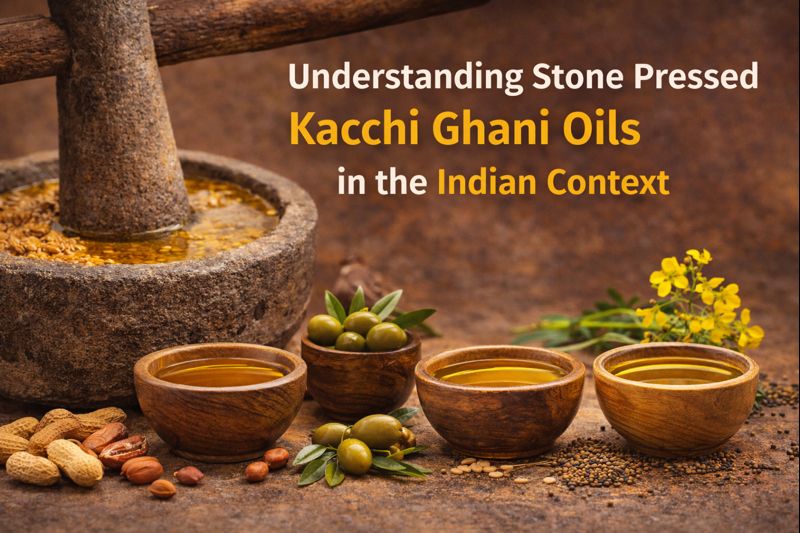
In traditional oil extraction, seeds are slowly crushed using wooden or stone presses. The low heat generated preserves the oil’s natural goodness.
OwnFresh stone pressed oils follow this age-old approach, ensuring:
- No chemical solvents
- No artificial refining
- No excessive heat damage
This gentle process supports heart health by keeping the oil closer to how nature intended it to be.
How traditional Indian cooking supports cardiovascular wellness
Indian cooking is often criticised for being “oil-heavy,” but this overlooks context.
Traditional meals typically include:
- Seasonal vegetables
- Whole grains
- Fermented foods
- Natural spices with digestive properties
When oils are used correctly:
- For tempering, not soaking
- For cooking, not drowning
- For flavour, not excess
They integrate smoothly into a heart-conscious diet.
The issue arises when:
- Oil quantities increase dramatically
- Highly processed oils replace traditional ones
- Fried foods become daily staples
Balance, not elimination, is the answer.
Choosing the right OwnFresh oil for everyday Indian cooking
Different dishes benefit from different oils. This was always understood in Indian kitchens.
Groundnut oil
- Ideal for sautéing, frying, and daily sabzis
- Stable at moderate cooking temperatures
- Nutty flavour complements Indian spices
Sesame oil
- Traditionally used in South Indian cooking
- Works well for tempering and slow cooking
- Deep, warming flavour
Mustard oil
- Strong aroma, excellent for pickles and eastern cuisines
- Supports digestion when used properly
Sunflower or safflower oil (stone pressed)
- Light flavour
- Suitable for everyday cooking
- Allows spices and vegetables to shine
Rotating oils across meals and seasons supports nutritional balance.
Practical ways to use heart-healthy oils in daily Indian meals
Small changes make a meaningful difference.
- Measure oil instead of pouring freely
- Use oil mainly for tempering and sautéing
- Avoid reheating the same oil multiple times
- Combine oil usage with steaming, pressure cooking, and roasting
- Let spices bloom briefly rather than burn
These habits protect both flavour and heart health.
Step-by-step heart-friendly traditional Indian recipes
Simple vegetable sabzi with stone pressed groundnut oil
Ingredients
- Mixed seasonal vegetables
- OwnFresh stone pressed groundnut oil
- Mustard seeds, cumin seeds
- Turmeric, salt
Steps
- Heat oil gently until warm, not smoking
- Add mustard and cumin seeds
- Add vegetables and turmeric
- Cook covered on low heat
- Finish with salt and fresh herbs
This method uses minimal oil while retaining nutrients.
Dal tadka with sesame oil
Ingredients
- Cooked toor or moong dal
- OwnFresh stone pressed sesame oil
- Garlic, cumin seeds, dry red chilli
Steps
- Heat sesame oil gently
- Add cumin and garlic
- Pour tadka over cooked dal
- Stir and serve
The oil enhances flavour without heaviness.
Traditional poha with light oil usage
Ingredients
- Flattened rice
- Vegetables
- OwnFresh stone pressed sunflower oil
Steps
- Heat a small amount of oil
- Add mustard seeds and curry leaves
- Add vegetables and soaked poha
- Toss gently
Balanced, light, and satisfying.
Common myths about cooking oils and heart disease
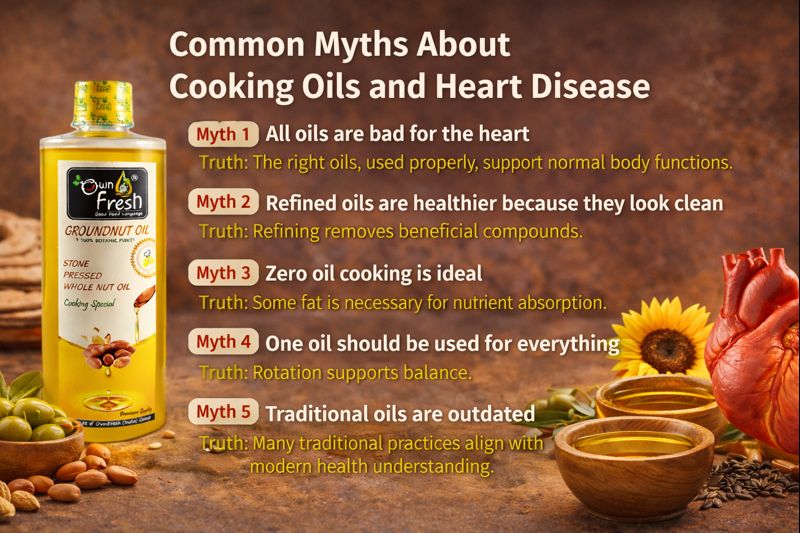
Myth 1: All oils are bad for the heart
Truth: The right oils, used properly, support normal body functions.
Myth 2: Refined oils are healthier because they look clean
Truth: Refining removes beneficial compounds.
Myth 3: Zero oil cooking is ideal
Truth: Some fat is necessary for nutrient absorption.
Myth 4: One oil should be used for everything
Truth: Rotation supports balance.
Myth 5: Traditional oils are outdated
Truth: Many traditional practices align with modern health understanding.
Tips to balance flavour and nutrition in Indian cooking
- Respect traditional methods
- Cook on medium to low heat
- Use fresh oil in small quantities
- Pair oil-rich dishes with fibre-rich foods
- Eat mindfully and moderately
Heart health is built daily, one meal at a time.
The OwnFresh philosophy and heart-conscious living
OwnFresh does not position oil as medicine or miracle food. Instead, it supports a return to mindful cooking, where purity, tradition, and balance guide everyday choices.
Stone pressed Kacchi Ghani oils fit naturally into Indian kitchens where food is cooked with care, shared with family, and enjoyed without guilt.
When cooking respects both tradition and moderation, heart health becomes a natural outcome not a constant worry.
Frequently asked questions
Is stone pressed oil good for heart patients?
Stone pressed oils are minimally processed and retain natural nutrients, making them suitable for heart-conscious diets when used in moderation.
How much oil should be used daily?
Quantity depends on age, activity level, and overall diet. Generally, small measured amounts spread across meals are recommended.
Can I fry food in stone pressed oil?
Yes, but frying should be occasional. Maintain moderate temperatures and avoid reusing oil repeatedly.
Should I completely avoid saturated fats?
No. Balance and portion control matter more than elimination.
Is rotating oils really necessary?
Yes. Different oils provide different fatty acid profiles, supporting nutritional balance.
Are traditional oils suitable for modern lifestyles?
Absolutely, when combined with mindful eating and activity.