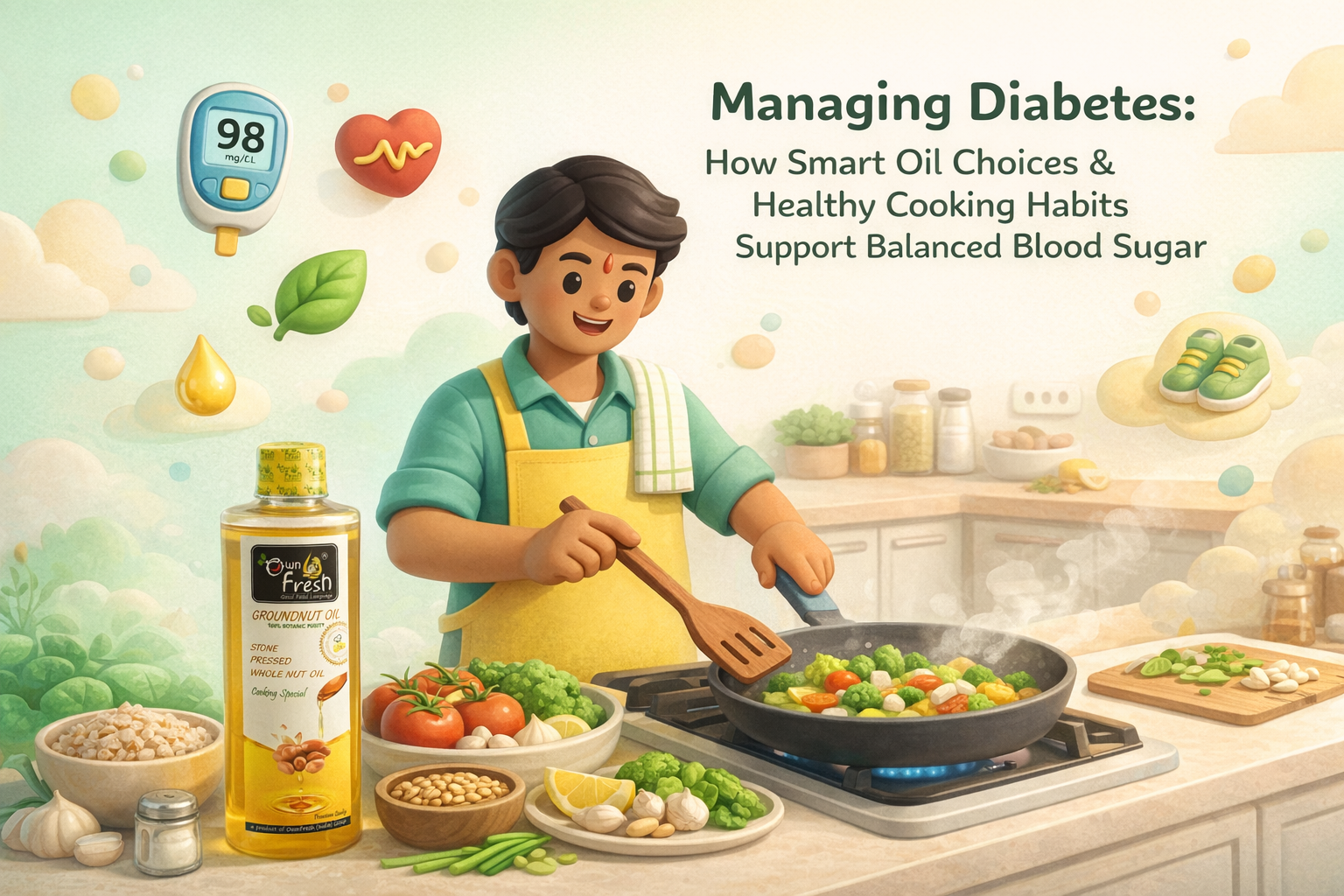
When you think of an Indian kitchen, the first thing that comes to mind is the beautiful aroma of spices sizzling in warm oil. The daily tadka is the heart of our cooking. But when someone in the family is diagnosed with diabetes, the kitchen suddenly becomes a place of strict rules. We often start fearing oil, thinking that a completely fat-free diet is the only way to manage blood sugar.
This fear takes away the joy of eating our traditional meals. However, managing diabetes does not mean you have to boil all your vegetables and give up on flavour. The secret lies in returning to our roots and making smarter choices. By understanding how different foods work together and choosing the right cooking oils, you can enjoy delicious, comforting Indian meals while keeping your blood sugar in check.
At OwnFresh, we believe that nature provides everything we need to stay healthy. Through pure, traditional ingredients and simple cooking habits, you can support your heart health and manage diabetes effectively. This guide will walk you through the simple kitchen wisdom that helps you make the right choices for your family.
Table of Contents
Understanding diabetes and the importance of daily diet in Indian homes
Diabetes is a condition where your body either does not produce enough insulin or cannot use it properly. Insulin is like a key that opens the doors of your cells, allowing glucose from the food you eat to enter and give you energy. When this process does not work well, sugar builds up in your blood. Over time, high blood sugar can affect your heart, nerves, and other organs.
In Indian homes, our diets are naturally rich in carbohydrates. We love our rice, rotis, parathas, and dals. Carbohydrates break down into sugar during digestion. If you eat too many simple carbohydrates without balancing them, your blood sugar can shoot up quickly. This is why diet plays the most important role in managing diabetes.
But managing your diet is not just about cutting out sugar and sweets. It is about slowing down the speed at which your food turns into glucose. This is where healthy fats step in. Adding the right kind of fat to your meals helps slow down digestion. When digestion is slower, sugar enters your bloodstream steadily, preventing those sudden, dangerous spikes.
A balanced diet for diabetes means combining complex carbohydrates, good quality proteins, fresh vegetables, and the right cooking oil. It is about creating harmony on your plate, much like how our ancestors used to eat before modern, highly processed foods took over our kitchens.
How fats and cooking oils influence your glucose levels and heart health
For a long time, we have been told that fat is bad for us. This is only half the truth. There are good fats and poor fats, and knowing the difference is vital for anyone managing diabetes.
Poor fats, like trans fats and excessive saturated fats, can cause inflammation in the body. Inflammation makes it harder for your cells to respond to insulin, a condition known as insulin resistance. When you are insulin resistant, your blood sugar stays high because the glucose cannot enter the cells efficiently. Poor fats can also raise your bad cholesterol, increasing the risk of heart problems, which are unfortunately common in people with diabetes.
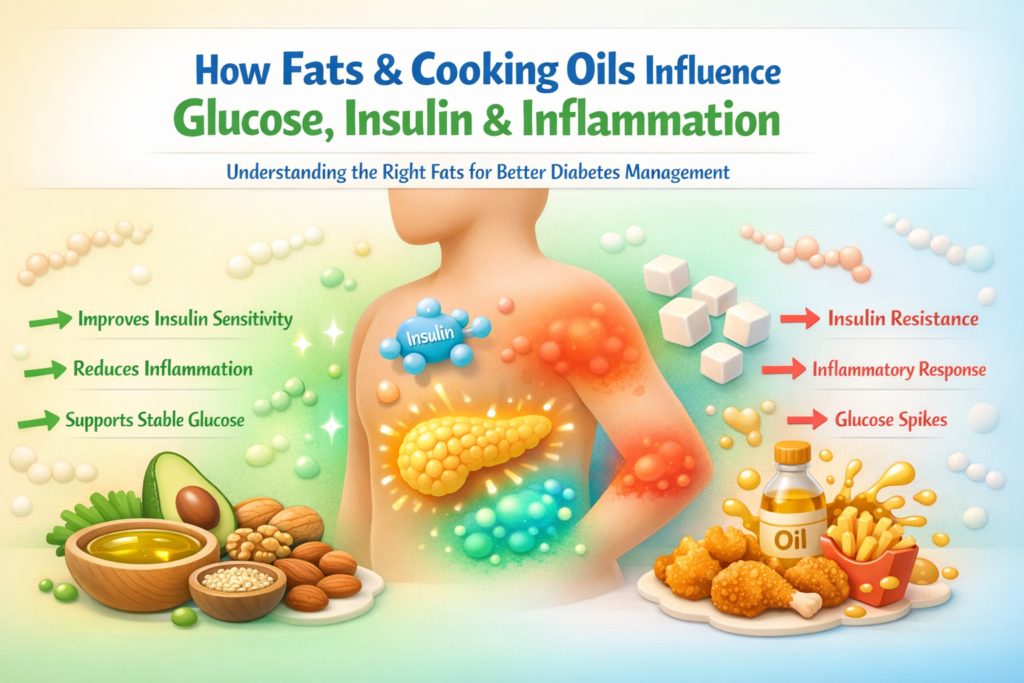
On the other hand, good fats are your best friends. These are the unsaturated fats found in natural plant-based oils, nuts, and seeds. When you cook your food in oils rich in good fats, several positive things happen in your body.
First, these fats coat the food in your stomach, slowing down the emptying process. This means the carbohydrates in your meal take longer to digest, giving you a gentle, steady release of energy rather than a sudden sugar rush. Second, healthy fats help reduce inflammation in the body. Lower inflammation improves your insulin sensitivity, meaning your body can use its insulin more effectively.
Lastly, good fats help absorb fat-soluble vitamins like vitamin A, D, E, and K from the vegetables you eat. So, when you temper your spinach or carrots in a high-quality Stone-Pressed oil, you are actually helping your body soak up all the powerful nutrients that fight against the complications of diabetes.
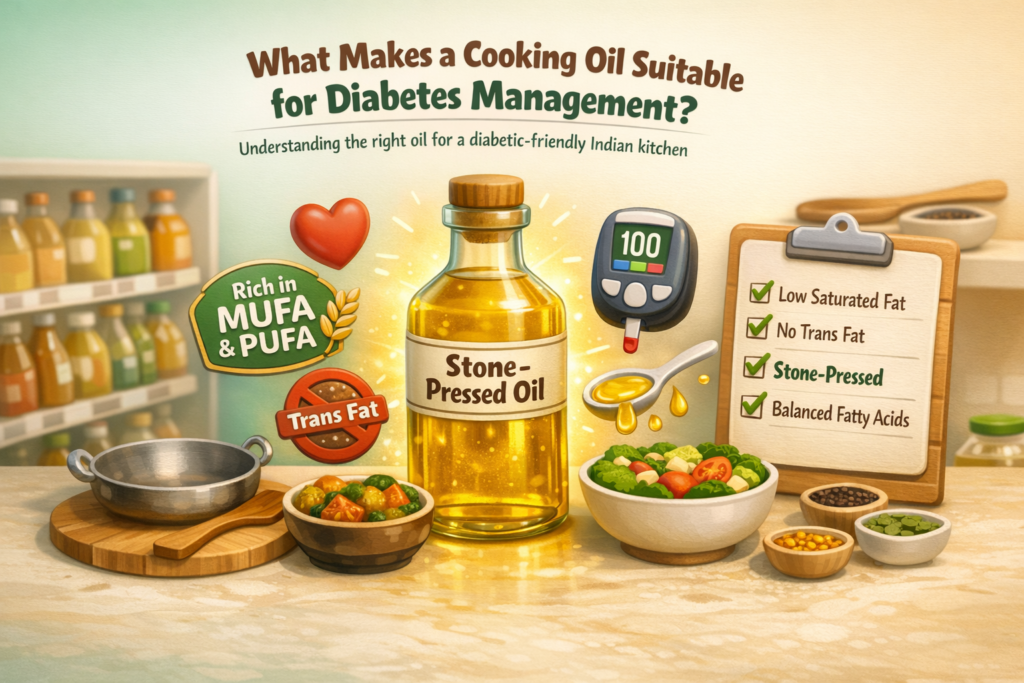
What makes a cooking oil suitable for a diabetic-friendly kitchen?
Walking down the grocery store aisle can be confusing. There are dozens of oils making bold health claims. But to understand what truly makes an oil safe and beneficial for someone with diabetes, you just need to look at a few simple qualities.
High unsaturated fats
A good cooking oil should be high in monounsaturated fats (mufa) and polyunsaturated fats (pufa). These are the heart-healthy fats that help lower bad cholesterol and maintain healthy blood vessels. Oils with a good balance of these fats help keep your cardiovascular system strong, which is a major priority in diabetes care.
Low saturated fats
While our bodies need a little bit of saturated fat, too much of it can lead to plaque buildup in the arteries and increase insulin resistance. A diabetic-friendly oil will have a lower percentage of saturated fats compared to unsaturated ones.
Balanced omega ratios
You might have heard of omega-3 and omega-6 fatty acids. Both are essential, meaning your body cannot make them, so you must get them from food. However, they need to be in balance. Too much omega-6 and too little omega-3 can promote inflammation. Traditional oils, when used in a balanced way, help maintain a better ratio, keeping inflammation away from your cells.
Natural antioxidants
Pure oils naturally contain antioxidants like vitamin E. Antioxidants fight oxidative stress in the body. High blood sugar causes a lot of oxidative stress, which damages cells over time. Oils that retain their natural antioxidants act as a protective shield for your body.
A high smoke point for Indian cooking
Indian cooking involves high heat. We fry spices, sauté onions until they are golden brown, and make deep-fried snacks. Every oil has a smoke point, which is the temperature at which it stops simmering and starts smoking. When an oil crosses its smoke point, it breaks down and releases harmful chemicals called free radicals. These free radicals trigger inflammation and worsen diabetes complications. Therefore, the right oil must have a high enough smoke point to handle the heat of a tadka without turning toxic.
The journey from refined to traditional: why Stone-Pressed oils are a better choice
To understand why Stone-Pressed oils are superior, we must look at how modern refined oils are made. Most refined oils go through a harsh industrial process. The seeds are heated to extremely high temperatures and treated with chemical solvents to extract every last drop of oil. Then, the oil is bleached to remove its natural colour and deodorised to remove its natural smell.
By the time a refined oil reaches a plastic bottle, it has lost almost all its natural nutrients, antioxidants, and original character. The high heat process alters the structure of the fats, sometimes creating harmful compounds.
Now, let us look at traditional Stone-Pressed oils, often known as kachi ghani or wood-pressed oils. This is the way oil was made in Indian villages for thousands of years. The seeds are slowly crushed at room temperature using a wooden or stone press. No external heat is applied, and no chemicals are added.
Because the oil is extracted gently, it retains its natural colour, rich aroma, and deep flavour. More importantly, it holds onto all its heart-healthy nutrients, vitamins, and antioxidants. For someone managing diabetes, these intact nutrients are incredibly valuable for reducing inflammation and keeping the heart strong.
At OwnFresh, we honour this ancient wisdom. We believe that food should be consumed as close to its natural state as possible. Stone-Pressed oils are a little thicker, more flavourful, and infinitely better for your body because they are pure, honest, and completely natural.
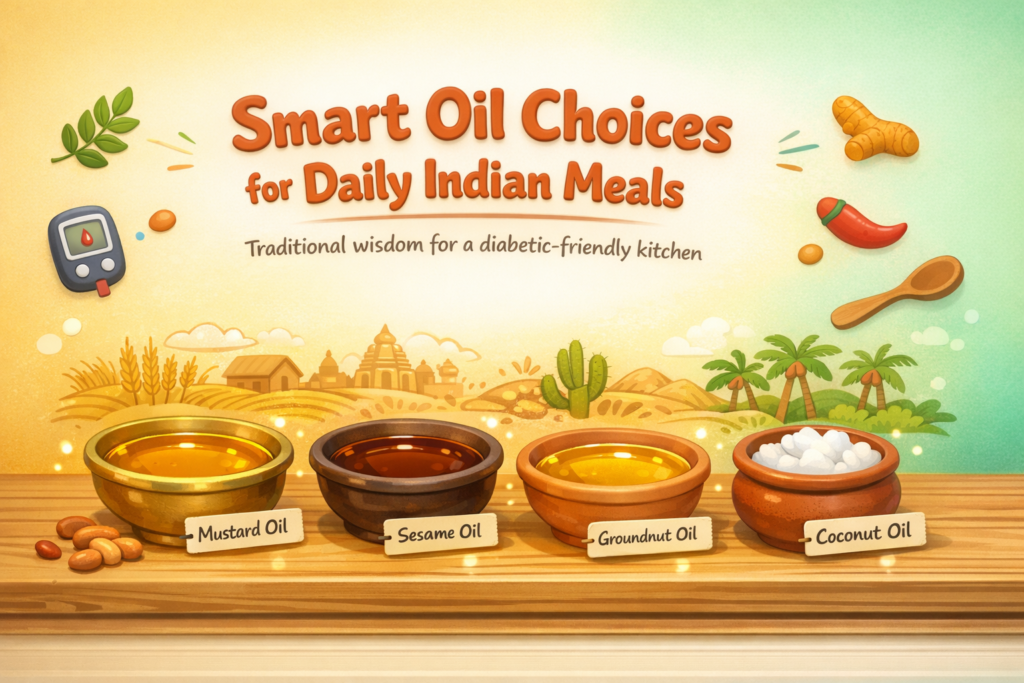
Smart oil choices for daily Indian meals
Different regions in India have used different oils for centuries based on what grew locally. This traditional wisdom holds the key to healthy eating today. Here are some of the best natural oils you can bring into your diabetic-friendly kitchen.
Pure mustard oil (sarson ka tel)
Mustard oil is a staple in North and East India, and for good reason. It has a beautiful balance of monounsaturated and polyunsaturated fats. It also contains an ideal ratio of omega-3 and omega-6 fatty acids. The pungent aroma of pure Stone-Pressed mustard oil comes from a compound that is highly antibacterial and anti-inflammatory. Because it has a high smoke point, it is perfect for everyday sabzis, curries, and tadkas.
Stone-Pressed groundnut oil (moongfali ka tel)
Groundnut or peanut oil is a classic favourite in Western and Southern India. It is naturally rich in vitamin E and monounsaturated fats, making it very similar in health benefits to olive oil, but much better suited for Indian cooking temperatures. It has a high smoke point, making it safe for sautéing and mild frying without breaking down into harmful compounds. The mild, nutty flavour of groundnut oil enhances the taste of dals and dry vegetable preparations without overpowering them.
Traditional sesame oil (til ka tel)
Sesame oil is an absolute powerhouse of nutrition. It contains unique antioxidants called sesamol and sesamin, which are known to be incredibly beneficial for heart health and keeping blood pressure in check. It adds a rich, earthy flavour to food and is highly stable during cooking. It is a wonderful choice for managing diabetes naturally because of its strong anti-inflammatory properties.
Using pure ghee in moderation
Ghee has been misunderstood for decades, but modern science is finally agreeing with Ayurveda. Pure cow ghee is rich in short-chain fatty acids which are easy to digest and excellent for the gut. A healthy gut is deeply connected to better blood sugar control. While ghee does contain saturated fat, having a small spoonful poured over your dal or roti lowers the glycemic index of the meal. This means your roti will not spike your blood sugar as fast as a dry roti would. The key with ghee is strict portion control.
Practical tips for using heart-healthy oils without losing the authentic Indian flavour
Switching to healthy, Stone-Pressed oils is a wonderful step, but how you use them in the kitchen matters just as much. Here are some practical ways to adapt your daily cooking habits to support diabetes management.
Practice portion control
Even the healthiest Stone-Pressed oil is still dense in calories. Weight management is a crucial part of controlling diabetes. You do not need large amounts of oil to make food tasty. Invest in a good quality oil dispenser or use a measured spoon instead of pouring directly from the bottle. Usually, three to four teaspoons of oil per person per day is a healthy limit, but you should always consult your doctor or dietitian for your specific needs.
Rotate your oils
No single oil has every single nutrient in the perfect amount. The best strategy is to rotate your oils or use different oils for different meals. For example, you might use groundnut oil for your morning upma or poha, mustard oil for your lunch sabzi, and a drizzle of ghee on your dinner dal. This gives your body a diverse range of fatty acids and antioxidants.
Understand the right cooking temperatures
Stone-Pressed oils retain their natural thickness and flavour, which means they behave differently in the pan compared to watery refined oils. You do not need to heat them until they smoke heavily. Warm the oil gently on a medium flame. Once it is warm enough for mustard seeds to crackle, add your spices. This gentle heating protects the vital nutrients in the oil while releasing the medicinal properties of your spices.
Adopt healthier cooking methods
Instead of deep-frying vegetables like potatoes or brinjal, try shallow frying, steaming, or roasting them with a light brush of oil. For wet curries, you can dry-roast your onion and tomato masala first and add just a small spoon of oil at the end to bring the flavours together. This simple trick drastically cuts down the total fat in the dish without compromising the authentic Indian gravy texture.
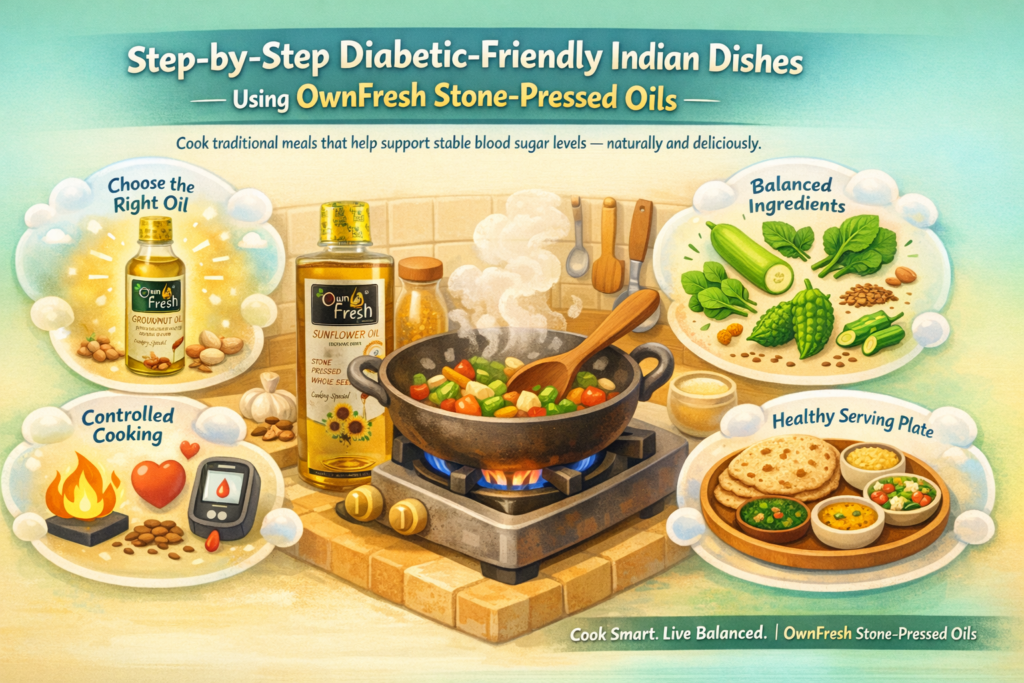
Step-by-step examples of diabetic-friendly Indian dishes using OwnFresh oils
To make these concepts practical, let us look at how you can cook delicious, traditional meals that actively support stable blood sugar levels.
Comforting methi moong dal with a light mustard oil tadka
Fenugreek leaves (methi) are famous for their blood-sugar-lowering properties. When paired with high-protein moong dal and the healthy fats of mustard oil, this becomes a perfect meal.
First, wash and boil yellow moong dal with turmeric and a little salt until soft. In a separate iron kadhai, warm one teaspoon of Stone-Pressed mustard oil. Wait for the raw smell of mustard to gently fade, but do not let it smoke excessively. Add cumin seeds, finely chopped garlic, and green chillies. Garlic provides a wonderful flavour without raising blood sugar. Add freshly washed and chopped methi leaves to the warm oil and sauté them lightly for two minutes. This light cooking helps the body absorb the vitamins from the methi. Finally, pour the boiled dal into the kadhai, squeeze some fresh lemon juice for vitamin C, and enjoy it with a millet roti.
Sautéed bhindi (okra) in Stone-Pressed groundnut oil
Okra is an excellent vegetable for people with diabetes because it is packed with soluble fibre. This fibre forms a gel in the stomach, slowing down sugar absorption.
Wash and completely dry the bhindi before chopping to prevent stickiness. Heat one tablespoon of groundnut oil in a heavy-bottomed pan. Groundnut oil brings out a sweet, nutty aroma that pairs beautifully with green vegetables. Add a pinch of carom seeds (ajwain) and turmeric. Add the chopped bhindi and cook on a low flame. Do not cover the pan, as the steam will make it mushy. The groundnut oil coats the vegetable perfectly, preventing it from sticking to the pan while keeping the total oil requirement very low. Add dry mango powder (amchur) and salt right at the end. This crisp, flavourful sabzi pairs perfectly with a bowl of homemade curd.
Healing bajra (pearl millet) khichdi with pure cow ghee
Millets are complex carbohydrates that are highly recommended for diabetes because of their low glycemic index. Bajra is warming, filling, and slow to digest.
Soak bajra and a little split green moong dal for a few hours. In a pressure cooker, add the soaked mixture, chopped carrots, beans, and plenty of water. Cook until it is soft and porridge-like. The magic happens at the end. Take the hot khichdi in a bowl and pour exactly one small teaspoon of pure ghee over it. Add a pinch of roasted cumin powder. The fat from the ghee wraps around the complex carbohydrates of the bajra, ensuring that your blood sugar remains absolutely stable throughout the night. It is a bowl of pure, traditional comfort.
Common misconceptions about fats, oils, and sugar control in Indian kitchens
When navigating a diabetes diagnosis, families often hear a lot of conflicting advice. Let us clear up some of the most common myths that float around our kitchens.
The myth that zero oil is the best approach
Many people completely stop using oil, boiling all their meals. This is counterproductive. Without fat, the stomach empties very quickly, causing the carbohydrates in the meal to spike blood sugar instantly. Zero fat also leads to dull skin, hair fall, and poor absorption of essential vitamins. You need fat to be healthy; you just need the right kind and in the right amount.
The myth that all fats will make you gain weight instantly
Weight gain happens when you consume more calories than you burn, regardless of where those calories come from. While fats are calorie-dense, eating natural, Stone-Pressed oils in moderation keeps you feeling full and satisfied for longer. This prevents unhealthy snacking between meals, which is often the real cause of weight gain and blood sugar fluctuations.
The myth that imported oils are always better than local oils
There is a heavy marketing push suggesting that oils from other countries are the only healthy options for the heart. While those oils are fine for cold salads, they are not always suitable for the high heat of Indian tadka. Our traditional oils like mustard, groundnut, and sesame have been used by our ancestors for centuries. They are perfectly suited to our local climate, our traditional recipes, and our bodily needs.
Everyday cooking mistakes to avoid when you are managing diabetes
Even if you buy the best quality ingredients, certain common kitchen habits can ruin their health benefits. Here are the mistakes you should watch out for.
Reusing frying oil
In many households, oil left over from frying puris or pakoras is saved in a container and used for daily sabzis. This is a very harmful practice. When oil is heated to a frying temperature, cooled, and then heated again, its chemical structure breaks down. It creates dangerous trans fats and free radicals. These compounds cause massive inflammation in the body and severely damage cardiovascular health. Always use fresh oil for daily cooking, and if you must fry something, use the minimal amount of oil required and safely discard the leftover.
Overheating Stone-Pressed oils
Because people are used to refined oils that do not smell, they often overheat Stone-Pressed oils until heavy smoke fills the kitchen. Stone-Pressed oils have a natural, earthy aroma. You only need to heat them gently. Overheating destroys the natural vitamin E and antioxidants that are meant to protect your heart.
Storing oil incorrectly
Stone-Pressed oils are completely natural and do not contain artificial chemical preservatives. If you leave the bottle open near the hot stove, the heat and light will cause the oil to go rancid quickly. Rancid oil tastes bitter and is bad for your digestion. Always store your oils in a cool, dark place inside your kitchen, and keep the cap tightly closed.
Embracing purity and tradition with OwnFresh
Managing diabetes is not about restriction; it is about returning to a lifestyle that respects the natural harmony of food. Our grandmothers did not have access to highly processed foods or chemically refined oils, and lifestyle diseases were far less common in their times.
By making small, thoughtful changes—like choosing complex carbohydrates over simple sugars, eating plenty of seasonal vegetables, and cooking with pure, unrefined oils—you can take control of your health.
At OwnFresh, we are deeply committed to bringing back the purity of traditional Indian foods. We understand that what you feed your family is a matter of trust. That is why our products are crafted with the utmost respect for nature and ancient methods, ensuring that you get only the authentic nutrition your body truly needs.
Taking care of your blood sugar starts in your kitchen, with the ingredients you select and the love you pour into your cooking. Trust in the wisdom of our traditions, make smart choices daily, and enjoy the journey of wholesome, flavourful, and healthy eating.
Frequently asked questions (FAQs)
Which oils are best for diabetes-conscious cooking?
For Indian cooking, Stone-Pressed mustard oil, groundnut oil, and sesame oil are excellent choices. They contain healthy unsaturated fats, balanced omegas, and a high smoke point, making them safe and beneficial for maintaining heart health and stable glucose levels.
How do healthy oils support blood sugar control?
Healthy fats slow down the digestion of carbohydrates in your stomach. This means the sugar from your food enters your bloodstream at a slow, steady pace rather than causing a sudden spike. They also help reduce inflammation, which improves how your body uses insulin.
Can diabetic patients fry foods safely?
While deep-fried foods should be eaten very rarely, you can use healthier methods like shallow frying or pan-roasting with a small amount of Stone-Pressed oil. If you do fry, never reuse the leftover oil, as reheating creates harmful chemicals that cause inflammation.
How much oil should be used daily?
While requirements vary based on individual weight and health goals, a general guideline is about 3 to 4 teaspoons (15-20 ml) of healthy oil per person per day. It is always best to consult your doctor or dietitian for personalized advice.
Are Stone-Pressed oils better than refined ones for diabetes?
Yes. Stone-Pressed oils are extracted naturally without harsh chemicals or high heat. This gentle process retains their natural antioxidants, vitamins, and healthy fats. Refined oils lose most of these protective nutrients during the harsh industrial refining process.
Can I eat ghee if I have diabetes?
Yes, pure cow ghee can be consumed in strict moderation. Adding a small teaspoon of ghee to complex carbohydrates like rotis, dals, or millets can actually lower the glycemic index of the meal, helping to prevent sharp spikes in blood sugar.