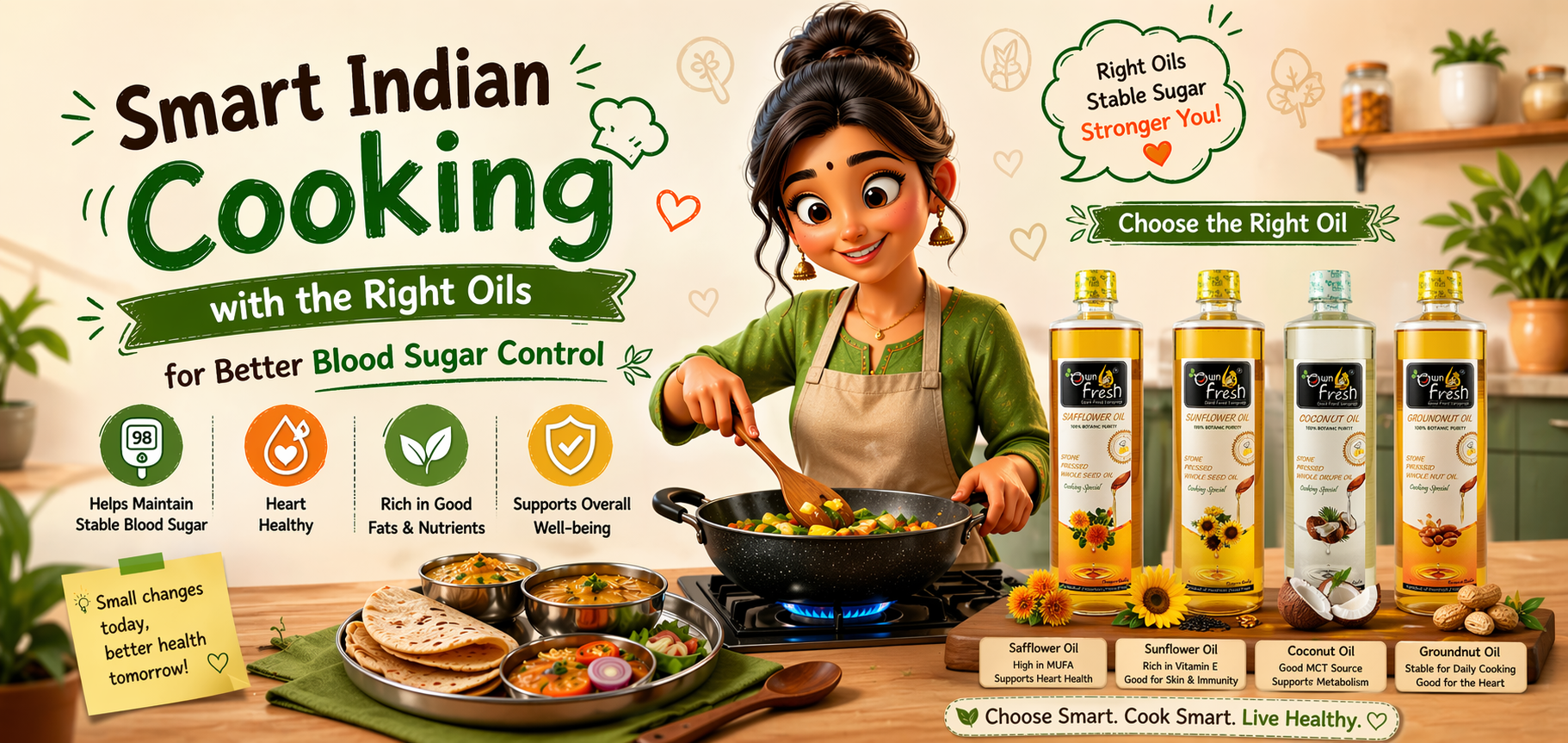
The Indian kitchen is the heart of the home, a place where traditions are passed down, and love is served in the form of warm, comforting meals. However, with the rising concerns about lifestyle diseases, particularly diabetes, many families are taking a closer look at how they cook. When managing blood sugar, we often focus entirely on cutting down sweets, reducing rice, or eating fewer rotis. While managing carbohydrates is certainly important, we tend to overlook a fundamental ingredient that touches almost every dish we prepare: cooking oil.
From the tempering of spices in our daily dal to the sautéing of fresh green vegetables, oil is a constant presence. But did you know that the type of oil you use, and how you use it, can significantly impact your blood sugar levels? Cooking oils play a quiet but powerful role in how our bodies process food, how insulin functions, and how stable our energy levels remain throughout the day.
Choosing the right cooking oil is not just about reducing calories; it is about selecting healthy fats that actively support your body. Pure, traditional, and nutritionally rich oils, like those crafted by OwnFresh, offer a simple yet highly effective way to make your daily meals more diabetes-friendly. This comprehensive guide will walk you through the science of blood sugar, the importance of healthy fats, and practical, everyday tips for your Indian kitchen.
Table of Contents
Understanding blood sugar and why it matters in our daily lives
To understand why cooking oils matter, we first need to understand what happens inside our bodies when we eat. Whenever we consume food, especially carbohydrates like wheat, rice, potatoes, or lentils, our digestive system breaks it down into a simple sugar called glucose. This glucose enters our bloodstream, causing our blood sugar levels to rise.
Glucose is essential. It is the primary fuel that gives our body the energy to think, work, and move. However, glucose cannot do its job if it just floats around in the blood. It needs to enter our cells. This is where insulin comes into the picture. Insulin is a hormone produced by the pancreas, and you can think of it as a biological key. Its job is to unlock the doors of your cells so that glucose can enter and be used for energy.
When someone has diabetes or prediabetes, this system stops working smoothly. In some cases, the pancreas does not produce enough insulin. In other cases, which is very common in type 2 diabetes, the body produces insulin, but the cells become stubborn and refuse to open their doors. This condition is known as insulin resistance. Because the glucose cannot enter the cells, it starts piling up in the bloodstream, leading to high blood sugar levels.
Consistently high blood sugar can cause a lot of damage over time, affecting the nerves, eyes, kidneys, and heart. Therefore, the goal of a diabetes-friendly diet is not just to avoid sugar, but to eat in a way that helps the body use insulin more effectively and prevents sudden, sharp spikes in blood sugar. This is exactly where your choice of cooking oil becomes incredibly important.
The connection between cooking oils and blood sugar levels
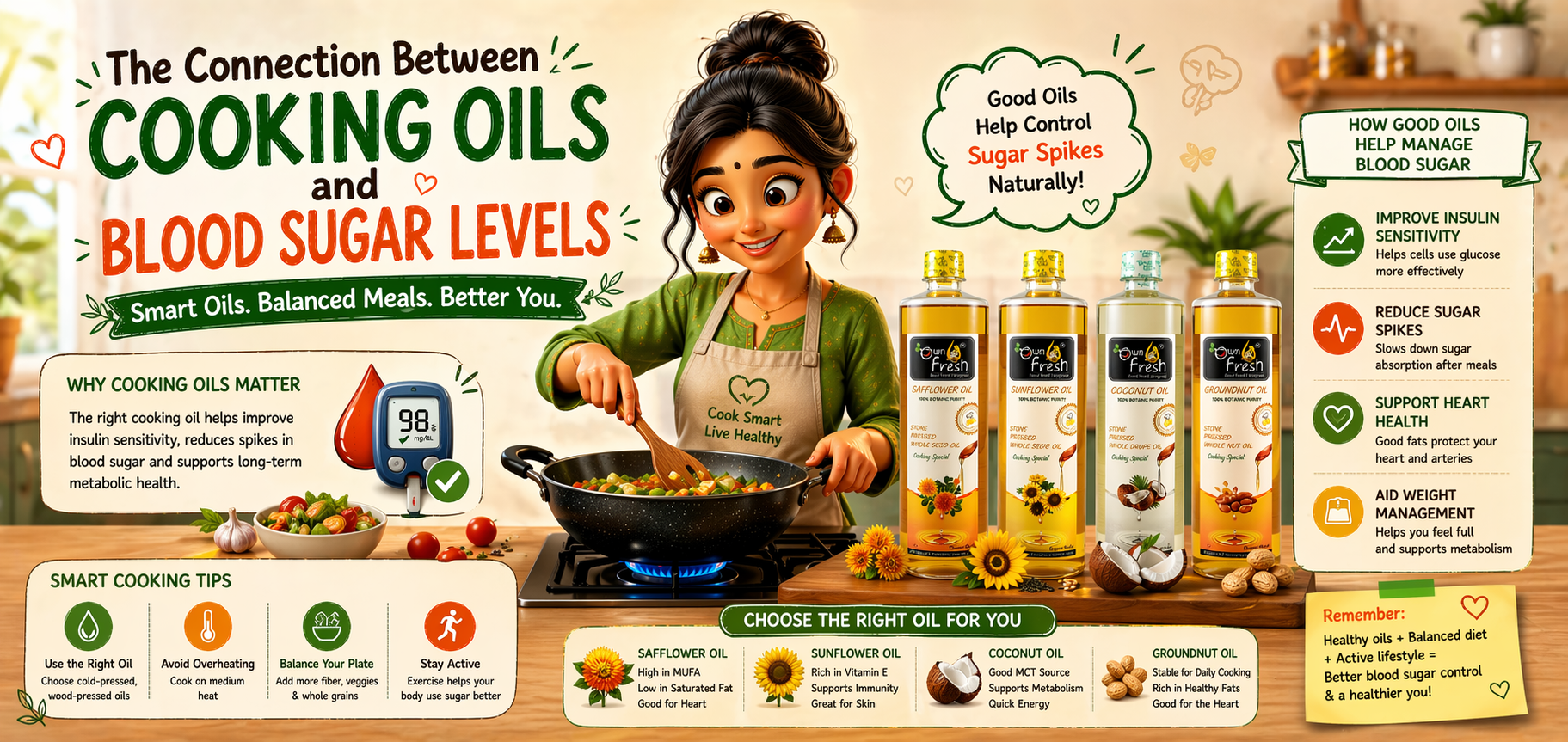
It is a common misconception that because oils and fats do not contain carbohydrates, they have no impact on blood sugar. While it is true that eating pure fat will not directly cause a spike in your glucose levels, fats have a profound indirect effect on how your body handles the carbohydrates you eat alongside them.
When you eat a meal that contains carbohydrates along with a good source of healthy fat, the fat physically slows down the emptying of your stomach. Because digestion takes longer, the carbohydrates are broken down into glucose at a much slower, steadier rate. Instead of a sudden flood of sugar entering your bloodstream which forces the pancreas to pump out large amounts of insulin in a panic the sugar drips in slowly. This gentle release makes it much easier for your body to manage blood sugar levels and prevents the sharp spikes and sudden crashes that leave you feeling tired and hungry.
Healthy fats versus unhealthy fats
Not all fats perform this helpful function. In fact, the wrong types of fat can make diabetes management much harder. To make smart choices, we need to understand the difference between healthy and unhealthy fats.
Unhealthy fats include trans fats and highly processed saturated fats. Trans fats are often found in partially hydrogenated oils, reusing frying oils multiple times, and many packaged bakery goods. These fats are harmful because they trigger inflammation inside the body. Inflammation is like a silent fire, and it actively worsens insulin resistance. When your body is inflamed, your cells become even more stubborn and resistant to the insulin trying to let glucose in.
Healthy fats, on the other hand, are your body’s allies. These are primarily monounsaturated fats (MUFAs) and polyunsaturated fats (PUFAs). These fats help lower bad cholesterol, protect the heart, and most importantly, reduce inflammation. By calming the body, healthy fats help repair the cellular environment, making your cells more responsive to insulin. Natural, minimally processed oils extracted from seeds and nuts such as mustard oil, groundnut oil, and sesame oil are excellent sources of these health-promoting fats.
How healthy fats improve insulin sensitivity
The cells in our body are surrounded by a protective membrane made entirely of fats, or lipids. When you consume a diet high in unhealthy, rigid trans fats, these cell membranes become stiff and hard. A stiff cell membrane makes it very difficult for insulin receptors to function properly.
However, when you regularly consume healthy, natural fats, those fats are incorporated into your cell walls. The cell membranes become flexible, fluid, and healthy. A flexible cell wall allows the insulin receptors to work efficiently, meaning the “key” fits into the “lock” much easier. This naturally improves insulin sensitivity, meaning your body needs less insulin to clear glucose from the bloodstream. By simply swapping highly refined oils for pure, traditional oils, you are literally changing the structure of your cells for the better.
What are sugar-free cooking oils and why do we need them?
When we hear the term “sugar-free,” we usually think of artificial sweeteners or diet soft drinks. So, what does it mean when we talk about sugar-free cooking oils?
In their purest, most natural state, all plant-based cooking oils are completely free of carbohydrates and sugars. They are 100% fat. However, the commercial cooking oil market is flooded with highly refined, chemically treated, and sometimes adulterated products. During harsh refining processes, oils are subjected to extreme heat, bleaching, and deodorising. While this does not add sugar to the oil, it completely strips away the natural nutrients, antioxidants, and beneficial plant compounds that help the body manage blood sugar.
When we talk about sugar-free, diabetes-friendly oils, we are talking about oils in their most authentic, unadulterated form. These are pure fats that have not been mixed with cheaper, inflammatory alternatives. A naturally sugar-free, pure oil provides the body with clean energy and slows down glucose absorption without introducing harmful chemical residues or trans fats. Choosing brands like OwnFresh ensures that you are getting oil that is exactly what nature intended: a rich, wholesome fat source that supports metabolic health rather than working against it.
The role of omega fatty acids and antioxidants in diabetes management

A major reason why pure, traditional oils are beneficial for blood sugar control is their rich nutritional profile, specifically their omega fatty acids and antioxidants.
Omega-3 and omega-6 fatty acids are known as essential fats. Our bodies cannot produce them, so we must get them from our food. While both are necessary, the modern diet is often overloaded with omega-6 fats (found in highly refined vegetable oils like soybean or sunflower oil) and deficient in omega-3 fats. This imbalance creates inflammation, which, as we discussed earlier, worsens insulin resistance. Using traditional oils, specifically those that are minimally processed, helps provide a better balance of these fats, calming inflammation and supporting healthy cellular function.
Antioxidants are equally crucial. When blood sugar levels remain high over time, it creates a condition called oxidative stress in the body. You can imagine oxidative stress as a kind of internal rusting that damages blood vessels, organs, and nerves. Antioxidants are the body’s natural defense against this rusting.
Pure, cold-pressed, or wood-pressed oils retain their natural antioxidants, such as vitamin E and various phytosterols, because they are not destroyed by high-heat processing. Vitamin E is a powerful antioxidant that helps protect the cells from oxidative damage caused by fluctuating blood sugar levels. By cooking with nutrient-rich oils, you are seamlessly adding a layer of internal protection to your family’s daily meals.
Why traditional and minimally processed oils are the best choice
For thousands of years, Indian cooking relied on indigenous oils extracted using simple, mechanical methods. The traditional kachi ghani (cold-pressed or wood-pressed) method involved crushing oilseeds at low speeds without the use of external heat. This gentle process allowed the oil to retain its natural aroma, flavor, thick texture, and entire nutritional profile.
In recent decades, there has been a shift towards refined oils. These oils are clear, odorless, and look clean, but the process required to make them that way is harsh. Refined oils are treated with chemical solvents like hexane to extract every last drop of oil from the seed. They are then heated to extremely high temperatures to remove any smell or color. This high-heat processing destroys the delicate omega fatty acids, strips away the antioxidants, and can even create harmful by-products.
When managing diabetes, eating foods as close to their natural state as possible is always the golden rule. This applies to oil just as much as it applies to vegetables or grains. Minimally processed, traditional oils are pure and nutritionally rich. They provide the body with the exact type of fats needed to improve insulin response. The OwnFresh philosophy centers exactly on this return to roots, offering traditional oils that carry the wisdom of the past, making them the safest and healthiest choice for everyday home cooking.
Everyday Indian cooking tips to maintain stable blood sugar
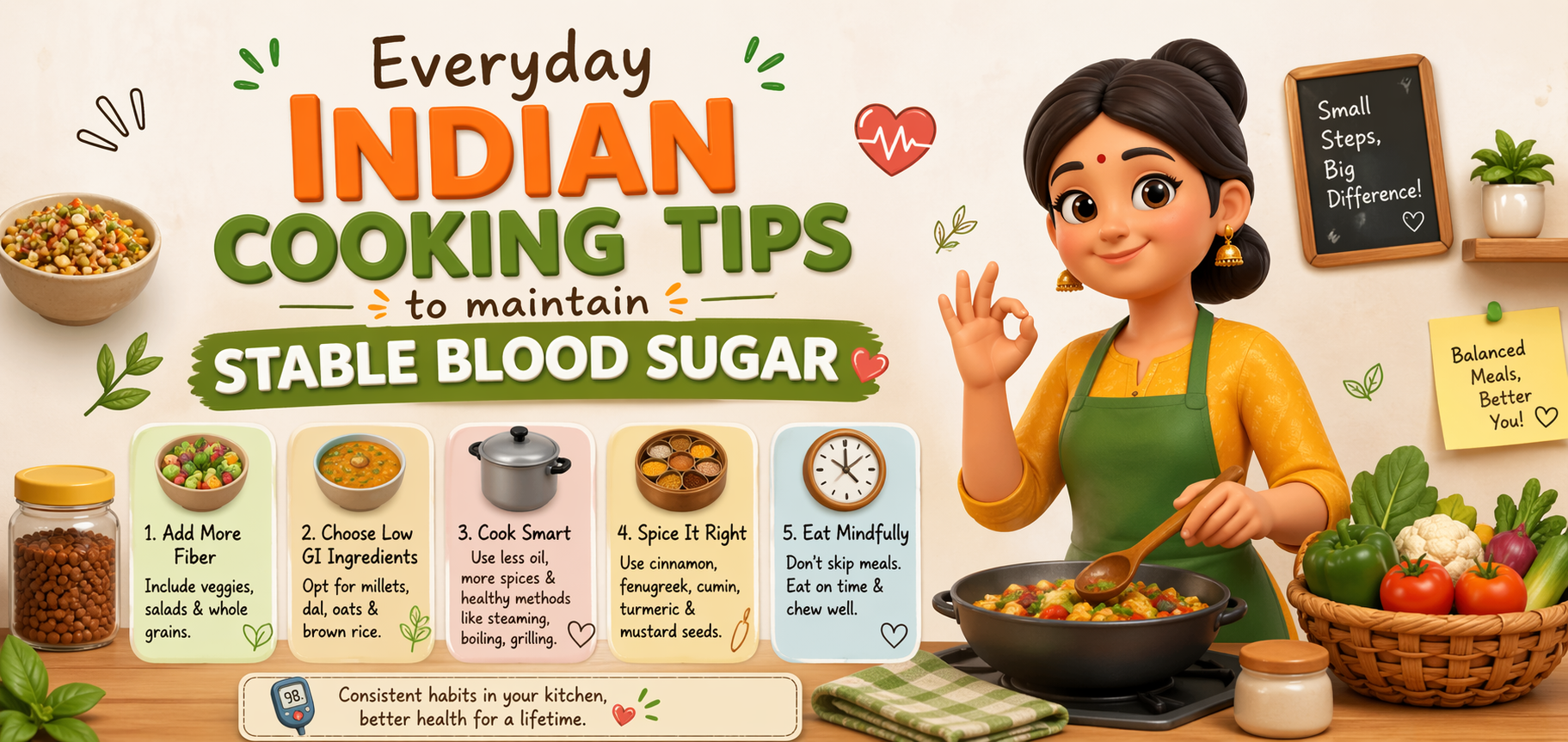
Having the right oil in your pantry is only the first step. How you use that oil in your everyday cooking determines how effectively you can manage your blood sugar. Indian cooking involves a variety of techniques from deep-frying to slow simmering and adjusting these methods can make a massive difference in your metabolic health.
Here are some practical, diabetes-friendly cooking tips for the Indian home:
- Understand smoke points: Every oil has a temperature at which it stops simmering and starts smoking. This is called the smoke point. When oil is heated past its smoke point, its healthy fats break down and turn into toxic compounds that trigger inflammation and worsen insulin resistance. For high-heat cooking like deep-frying, choose an oil with a high smoke point. For gentle sautéing or tempering, oils with lower smoke points are perfectly fine.
- Balance carbohydrates with healthy fats: If you are preparing a carbohydrate-heavy dish, like a potato curry or a rice dish, ensure you are incorporating a good quality, pure oil. The fat will slow down the digestion of the starches, preventing a rapid spike in blood sugar.
- Prioritize shallow frying and sautéing: Deep-fried foods like pakoras, samosas, and puris absorb a massive amount of oil. While the fat itself isn’t the enemy, excessive calorie intake can lead to weight gain, which is a major driver of insulin resistance. Shift your focus to sautéing, stir-frying, or shallow frying using a minimal but sufficient amount of high-quality oil.
- Include fiber in every meal: Oil works beautifully with fiber to slow down digestion. When cooking vegetables, do not overcook them to a mush. Leave a slight crunch to retain their natural fiber. A sabzi cooked in traditional oil with its fiber intact is a perfect, blood-sugar-stabilizing dish.
- Use raw oils for garnishing: Heating oil isn’t the only way to consume it. Drizzling a small spoonful of raw, cold-pressed oil over a warm bowl of dal, a fresh salad, or a chutney preserves 100% of its antioxidants and healthy fats, giving your body a pure dose of nutrition.
Step-by-step cooking practices using OwnFresh oils
Let us look at how you can practically apply these concepts using pure, traditional oils in your daily cooking routines.
Perfecting the daily tadka (tempering)
The tadka is the soul of Indian cooking, used to flavor dals, kadhis, and vegetable preparations.
- Place your traditional pan or kadhai on a medium flame and let it warm up gently.
- Add a tablespoon of pure OwnFresh oil (such as mustard or groundnut oil, depending on your region and taste).
- Do not let the oil smoke vigorously. Once it is adequately hot, lower the flame.
- Add your cumin seeds, mustard seeds, green chilies, and curry leaves. The slow sputtering releases the essential oils of the spices into the healthy fats without burning them.
- Pour the aromatic oil over your fiber-rich dal to create a meal that digests slowly and keeps blood sugar steady.
Making diabetes-friendly rotis and parathas
Parathas are often considered a strict no for diabetics, but the preparation method is what matters most.
- Knead your dough using a mix of whole wheat and a low-glycemic flour like chickpea flour (besan) or ragi.
- Roll out the roti or paratha and place it on a hot tawa.
- Dry roast the roti on both sides until it is almost fully cooked.
- Instead of shallow frying the paratha in a pool of oil on the tawa, take it off the heat.
- Lightly brush or smear half a teaspoon of pure, unrefined oil over the warm surface. This gives you the flavor and the benefit of healthy fats without degrading the oil through prolonged high-heat exposure.
Preparing dry vegetable sabzis
Vegetables are crucial for managing blood sugar, and cooking them correctly enhances their benefits.
- Heat your pan and add a small amount of OwnFresh oil.
- Add your tempering spices, followed by chopped onions or garlic. Sauté until translucent, not burnt.
- Add vegetables like bhindi (okra), karela (bitter gourd), or beans.
- Avoid adding too much water. Let the vegetables cook in their own juices and the healthy fats. This method, called slow roasting or bhuna, enhances the taste and preserves the nutritional integrity of the meal.
Common mistakes people make while cooking for diabetes
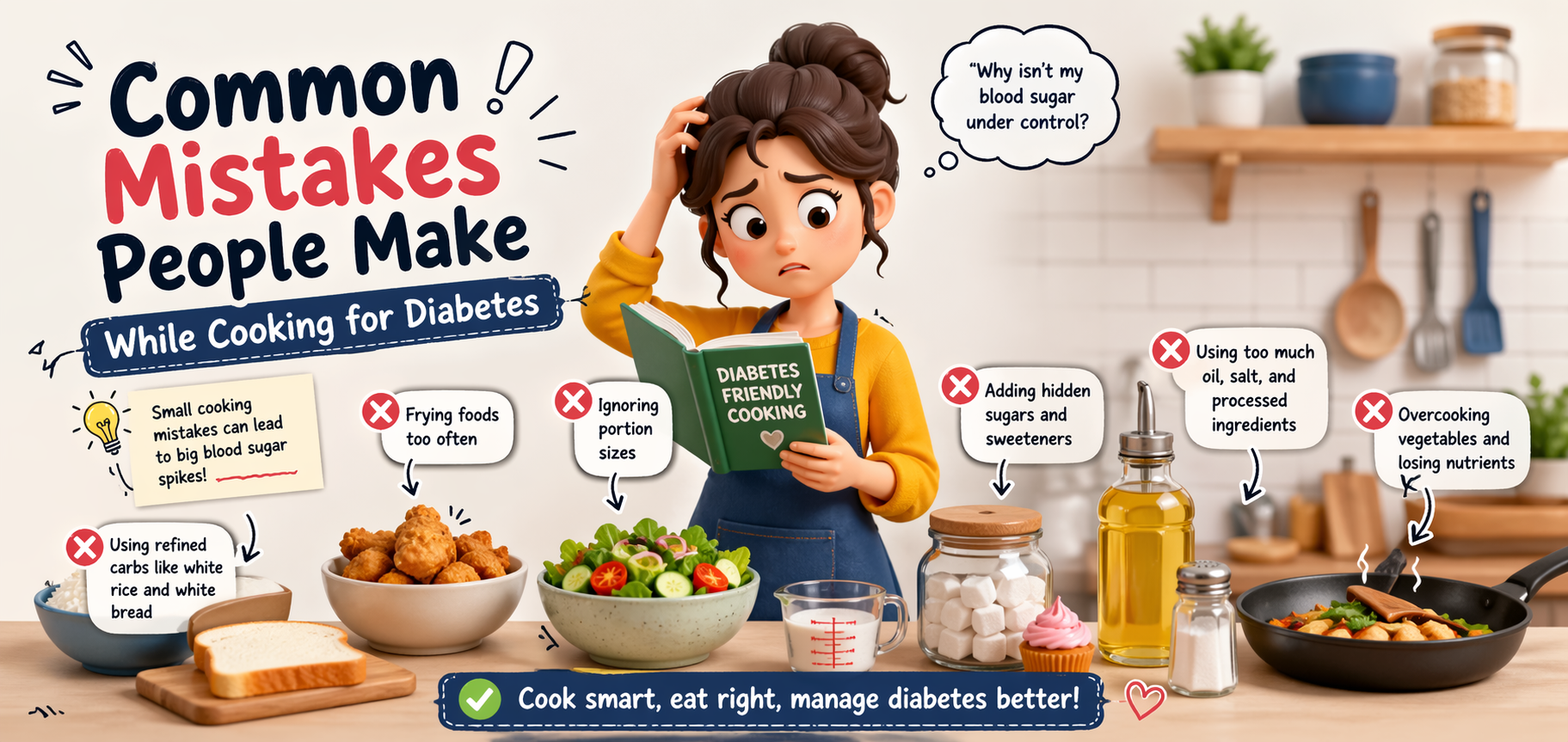
Even with the best intentions, it is easy to make mistakes in the kitchen when trying to cook for a diabetic family member. Being aware of these common pitfalls can help you navigate daily cooking with more confidence.
- Mistake: Cutting out all fats completely.
Many people believe that a zero-oil diet is the best way to manage diabetes and weight. This is a dangerous myth. Eliminating healthy fats from your diet causes carbohydrates to digest incredibly fast, leading to immediate and severe blood sugar spikes. A fat-free diet also prevents your body from absorbing fat-soluble vitamins like Vitamin A, D, E, and K, which are vital for overall health and immunity. - Mistake: Reusing frying oil.
It is common in Indian households to save the leftover oil from frying puris or pakoras to use for the next day’s sabzi. Heating oil, cooling it down, and heating it again chemically alters the fat structure, creating dangerous trans fats and free radicals. These toxins massively increase bodily inflammation and directly worsen insulin resistance. Always discard oil that has been heavily used for deep-frying. - Mistake: Believing all “light” or “blended” oils are healthy.
Marketing labels can be highly deceptive. Oils marketed as “lite,” “heart-friendly,” or “blended” are almost always heavily refined and chemically processed to achieve a thinner consistency and longer shelf life. While they may feel lighter on the stomach, they are often devoid of the very antioxidants and healthy fats your body needs to fight diabetes. Stick to pure, single-ingredient traditional oils. - Mistake: Using high-heat methods for delicate oils.
Certain oils, particularly extra virgin varieties or very lightly processed seed oils, have low smoke points. Using them for deep frying Indian snacks destroys their nutrients and turns them toxic. Always match the oil to the cooking technique. Use robust oils for higher heat and delicate oils for low heat or raw garnishing.
Conclusion: making smart choices for your family’s health
Managing blood sugar is not about giving up the joy of eating or abandoning traditional Indian flavors. It is about making smarter, more conscious choices in the kitchen. By simply replacing heavily processed, inflammatory cooking oils with pure, traditional, and nutritionally rich alternatives, you can make a profound difference in how your body handles food.
The oils we use act as the silent caretakers of our meals, ensuring that energy is released slowly, cells remain healthy and responsive, and our bodies are protected from internal inflammation. Cooking with brands like OwnFresh allows you to embrace the wisdom of traditional Indian culinary practices while actively supporting a diabetes-friendly lifestyle.
Remember, healthy cooking is a daily practice, not a one-time event. By understanding the importance of healthy fats, mastering gentle cooking techniques, and choosing ingredients in their purest form, you can confidently serve meals that are not only delicious but also deeply healing for your entire family. Let the heart of your home be a place where tradition meets wellness, one wholesome meal at a time.
Frequently asked questions
What are sugar-free cooking oils?
Sugar-free cooking oils refer to pure, unadulterated fats that naturally contain zero carbohydrates or added sugars. When naturally extracted without harsh chemicals, these oils retain healthy fats and nutrients that help slow down digestion and prevent sudden spikes in blood sugar levels.
Can cooking oil affect blood sugar levels?
Yes, cooking oil has a significant indirect effect on blood sugar. While oil itself does not contain glucose, eating healthy fats alongside carbohydrates slows down the stomach’s emptying process. This causes the body to absorb sugar at a slower, steadier rate, preventing dangerous blood sugar spikes and crashes.
Which oils are best for diabetes-friendly cooking?
The best oils for a diabetes-friendly diet are those rich in monounsaturated and polyunsaturated fats, and minimally processed. Traditional Indian oils like pure mustard oil, groundnut oil, and sesame oil are excellent choices. They reduce inflammation and improve insulin sensitivity when used in moderation.
How much oil should be used daily?
While healthy fats are beneficial, they are also dense in calories. Nutritionists generally recommend an average of 3 to 4 teaspoons (about 15-20 ml) of visible cooking oil per person per day. It is best to distribute this amount across different meals to maintain stable energy levels and support slow digestion.
Are traditional oils better than refined oils for blood sugar control?
Yes, absolutely. Traditional oils, often extracted using wood-pressed or cold-pressed methods, retain their natural antioxidants, vitamins, and healthy fat structures. Refined oils undergo harsh chemical and high-heat processing that destroys these beneficial nutrients, making traditional oils the far superior choice for metabolic health.
Why is it bad to reuse cooking oil if I have diabetes?
Reusing oil that has already been heated to high temperatures causes the oil to break down and form trans fats and harmful free radicals. These toxins cause severe inflammation in the body, which directly worsens insulin resistance and makes it much harder to control blood sugar levels.
Can I stop taking my diabetes medication if I use healthy oils?
No, you should never stop or alter your prescribed medication without consulting your doctor. Using healthy, pure cooking oils is a vital part of a balanced, diabetes-friendly lifestyle and dietary plan, but it is meant to support medical treatment, not replace it.