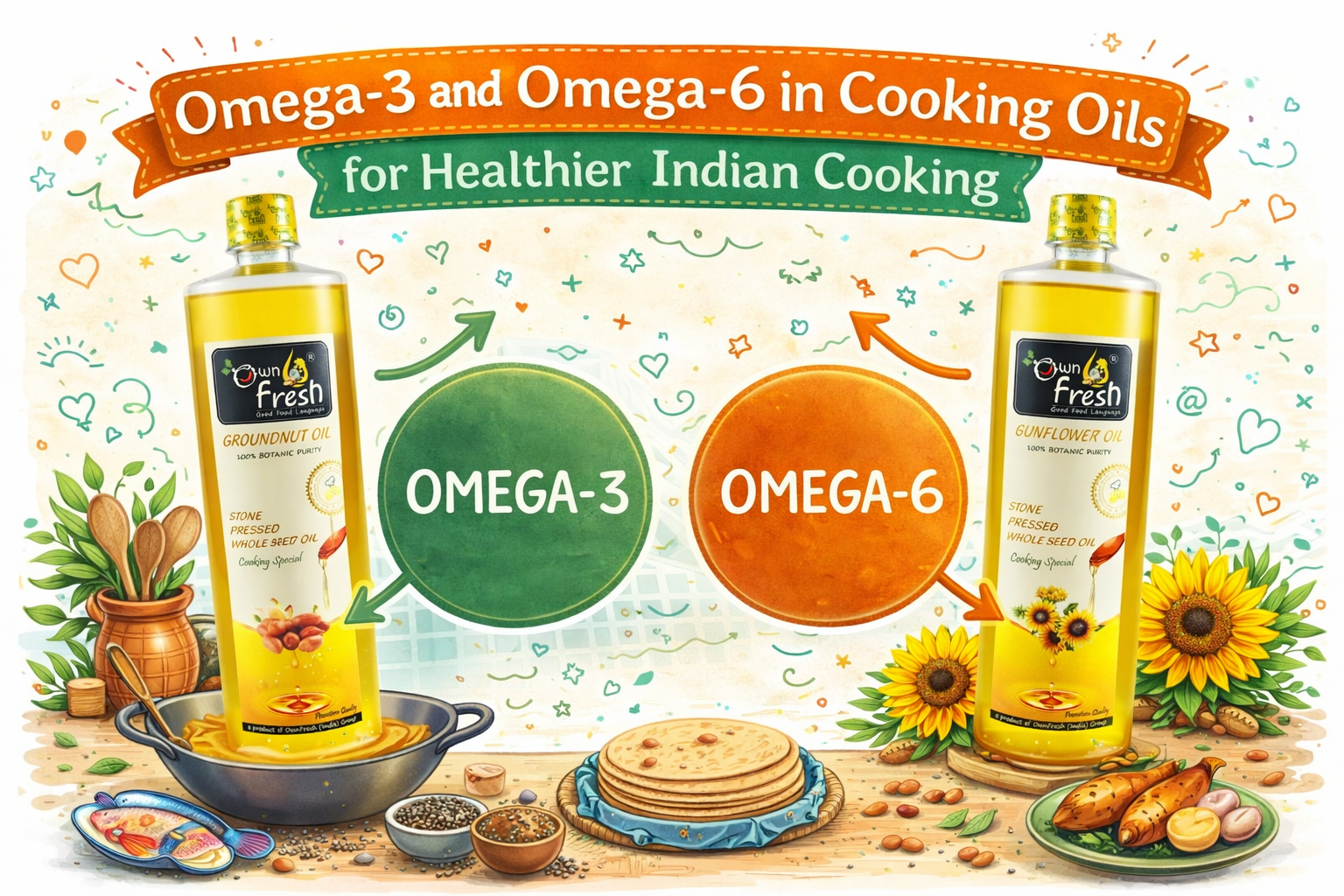
When you walk into a traditional Indian kitchen, the very first thing that greets you is the aroma of warm oil or ghee, crackling with mustard seeds, cumin, and fresh curry leaves. This simple daily ritual of tempering, or the classic Indian tadka, is not just about adding flavour to our dals and sabzis. It is a deeply rooted scientific practice designed to extract the best nutrients from our spices and deliver them straight to our bodies. But at the heart of this everyday practice lies an ingredient we often take for granted, yet one that dictates our family’s long-term health: our cooking oil.
For generations, our grandmothers trusted their local Stone-Pressed oils. Whether it was the pungent mustard oil in the north, the sweet groundnut oil in the west, or the fragrant coconut and sesame oils in the south, these choices were natural, seasonal, and perfectly suited to their environments. Today, however, we are faced with supermarket aisles flooded with endless choices, and words like polyunsaturated fats, refined blends, and essential fatty acids are thrown around freely.
Among all this noise, two specific nutrients have sparked the most conversation in recent years: omega-6 fatty acids. You might have seen these terms on supplement bottles or health food packaging, but did you know that your daily cooking oil is one of the most significant sources of these fats?
Understanding what these fats are, why our bodies desperately need them, and how to balance them using pure, traditional oils is the secret to unlocking true wellness. This comprehensive guide will take you through everything you need to know about omega-6 fatty acids, explaining them in simple terms, and helping you make the best choices for your family’s everyday Indian cooking.
Table of Contents
The heart of the Indian kitchen and the fat debate
For a long time, we were told that all fats are bad. We went through a phase where families actively tried to remove as much oil as possible from their diets, switching to fat-free products and dry-roasting their meals. But modern science, eventually catching up with traditional Indian wisdom, has proven that this fear of fats was misplaced.
Fats are not the enemy. In fact, they are fundamental to our survival. Our brain is made up largely of fat, our cells require fat to build their outer walls, and certain vital vitamins like a, d, e, and k can only be absorbed by the body if they are dissolved in fat. If you eat a bowl of healthy carrot sabzi rich in vitamin a without a drop of oil, your body will barely absorb any of that nutrient.
The real conversation we need to have is not about eating less fat, but about eating the right kind of fat. This is where the concept of essential fatty acids comes into the picture, specifically omega-3 and omega-6. They are called essential for a very simple reason: your body cannot manufacture them on its own from other food sources. Just like vitamin c or iron, you must get these fatty acids from the food you eat every single day. If your diet lacks them, your body slowly starts showing signs of deficiency, ranging from dry skin and fatigue to more severe heart and brain issues over time.
What exactly are essential fatty acids?
To understand omega-3 and omega-6 without getting lost in complicated science, think of your body as a highly advanced, continuously running factory. To keep the machinery running smoothly, to build new parts, and to repair wear and tear, this factory needs specific raw materials.
Fatty acids are these crucial raw materials. They come in different shapes and sizes, mostly known as saturated, monounsaturated, and polyunsaturated fats. Omega-3 and omega-6 both belong to the polyunsaturated family. They are incredibly flexible, fluid fats that keep your blood moving smoothly and your cell walls soft and permeable.
Breaking down omega-3: the calming nutrient
Omega-3 fatty acids are often referred to as the calming nutrients of the body. They are naturally found in high quantities in marine life, like fatty fishes, but for the predominantly vegetarian Indian population, plant-based sources like flaxseeds, walnuts, chia seeds, and certain traditional oils are the primary providers.
When you consume omega-3, your body uses it to soothe and heal. It acts as a peacemaker, telling your internal systems to relax, reducing heat or inflammation, and ensuring that your blood flows without clotting unnecessarily. It is the gentle, protective mother of the fatty acid family, always working to repair damage and maintain a sense of calm within your body’s systems.
Breaking down omega-6: the energy builder
On the other side, we have omega-6 fatty acids. If omega-3 is the calming force, omega-6 is the active, energetic builder. These fats are naturally abundant in many plant seeds and the oils extracted from them, such as sunflower, safflower, soybean, and corn.
Omega-6 is absolutely vital for growth. When a child is growing, or when you get a cut and your skin needs to heal, omega-6 rushes to the site to trigger the necessary inflammation that fights off infection and starts the healing process. It gives you energy, builds up your cells, and keeps your skin barriers strong. Without omega-6, we would be incredibly vulnerable to infections and our bodies would not be able to grow or repair themselves.
The roles of omega-3 in your daily health
Now that we know what these nutrients generally do, let us look deeper into why omega-3 is so highly praised by nutritionists and doctors around the world. The benefits of this fatty acid touch almost every major organ in our body.

Protecting your heart health naturally
In India, heart health is a major concern. We see young people and older adults alike struggling with blood pressure, cholesterol, and cardiovascular issues. Omega-3 acts as a natural shield for your heart. When you consume oils and foods rich in omega-3, these fats travel through your bloodstream and actively work to lower triglyceride levels, which are the harmful fat particles that can block arteries.
Furthermore, omega-3 helps to keep your blood vessels flexible. Imagine a fresh rubber pipe versus an old, stiff plastic pipe. The flexible rubber pipe can handle high water pressure easily without bursting, while the stiff pipe might crack. Omega-3 keeps your blood vessels like that fresh rubber, allowing blood to pump smoothly, which naturally helps in regulating blood pressure. It also prevents blood platelets from clumping together, reducing the risk of harmful clots that lead to heart attacks.
Fueling your brain and mental clarity
Have you ever wondered why older generations insisted on feeding children walnuts and almonds before exams? It is because these foods are rich in omega-3, and your brain absolutely loves this nutrient. Nearly sixty percent of the human brain is made of fat, and a massive portion of that is specifically an omega-3 fat called dha.
When you have enough omega-3 in your diet, the membranes of your brain cells remain fluid and healthy. This allows electrical signals to pass between brain cells quickly and efficiently. In everyday terms, this translates to better memory, sharper focus, and quicker thinking. For aging adults, a diet rich in omega-3 is incredibly important as it helps slow down cognitive decline and keeps the mind active and alert. It is also deeply connected to our mood, with balanced omega-3 levels helping to ward off anxiety and feelings of depression.
Acting as a natural shield against inflammation
Inflammation is a word we hear often, but what does it really mean? Think of inflammation as your body’s fire alarm. When you are injured or sick, the alarm rings, and the body sends heat, swelling, and redness to fight the problem. This is good in the short term. But sometimes, due to poor diet, stress, and pollution, the fire alarm gets stuck and keeps ringing. This is called chronic inflammation, and it quietly damages your healthy cells, leading to joint pain, arthritis, diabetes, and heart disease.
Omega-3 is the cooling water that puts out this unnecessary fire. It produces special molecules in the body called resolvins and protectins, which literally resolve the inflammation and protect the tissues. By including pure, omega-3 rich traditional oils and seeds in your cooking, you are naturally cooling down your body from the inside, keeping chronic diseases at bay.
The roles of omega-6 in your daily health
While omega-3 gets a lot of the spotlight, omega-6 is equally vital. It is unfair to label it as the bad fat, because without it, our bodies would simply stop functioning properly. It is all about how it is used and in what context.
Supporting growth and cellular development
From the moment we are born, our bodies are in a constant state of building and rebuilding. Every single day, millions of our cells die and are replaced by new ones. Omega-6 fatty acids are a primary structural component of these cell walls. Without enough omega-6, the new cells our bodies create would be weak and unstable.
For pregnant women, growing children, and teenagers, omega-6 is particularly crucial. It supports the building of muscle tissue, the lengthening of bones, and the overall physical development of the body. When you feed your family meals cooked in traditional, wholesome oils, you are providing the structural building blocks their bodies need to grow strong and resilient.
Keeping your energy levels steady
We often think of carbohydrates like rice and roti as our main energy sources. While they provide quick energy, fats are our body’s long-term energy reserves. Omega-6 fatty acids are incredibly efficient at being converted into usable energy by our cells. When you have a long, tiring day ahead, a meal cooked with the right balance of traditional fats ensures that your energy does not suddenly crash in the afternoon. It provides a slow, steady release of fuel that keeps you active, focused, and ready to tackle your day.
Maintaining healthy skin and strong bones

In India, we face harsh summers, dry winters, and heavy monsoons. Our skin takes a beating from the weather and pollution. Omega-6 is nature’s internal moisturizer. A specific type of omega-6 called linoleic acid is responsible for maintaining the skin’s outer barrier. It locks moisture in and keeps irritants out.
If your diet lacks high-quality omega-6, you might notice your skin becoming dry, flaky, or prone to breakouts and allergies. Additionally, omega-6 works alongside other nutrients to help your bones absorb calcium efficiently. This means that as we age, having the right pure fats in our diet can help prevent our bones from becoming brittle.
The crucial balance: why the omega-3 to omega-6 ratio matters
If both omega-3 and omega-6 are so incredibly good for us, you might be wondering where the problem lies. The secret to long-term wellness does not lie in just consuming these fats; it lies entirely in the balance between them.
The seesaw analogy in nutrition
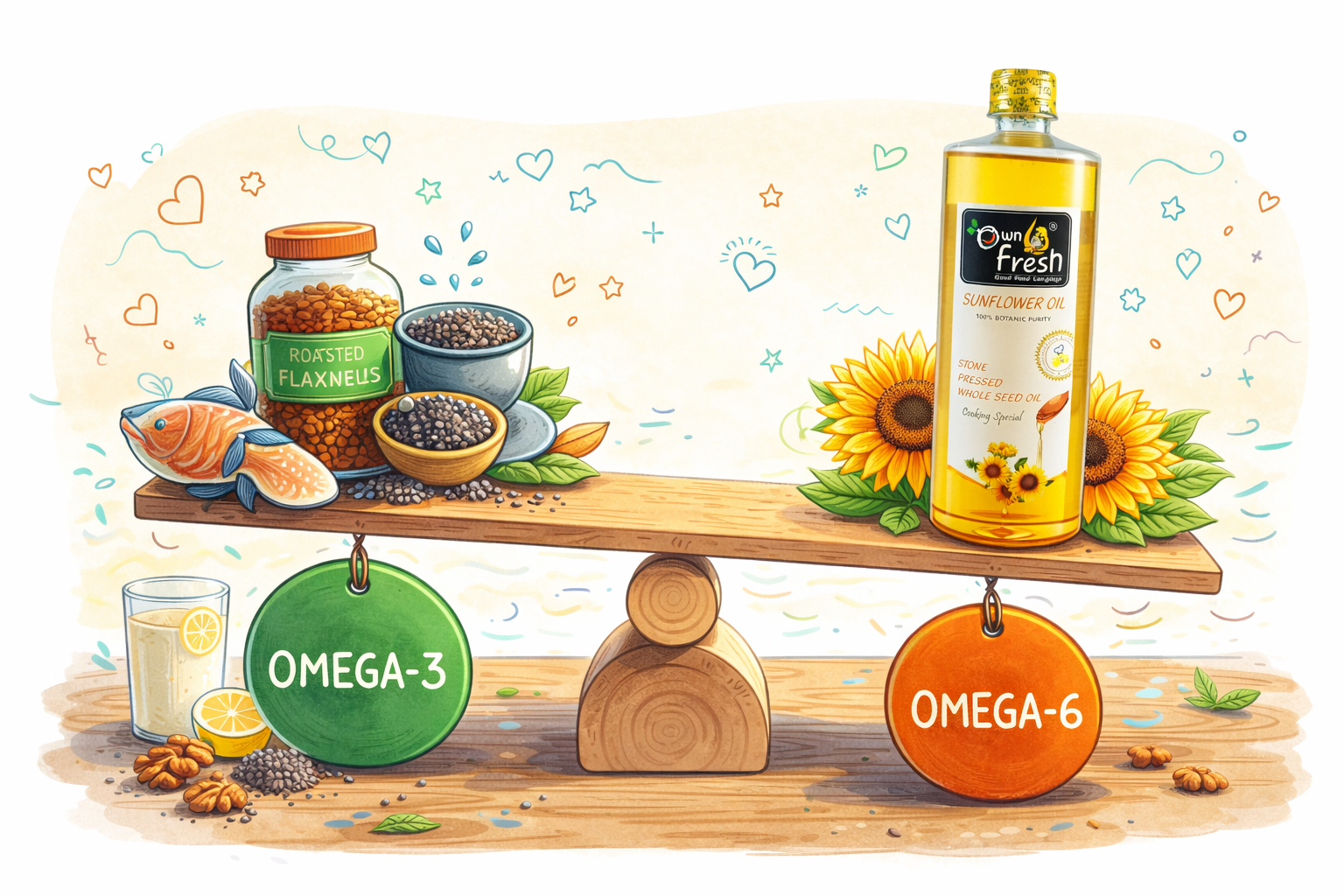
Imagine a playground seesaw. On one side sits omega-3, the calming, anti-inflammatory force. On the other side sits omega-6, the active, pro-inflammatory builder. For perfect health, this seesaw needs to be perfectly balanced, gently tipping back and forth as the body requires.
When your body detects an infection, omega-6 tips the seesaw to create inflammation and fight the germs. Once the job is done, omega-3 tips the seesaw back, cooling the inflammation down and returning the body to a peaceful state. Historically, our ancestors ate a diet that provided a ratio of roughly one part omega-3 to one part omega-6, or at most, one part omega-3 to four parts omega-6. This kept the seesaw perfectly balanced.
How modern diets disrupted the natural balance
Over the last few decades, something drastic happened to the way we eat, and the seesaw broke. The rise of highly processed foods, cheap commercial cooking oils, and fast food meant that our intake of omega-6 skyrocketed, while our intake of traditional omega-3 sources dropped.
Today, a typical urban diet often has a ratio of one part omega-3 to fifteen, or even twenty parts of omega-6. It is like putting an elephant on the omega-6 side of the seesaw and a small child on the omega-3 side. The result? The body is stuck in a state of constant, low-grade inflammation. The fire alarm is always ringing, but there is no water to put it out.
This massive imbalance is largely driven by the heavy reliance on cheap, chemically refined oils like generic sunflower, soybean, and corn oil in almost all packaged foods, restaurant meals, and modern home kitchens. These oils are incredibly high in omega-6. When we consume them in excess, without actively seeking out omega-3 rich foods, we set the stage for heart disease, joint pains, poor immunity, and fatigue. Restoring this balance is the single most important dietary change you can make for your family.
How cooking oils contribute to this fatty acid balance
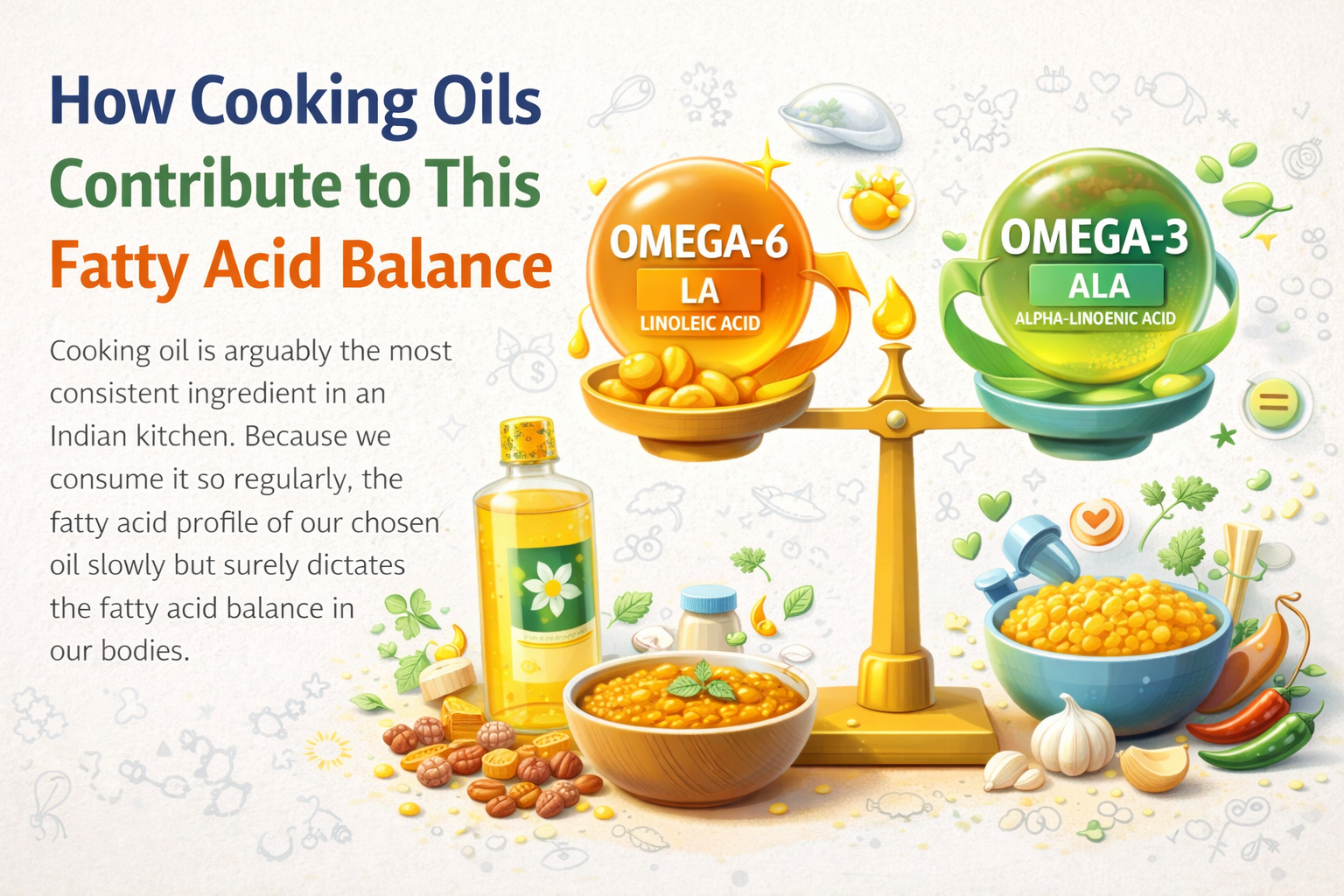
Cooking oil is arguably the most consistent ingredient in an Indian kitchen. We change our vegetables, our dals, and our spices, but the oil usually remains the same for every meal, every single day. Because we consume it so regularly, the fatty acid profile of our chosen oil slowly but surely dictates the fatty acid balance in our bodies.
Refined oils versus traditional Stone-Pressed oils
To understand how to choose better, we must first understand the difference between modern refined oils and traditional Stone-Pressed oils. Refined oils are created in massive factories using high heat, harsh chemicals like hexane, and intensive bleaching and deodorizing processes. By the time the oil reaches the clear plastic bottle on the supermarket shelf, it has been stripped of its natural colour, smell, and most importantly, its delicate nutrients. The high heat often damages the fragile omega-3 fatty acids, leaving behind mostly omega-6 and, occasionally, harmful trans fats.
On the other hand, the traditional Indian way of making oil is through wood-pressing or cold-pressing, known as kachi ghani or chekku. In this method, seeds or nuts are slowly crushed at room temperature without any chemical solvents. This gentle process retains the natural aroma, the deep vibrant colour, and all the original nutritional properties of the seed, including the delicate balance of omega-3 and omega-6 fatty acids, antioxidants, and vitamins.
When you choose pure, traditionally extracted oils, you are consuming fats exactly as nature intended. The body recognizes these fats, digests them easily, and utilizes their nutritional profile to keep your internal seesaw balanced.
Taking a closer look at traditional Indian oils
Let us evaluate some of the common pure oils used in traditional Indian cooking and how they fit into the omega balance.
Mustard oil is a staple in northern and eastern India. When extracted traditionally as kachi ghani, it is one of the healthiest oils available. It has a brilliant balance of monounsaturated fats and polyunsaturated fats. What makes it special is that it naturally contains a very respectable amount of plant-based omega-3, making it an excellent daily cooking medium to help maintain a healthy ratio. Its pungent flavor is a sign of beneficial compounds that also aid digestion and circulation.
Groundnut oil, or peanut oil, is widely loved in central and western India. It is extremely rich in monounsaturated fats, much like olive oil, making it very stable for Indian cooking. While it leans slightly more towards omega-6, its overall fatty acid profile is incredibly heart-friendly, especially when it is Stone-Pressed and retains its natural vitamin e.
Sesame oil, predominantly used in the south, is an ancient healing oil. It is celebrated in Ayurveda for its warming properties and its ability to nourish the skin and bones. It contains a balanced mix of fats and is loaded with unique antioxidants called sesamol and sesamin, which protect the oil from spoiling and protect our bodies from cellular damage.
Flaxseed oil is the undisputed king of plant-based omega-3. However, it is very delicate and cannot be used for frying or high-heat cooking. In traditional homes, flaxseed is often roasted and made into a dry chutney powder, or the pure oil is gently drizzled over cooked warm rice or salads just before eating, providing an instant, massive boost of cooling omega-3.
Coconut oil and pure desi ghee, while mostly composed of saturated fats, play a vital supporting role. Because they contain almost no omega-6, using them in combination with other seed oils helps ensure you do not overload your system with excess omega-6. They are stable, highly nutritious, and excellent for brain and gut health.
Practical Indian cooking tips to maintain a healthy fat balance
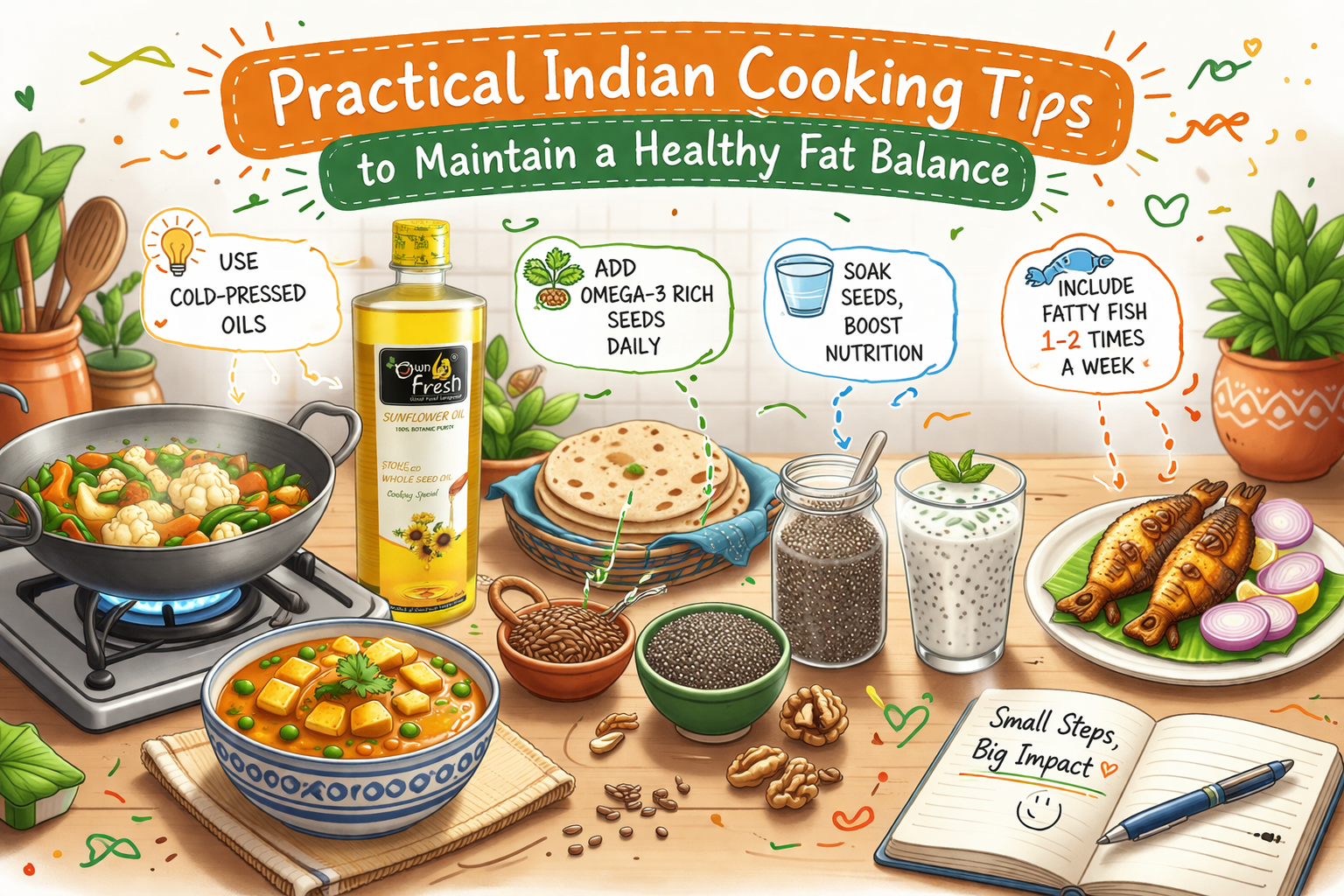
Knowing the science is one thing, but applying it in the hustle and bustle of a busy Indian morning is another. You do not need to measure your food with a calculator to achieve a healthy omega balance. Instead, you can adopt a few simple, practical habits that naturally align your family’s diet with long-term wellness.
Rotating your oils smartly
One of the best practices you can introduce in your kitchen is oil rotation. Do not stick to just one type of oil for everything, all year round. Different oils offer different nutrients. By rotating them, you naturally prevent an overdose of omega-6 and ensure a wide variety of fatty acids.
For example, you might use robust mustard oil for heavy vegetable preparations like bhindi or baingan, which benefit from its strong flavour and bring a dose of omega-3. For mild dals or dosas, you could use pure groundnut or sesame oil. For traditional sweets or a simple tadka on khichdi, nothing beats pure desi ghee. By keeping two or three varieties of pure, unrefined oils in your pantry, your diet naturally mimics the diverse nutritional intake of our ancestors.
Balancing oils with whole foods
While your cooking oil is the foundation, you can heavily influence your omega balance through the whole foods you add to your meals. Since it is easy to get enough omega-6, your goal should be to actively sprinkle omega-3 into your daily cooking.
Keep a jar of roasted flaxseeds on your dining table. A spoonful can be chewed after meals or ground into a coarse powder and mixed into your daily atta while making rotis. Add a handful of walnuts to your morning oatmeal or upma. Chia seeds or sabja seeds can be soaked in water and added to buttermilk or nimbu pani during the summer. If you eat non-vegetarian food, try to include small, fatty local fishes in your diet a couple of times a week. These small additions work powerfully alongside your cooking oils to bring the seesaw back to a perfect horizontal balance.
Making smart choices for deep frying and daily tempering
Indian cooking involves techniques ranging from slow simmering to high-heat deep frying. It is crucial to use the right fat for the right technique. High heat can destroy delicate omega-3s and turn healthy oils into harmful compounds.
When you are deep frying festive treats like puris or pakoras, use highly stable fats like pure groundnut oil, sesame oil, or ghee. These can withstand high temperatures without breaking down. Save your delicate oils, or meals that you are actively trying to make omega-3 rich, for gentle cooking methods like steaming, light sautéing, or preparing wet gravies.
Another excellent habit is to minimize the use of commercially packaged snacks like biscuits, namkeens, and ready-to-eat meals. These are almost always fried in cheap, highly refined oils that flood your system with inflammatory omega-6. By making fresh snacks at home using traditional oils, you drastically cut down the bad fats and improve your family’s baseline health.
A day in a balanced Indian kitchen: everyday examples
To see how effortless this can be, let us walk through a typical day in a health-conscious Indian home that understands the power of balanced fats.
The morning begins with a warm glass of water, perhaps with some soaked almonds and walnuts on the side, instantly providing a dose of brain-loving omega-3. Breakfast might be a comforting bowl of poha or upma. Instead of a refined vegetable oil, it is cooked in a spoonful of pure Stone-Pressed groundnut oil, providing stable energy and heart-healthy monounsaturated fats.
For lunch, the family enjoys a traditional spread of roti, dal, and a seasonal vegetable. The dry vegetable, perhaps a bitter gourd or potato sabzi, is cooked in pungent, pure mustard oil, bringing in that crucial plant-based omega-3. The dal receives a fragrant tadka of cumin and garlic crackled in pure desi ghee, which aids in the digestion of the lentils and adds a rich, comforting aroma without adding any extra omega-6 to the meal. A side of flaxseed and garlic dry chutney provides an extra nutritional punch.
In the evening, instead of opening a packet of factory-made chips loaded with refined oils, the family snacks on roasted makhanas tossed in a tiny bit of ghee, or some roasted chana and peanuts.
For dinner, a light and easily digestible meal like khichdi is served. To boost the nutrition, a few drops of sesame oil might be mixed into a fresh cucumber salad on the side.
Throughout this entire day, without any stress or complicated meal prep, the family has consumed a diverse range of fats. They have avoided the heavy burden of modern refined omega-6, naturally incorporated anti-inflammatory omega-3, and fueled their bodies with pure, traditional ingredients that support heart health, glowing skin, and a calm, focused mind.
Embracing traditional wisdom for long-term wellness
At the end of the day, health is not about following the latest western diet trend or completely avoiding certain food groups. True wellness comes from looking back at how we were meant to eat. The pure, traditional oils that our ancestors painstakingly extracted using wooden ghani methods were never the cause of modern lifestyle diseases. In fact, they were the cure.
The problem arose when we moved away from purity and started prioritizing cheap, highly processed, heavily refined oils that completely skewed our natural fatty acid balance. By understanding the simple science of omega-3 and omega-6, we regain control over our kitchen and our health. We learn that fats are our friends, provided we choose the ones that are close to nature.
When you bring a bottle of pure, traditional oil into your kitchen, you are doing more than just buying a cooking ingredient. You are making a conscious decision to reject chemically processed foods. You are choosing to support your child’s growth with clean energy, to protect your parents’ hearts with anti-inflammatory properties, and to nourish your own body with the exact building blocks it needs to thrive.
Conclusion
The journey to better health does not require you to abandon the rich, flavorful, and comforting traditions of Indian cooking. You do not need to eat bland, boiled food to be healthy. The secret lies in making one fundamental switch: moving away from highly refined, mass-produced oils and returning to the purity of traditional, Stone-Pressed oils.
By being mindful of the omega-3 and omega-6 balance, rotating your pure cooking oils, and supplementing your diet with natural seeds and nuts, you create a deeply nourishing environment for your body. The seesaw stays perfectly balanced. Your heart stays strong, your mind stays sharp, and your body remains free from the silent damage of chronic inflammation. Let your kitchen be a place of healing, where every tadka is a step towards long-term wellness and vitality.
FAQs
What is the difference between omega-3 and omega-6?
Omega-3 fatty acids are generally known for their calming, anti-inflammatory properties that protect the heart and brain. Omega-6 fatty acids are active builders that promote growth, energy, and cellular repair. Both are essential for survival, but they perform different tasks in the body.
Why is their balance important?
Your body needs both fats to function correctly, like a balanced seesaw. Too much omega-6 without enough omega-3 can lead to chronic inflammation, which is linked to joint pain, heart issues, and lowered immunity. Maintaining a balanced ratio keeps the body healthy and disease-free.
Which traditional cooking oils contain omega-3?
Among traditional Indian oils, pure, Stone-Pressed mustard oil contains a good amount of plant-based omega-3. While not used for cooking, pure flaxseed oil is also exceptionally high in omega-3 and can be drizzled over prepared food.
Are omega-6 oils harmful?
No, omega-6 is not inherently harmful; it is an essential nutrient required for growth and skin health. The harm only occurs when we consume an excessive amount of it through highly refined commercial oils and processed foods, while ignoring omega-3 intake.
How can I maintain a healthy fat balance in everyday Indian cooking?
You can maintain balance by avoiding cheap, highly refined oils and switching to pure, Stone-Pressed traditional oils like mustard, groundnut, and sesame. Rotate your oils depending on the dish, limit packaged junk food, and actively add omega-3 rich foods like flaxseeds, chia seeds, and walnuts to your daily meals.
Is it safe to use pure desi ghee for daily cooking?
Yes, pure desi ghee is excellent for daily use in moderation. While it does not provide significant amounts of omega-3 or omega-6, it is highly stable for high-heat cooking, aids in digestion, and helps you avoid overloading your diet with the excess omega-6 found in refined vegetable oils.