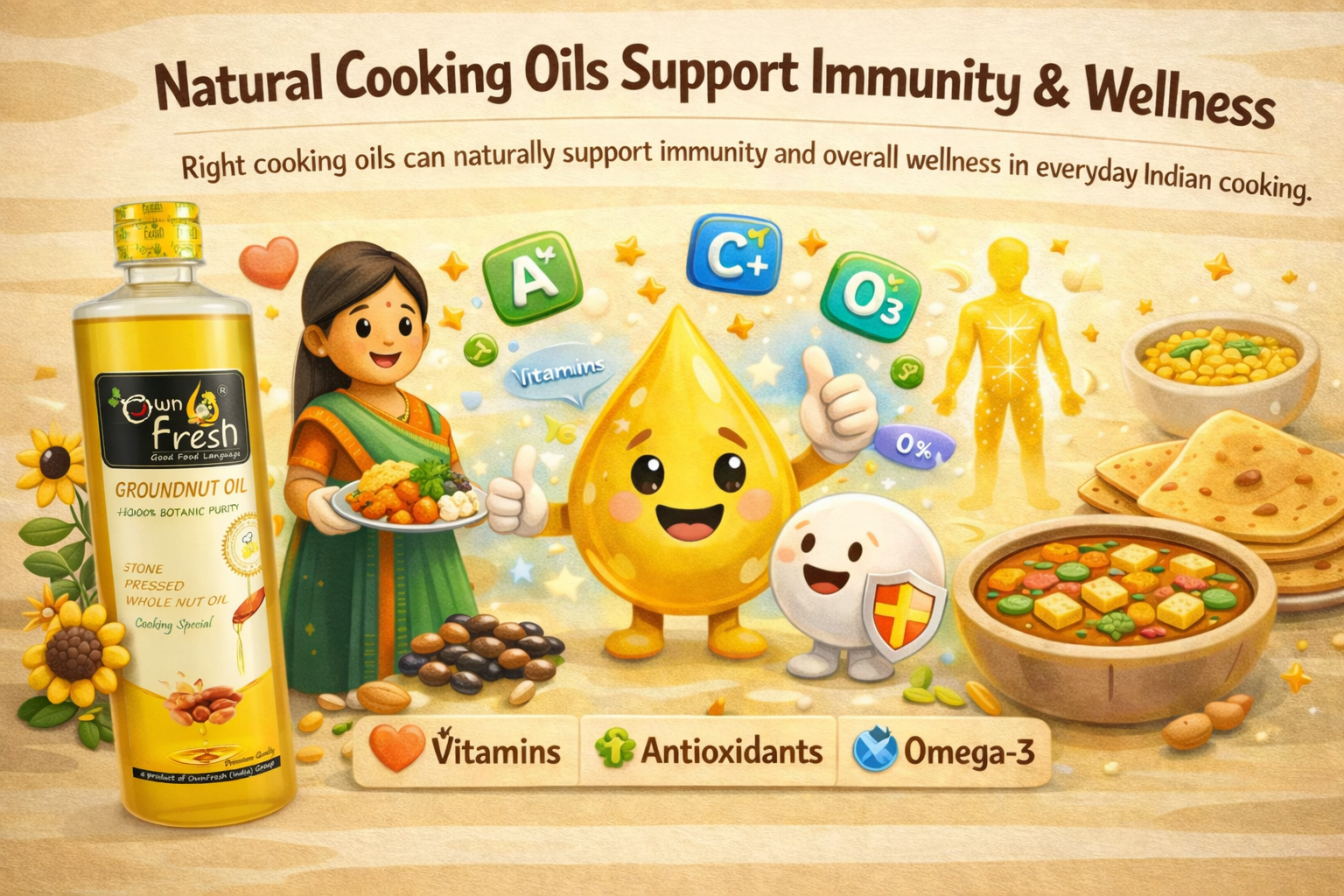
When you step into a traditional Indian kitchen, the first thing that welcomes you is the rich, warm aroma of spices sizzling in hot oil. This simple, everyday act of making a tadka or tempering is the heart of Indian cooking. For generations, our grandmothers and mothers have relied on this culinary ritual not just to add flavour to our dals and sabzis, but to bring out the medicinal properties of our food. But in recent years, as we have become more health-conscious, a lot of confusion has emerged around cooking oils. Many of us started believing that less oil, or the most highly refined, colourless oil, is the best path to good health.
However, modern science and ancient Ayurvedic wisdom both point us back to a simple truth: it is not about entirely eliminating oil from our diets, but rather choosing the right kind of oil. The cooking oil you use every single day plays a massive role in your family’s overall wellness, and surprisingly, it is one of the most important building blocks for a strong immune system.
At OwnFresh, we believe in the power of returning to our roots. Our philosophy has always been centred around the belief that pure, stone-pressed oils, extracted through traditional methods, hold the key to wholesome nutrition. When oil is extracted gently, keeping its natural nutrients intact, it becomes more than just a cooking medium. It becomes a daily dose of health. In this comprehensive guide, we will explore exactly how your daily choice of cooking oil influences your body’s natural defences, and how you can make the best choices for your family’s daily meals.
Table of Contents
Understanding how our body’s natural defence system works
To understand how food helps us fight off illnesses, we first need to understand how the immune system works. You can think of your immune system as a highly trained, dedicated army that works twenty-four hours a day to protect your body from invaders. These invaders are viruses, bacteria, harmful fungi, and toxins that we encounter every day in the air we breathe, the surfaces we touch, and the food we eat.
This defence system is not just one organ; it is a complex network of cells, tissues, and organs working together in perfect harmony. The first line of defence is your physical barriers, like your skin and the mucous membranes in your nose and throat, which trap germs before they can enter deeper into your body.

If germs do manage to sneak past these physical barriers, the second line of defence kicks in. This is where your white blood cells come into play. Some white blood cells act like scouts, constantly patrolling your bloodstream looking for foreign invaders. When they spot a threat, they send out chemical signals to call for backup. Other white blood cells act like soldiers, rushing to the site of the infection to swallow and destroy the harmful germs.
Finally, your immune system has an incredible memory. Once it has fought off a specific germ, it creates antibodies. If that same germ ever tries to invade your body again in the future, your immune system recognizes it instantly and destroys it before you even start to feel sick. But just like any army, your immune system needs constant supplies, fuel, and raw materials to function properly. If your body is poorly nourished, your immune army becomes weak, slow, and easily overwhelmed. This is where your daily diet steps in.
Why what we eat directly influences our immunity
There is a very famous saying that you are what you eat, and when it comes to immune health, nothing could be more accurate. Every single cell in your immune system is built from the nutrients you consume. When you eat a balanced diet filled with fresh vegetables, whole grains, lentils, and the right fats, you are directly handing your body the tools it needs to manufacture strong, active white blood cells.
A huge part of this connection lies in our gut. It surprises many people to learn that roughly seventy percent of our immune system is located right in our digestive tract. Our gut is home to trillions of helpful bacteria, known as the gut microbiome. These good bacteria constantly communicate with our immune cells, teaching them the difference between harmless substances and dangerous pathogens.
When we eat highly processed foods, foods loaded with sugar, or foods cooked in heavily refined, low-quality oils, we cause inflammation in the body. Inflammation is like a false alarm that constantly rings in your system. If your immune system is busy fighting off the inflammation caused by bad food, it becomes distracted and exhausted. When a real threat like a flu virus comes along, your immune system simply does not have the energy or resources left to fight it off effectively.
On the other hand, a wholesome diet rich in natural, unrefined ingredients soothes the gut, reduces internal inflammation, and allows your immune system to stay alert, rested, and ready for real threats. And the cooking oil you use forms the very foundation of this daily diet.
The surprising connection between cooking oils and immune health
We use cooking oil at least two to three times a day in an Indian home. We use it to cook our breakfast upma or poha, we use it to temper our afternoon dal, and we use it to lightly toss our dinner vegetables. Because it is consumed so frequently, the quality of this oil quietly dictates our internal health. Let us break down exactly how pure, healthy cooking oils naturally support your immunity.
Healthy fats build strong and flexible immune cells
One of the biggest misconceptions we face today is that all fat is bad for us. In reality, our bodies desperately need healthy fats to survive. Every single cell in the human body, including your hardworking immune cells, is surrounded by a protective outer layer called a cell membrane. This membrane is primarily made up of fats.

When you consume healthy fats, such as the monounsaturated and polyunsaturated fats found in traditional stone-pressed oils, your body uses them to build these cell membranes. Healthy fats keep the cell membranes soft, flexible, and fully functional. A flexible membrane allows the immune cell to easily absorb nutrients from the blood and swiftly push out waste products.
If you consume unhealthy fats, like the trans fats often found in reheated refined oils or commercial junk food, the cell membranes become stiff and rigid. A rigid immune cell struggles to move through the bloodstream, struggles to communicate with other cells, and becomes sluggish in fighting off infections. By simply choosing the right cooking oil, you are ensuring that your white blood cells remain agile and efficient.
The role of antioxidants in fighting off cellular damage
Our bodies are constantly dealing with unstable molecules known as free radicals. These free radicals are generated by everyday things like pollution, stress, sunlight, and even the simple act of breathing and digesting food. If left unchecked, free radicals bounce around inside our bodies, damaging our healthy cells and causing a process known as oxidative stress. You can think of oxidative stress as rust slowly eating away at a piece of iron.
This cellular “rust” weakens the immune system and makes us prone to illnesses. To stop free radicals, our bodies need antioxidants. Antioxidants are incredible compounds that safely neutralize free radicals before they can cause any damage.
Pure, unrefined cooking oils are naturally packed with these life-saving antioxidants. Because these oils are extracted without the use of high heat or harsh chemicals, they retain natural plant compounds like tocopherols and sterols, which act as powerful antioxidants inside your body. Every time you cook with a pure, traditional oil, you are seamlessly adding a layer of antioxidant protection to your family’s daily meal.
Unlocking the power of fat-soluble vitamins
Our bodies require a wide variety of vitamins to maintain a strong immune system, but not all vitamins are the same. Vitamins like vitamin C and the B-complex vitamins are water-soluble, meaning they dissolve in water and are easily absorbed. However, vitamins A, D, E, and K are fat-soluble. This means your body absolutely cannot absorb these vital nutrients unless they are consumed alongside dietary fat.
Vitamin A is crucial for maintaining the health of your skin and mucous membranes, your body’s first line of defence. Vitamin D plays a massive role in regulating immune responses and helping white blood cells do their job. Vitamin E is one of the most potent antioxidants known to science, and vitamin K is essential for proper blood healing and bone health.

In the Indian diet, we eat a lot of vegetables rich in the precursors to these vitamins. For example, carrots and pumpkins are rich in beta-carotene, which the body turns into vitamin A. Spinach and leafy greens contain vitamin K. But if you were to boil these vegetables in plain water without any oil, your body would struggle to absorb those nutrients. They would simply pass through your digestive system. Cooking these vegetables in a high-quality, healthy oil acts as a vehicle, carrying these precious vitamins directly into your bloodstream where your immune system can put them to use.
Why traditional Indian oils are immune-boosting powerhouses
Long before the aisles of supermarkets were flooded with heavily processed, transparent cooking oils, Indian households thrived on regional, locally sourced oils. Depending on where you lived, the cooking medium changed. The northern and eastern regions relied heavily on mustard oil, the western and southern regions loved groundnut oil, and sesame oil was a staple for many coastal and southern communities. These traditional oils, when extracted in their purest form, are absolute powerhouses of immunity and wellness.
Sesame oil: the ancient shield of health
Sesame oil, often referred to as til ka tel or gingelly oil, holds a place of supreme importance in Ayurveda. It has been used for thousands of years not just for cooking, but for medicinal massages and healing therapies. From an immune perspective, sesame oil is incredibly special.
It contains two unique, powerful antioxidants called sesamol and sesamin. These natural compounds are highly effective at reducing inflammation in the body and protecting cells from oxidative damage. Furthermore, pure sesame oil is naturally rich in essential minerals like copper and zinc. Zinc is a critical mineral for the immune system, helping with the development and function of immune cells. Regular consumption of wholesome, stone-pressed sesame oil in your daily cooking provides a warming, protective effect on the body, especially during the changing seasons when we are most vulnerable to colds and coughs.
Mustard oil: the warming, protective kitchen staple
If you have grown up in a North Indian or East Indian home, the sharp, pungent aroma of mustard oil, or sarson ka tel, is likely deeply tied to your childhood memories. Mustard oil is famous for its warming properties, which is why our grandmothers often used it to massage our chests when we had a winter cold.
When consumed in our daily diet, pure mustard oil acts as a natural guardian for our respiratory health. It contains a specific compound called allyl isothiocyanate, which gives the oil its signature pungent kick. This compound has powerful antibacterial and antifungal properties. When you cook your daily vegetables or prepare a fish curry in pure, stone-pressed mustard oil, you are actively consuming compounds that help clear the respiratory tract and protect the gut from harmful bacterial overgrowth, thereby taking a huge load off your immune system.
Groundnut oil: the everyday hero for heart and immunity
Groundnut oil, or peanut oil, is perhaps one of the most versatile and universally loved cooking oils in Indian households. It has a beautiful, mild, nutty flavour that enhances the taste of everything from a simple potato fry to a complex festive delicacy.
What makes groundnut oil fantastic for daily wellness is its perfect balance of fatty acids. It is predominantly rich in monounsaturated fats (MUFAs), which are excellent for maintaining a healthy heart and keeping bad cholesterol levels in check. A healthy heart ensures that your blood circulation is strong, allowing immune cells to travel efficiently throughout the body. Groundnut oil is also an outstanding source of natural vitamin E, the fat-soluble antioxidant that protects our immune cells from damage. Because pure groundnut oil has a naturally high smoke point, it is incredibly safe for traditional Indian cooking techniques that require slightly higher heat.
The magic of the traditional stone-press method
Knowing which oil to choose is only half the battle; knowing how that oil was extracted is equally, if not more, important. This is where the OwnFresh philosophy truly comes to life. We strongly believe that nature provides us with perfect ingredients, and our job is simply to bring them to your kitchen without destroying their natural goodness.
What happens when oil is heavily processed?
Most of the cooking oil sold in the market today goes through a harsh industrial process known as refining. To extract the maximum possible amount of oil from seeds, large factories use high heat, often exceeding two hundred degrees Celsius. They also use chemical solvents, like hexane, to pull every last drop of oil from the seed.
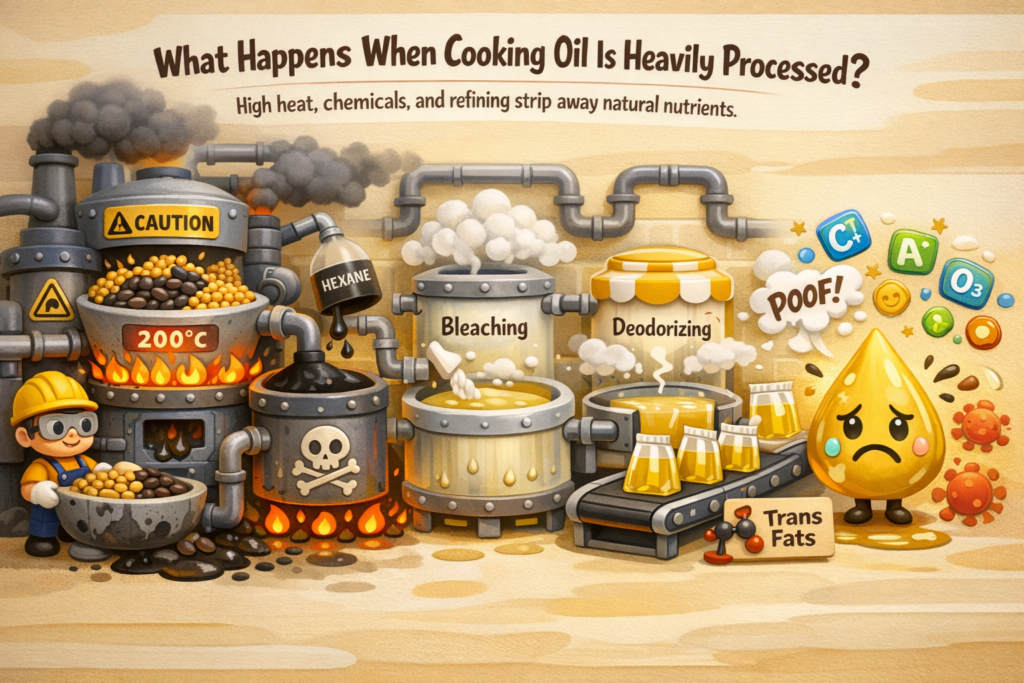
Because this violent process leaves the oil with a terrible smell and a dark, unappealing colour, it is then put through further stages of bleaching and deodorising. By the time this oil reaches your kitchen in a shiny plastic pouch, it has been stripped of its natural aroma, its beautiful colour, and most importantly, its life-giving nutrients. The high heat destroys the delicate antioxidants and vitamins, and often leads to the formation of harmful trans fats. Cooking with heavily refined oil gives you empty calories that cause inflammation, rather than giving you immune-boosting nutrition.
Why stone-pressed oils keep your family healthier
To retain the incredible health benefits of cooking oils, we must look to the traditional methods of our ancestors. The traditional Indian method of oil extraction uses a wooden or stone apparatus, locally known as a kachhi ghani, mara chekku, or lakdi ghani.
In this method, the seeds are slowly and gently crushed under a heavy stone or wood pestle. The beauty of this process is that the friction is minimal, and the temperature of the oil never rises above a gentle warmth, usually staying well below forty-five degrees Celsius. Because no external heat or chemical solvents are applied, the resulting oil is one hundred percent pure. It retains its thick texture, its natural, vibrant colour, its rich, mouth-watering aroma, and all of its vital nutrients.
A stone-pressed oil is a living food. All the vitamin E, the delicate antioxidants, the anti-inflammatory compounds, and the healthy fatty acids remain completely intact. When you switch to a stone-pressed oil, you are not just changing your cooking medium; you are upgrading the nutritional value of every single meal cooked in your home.
Practical Indian cooking examples for better immunity
Understanding the science is wonderful, but how does this translate into our daily cooking routines? Indian cooking is already uniquely designed to maximize health benefits, provided we use the right ingredients. Here is how your daily cooking techniques, combined with pure stone-pressed oils, can actively boost your family’s immunity.
The science of the everyday tadka
The tadka, or chaunk, is an absolute masterpiece of nutritional science. Think about how we prepare a simple bowl of yellow dal. We heat a spoonful of pure oil, and when it is warm, we add mustard seeds, cumin seeds, a pinch of asafoetida (hing), some turmeric, and a few fresh curry leaves.
When these dry spices hit the warm, high-quality oil, something magical happens. The essential oils and medicinal compounds locked inside the spices are instantly released and dissolved into the fat. Turmeric contains an active immune-boosting compound called curcumin, which is notoriously difficult for the human body to absorb. But curcumin is fat-soluble. By blooming turmeric in pure stone-pressed oil, you make the curcumin highly absorbable. When you pour that tadka over your dal, you are mixing these fat-infused medicines into your protein-rich lentils, creating a highly digestible, immune-strengthening superfood.
Making the most of everyday vegetables
We often make dry vegetable dishes, like a simple carrot and peas sabzi or an aloo palak. If you want to ensure your family gets the most immunity support from these dishes, always use a good quality unrefined oil.
When you sauté spinach in a pure stone-pressed groundnut or mustard oil, the healthy fats break down the tough plant cell walls, releasing the iron, vitamin K, and calcium into the food. The fats then bind to these vitamins, ensuring that when the food reaches your intestines, the nutrients are seamlessly absorbed into the bloodstream. Just a tablespoon or two of the right oil turns a basic vegetable dish into a highly efficient delivery system for essential vitamins.
Healthy fats in traditional breakfast foods
Even our traditional breakfasts are designed around this concept. Whether you are eating a fluffy idli with a drizzle of pure sesame oil and podi, or a warm bowl of poha cooked with groundnut oil and scattered with roasted peanuts, you are combining complex carbohydrates with high-quality fats. This combination ensures a slow, steady release of energy throughout the morning, preventing blood sugar spikes that can cause systemic inflammation and weaken immune responses.
Common mistakes we make while buying and using cooking oils
Even when we want to make healthy choices, the overwhelming amount of marketing and mixed information can lead us to make small errors in our kitchens. Being aware of these common mistakes can help you protect the nutritional value of your food.
The first major mistake is reusing oil for deep frying. In many Indian homes, it is a common practice to save the leftover oil after frying puris or pakoras, and use it again the next day to cook a sabzi. This is highly detrimental to immune health. When oil is heated to a very high temperature, cooled down, and then heated again, its chemical structure breaks down. This repeated heating creates harmful free radicals and toxic compounds called trans fats. Consuming reheated oil causes severe inflammation in the body, actively damaging your immune system. If you deep fry, use a stable, pure oil like groundnut oil, and discard any leftover oil safely.
Another common mistake is judging the purity of an oil by its colour and thickness. Over the years, advertisements have conditioned us to believe that a good oil should be thin, transparent, and completely odourless. We have been taught that thin oil is light on the stomach. In reality, an oil that looks like clear water has been aggressively chemically refined. A genuine, pure, stone-pressed oil will always have a slightly thick texture, a vibrant natural colour (like the deep golden-yellow of mustard oil or the rich amber of sesame oil), and a distinct, natural fragrance of the seed it was pressed from.
Finally, improper storage can ruin a good oil. Pure, unrefined oils are delicate because they contain active plant compounds. If you store your stone-pressed oil in a clear plastic bottle right next to a hot gas stove or in direct sunlight, the heat and light will cause the oil to oxidize and go rancid quickly. Rancid oil loses its antioxidant properties and can cause digestive issues.
Everyday kitchen tips to cook nutritious meals using the right oils
Making the shift to immune-boosting cooking is actually very simple. It does not require you to learn new recipes or change your family’s eating habits; it only requires a few mindful adjustments in the kitchen.
Firstly, embrace the habit of rotating your cooking oils. Our bodies thrive on variety, and different oils offer different profiles of healthy fats and vitamins. Instead of sticking to just one oil all year round, keep two or three pure stone-pressed oils in your kitchen. You might use mustard oil for your heavy winter vegetable preparations and fish curries, groundnut oil for your everyday dal tadka and breakfast dishes, and sesame oil for special regional dishes or dosas. This rotation ensures your immune system gets a broad spectrum of nutrients.
Secondly, practice the art of moderation. While pure stone-pressed oils are incredibly healthy and essential for immunity, they are still calorie-dense. You do not need to drown your food in oil to get the benefits. Because unrefined oils are so flavourful and thick, you will find that you actually need to use less of them compared to watery refined oils. A little goes a long way in providing both taste and nutrition.
Thirdly, always store your pure oils correctly. At OwnFresh, we always recommend keeping your stone-pressed oils in dark glass bottles or food-grade steel containers with tight-fitting lids. Store them in a cool, dark cupboard away from the direct heat of the stove and out of direct sunlight. This simple step preserves the delicate vitamin E and antioxidants, ensuring that every spoonful you use is as potent and healthy as the day it was pressed.
Conclusion: making the right choice for your family’s health
Building a strong immune system does not happen overnight, and it does not come from a magic pill. It is the result of consistent, small, daily habits. Every time you step into the kitchen to prepare a meal for your family, you have the opportunity to nourish them and protect them from within.
By simply moving away from heavily processed, chemically refined products and embracing the pure, natural goodness of traditional stone-pressed oils, you are making a powerful investment in your family’s daily wellness. The natural antioxidants, the essential fat-soluble vitamins, and the flexible, healthy fats found in pure oils are exactly what your body’s defence system needs to thrive. At OwnFresh, we are proud to bring these ancient traditions back into modern kitchens, ensuring that every drop of oil you use contributes to a healthier, happier, and more resilient life.
Frequently asked questions (FAQs)
Can cooking oils help improve immunity?
Yes, absolutely. Pure, unrefined cooking oils are rich in healthy fats, natural antioxidants, and fat-soluble vitamins like vitamin E. These nutrients are essential for building strong immune cells, fighting off cellular damage, and reducing internal inflammation, which allows your body’s natural defence system to function at its best.
Which oils are best for supporting immune health?
Traditional Indian oils such as pure groundnut oil, mustard oil, and sesame oil are excellent for immune health. Sesame oil is rich in anti-inflammatory compounds, mustard oil has natural antibacterial properties that protect respiratory health, and groundnut oil provides a healthy balance of fats and antioxidants for overall wellness.
Are cold-pressed oils better for daily cooking?
Yes, cold-pressed or stone-pressed oils are far superior to refined oils. Because they are extracted without high heat or harsh chemicals, they retain all their natural vitamins, antioxidants, and pure flavour. Refined oils lose these vital nutrients during the industrial chemical extraction process.
How much oil should be used daily?
While healthy oils are essential for absorbing vitamins and supporting immunity, moderation is key. A general guideline for an adult is to consume about three to four teaspoons of visible cooking oil per day. Because pure, stone-pressed oils are rich and flavourful, you naturally tend to use slightly less than you would with thin, refined oils.
What nutrients in oils help the immune system?
Healthy cooking oils provide essential fatty acids that build strong cell membranes. They also contain powerful natural antioxidants like tocopherols, and they act as carriers for fat-soluble vitamins like vitamin A, D, E, and K. Your body needs dietary fat to absorb these specific vitamins from the vegetables you eat.
Is it safe to reuse cooking oil for frying?
No, it is highly recommended to avoid reusing oil. When oil is repeatedly heated, cooled, and heated again, it breaks down and forms harmful trans fats and free radicals. Consuming reheated oil causes severe inflammation in the body, which weakens the immune system over time.
Why does my stone-pressed oil smell stronger than regular oil?
A strong, natural aroma is actually a sign of purity! Refined oils are chemically deodorised to remove all smell and taste. Pure stone-pressed oils retain the natural fragrance and flavour of the seed (like peanuts, mustard, or sesame) because they are extracted gently, keeping all the natural plant compounds intact.