As Indian parents, we spend a lot of time thinking about what goes into our children’s plates. We worry about whether they are eating enough vegetables, getting enough protein, and drinking enough milk. We plan their tiffin boxes with care and try to recreate their favourite restaurant dishes at home so they eat fresh food. But in the middle of choosing the freshest vegetables and the best quality lentils, we often overlook one of the most foundational ingredients in our kitchen: the cooking oil.
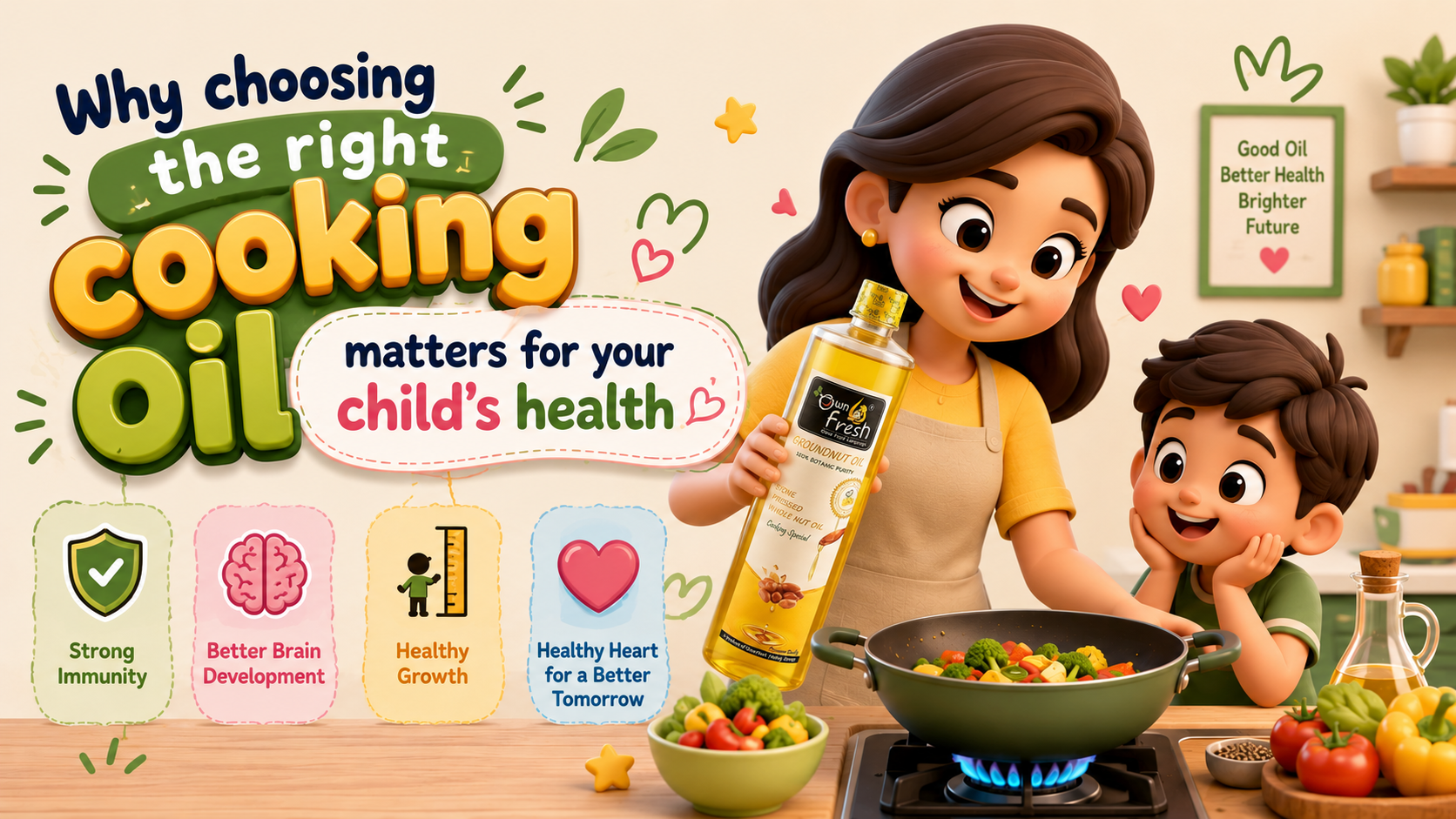
Cooking oil is the base of almost every Indian meal. From the morning upma or paratha to the afternoon dal tadka and the evening sabzi, oil is a constant presence in our daily diet. For a growing child, the quality of this everyday ingredient can make a world of difference. It is not just a medium to cook food; it is a vital source of nutrition that directly affects their brain growth, their immunity, and their long-term health.
In this detailed guide, we will explore why cooking oils play such a crucial role in your child’s development. We will look into the differences between modern refined oils and traditional cold-pressed oils, understand the dangers of reusing oil, and help you make safer, healthier choices for your family’s daily cooking needs.
Table of Contents
Why children need healthy fats in their diet
When we hear the word “fat”, our minds often jump to weight gain or health issues. For many years, we have been told that fats are bad and that we should eat them as little as possible. However, this advice does not apply to children, and frankly, it is a misunderstanding of how the human body works. Fats are not the enemy. In fact, for infants, toddlers, and young children, healthy fats are absolutely essential for normal growth and development.
Children have tiny stomachs but very high energy needs because they are constantly growing, playing, and learning. Fats provide a concentrated source of energy, offering more than double the calories per gram compared to carbohydrates or proteins. But the role of fat goes far beyond just providing energy to run around the playground.
Brain development and cognitive growth
Did you know that the human brain is made up of nearly sixty percent fat? During the first few years of life, a child’s brain grows at a rapid pace. By the time a child is five years old, their brain has reached about ninety percent of its adult size. This incredible growth requires a steady supply of dietary fats.
Healthy fats provide the building blocks for brain tissue and the central nervous system. They help in the formation of myelin, a protective sheath that wraps around nerve fibres. This sheath acts like the insulation on an electrical wire, allowing signals to travel quickly and efficiently across the brain. When children get the right amount of good quality fats in their diet, it supports their cognitive development, memory retention, focus in the classroom, and overall learning abilities.
Immunity and the absorption of essential vitamins
We often feed our children carrots for vitamin A to support their eyesight, or give them green leafy vegetables for vitamin K. However, simply eating these foods is not enough. Vitamins A, D, E, and K are fat-soluble vitamins. This means that they can only be absorbed and used by the body if they are consumed along with some dietary fat.
If a child is given a completely fat-free diet, their body will struggle to absorb these crucial nutrients, leading to deficiencies. Vitamin D is essential for strong bones, vitamin E acts as a powerful antioxidant that protects cells from damage, and vitamin A is crucial for a robust immune system. By cooking your child’s food in the right kind of oil, you are ensuring that their little bodies can actually unlock and absorb all the goodness from the vegetables and grains you lovingly prepare for them.
Healthy digestion and cellular growth
Fats also play a significant role in maintaining a healthy digestive system. They help in slowing down digestion, which keeps children feeling full and satisfied for longer periods. This prevents those sudden hunger pangs and sugar cravings between meals. Furthermore, every single cell in a child’s growing body has a membrane that is composed of lipids, or fats. Good quality cooking oils provide the essential fatty acids needed to build these strong, healthy cell membranes, protecting the cells from damage and supporting overall physical growth.
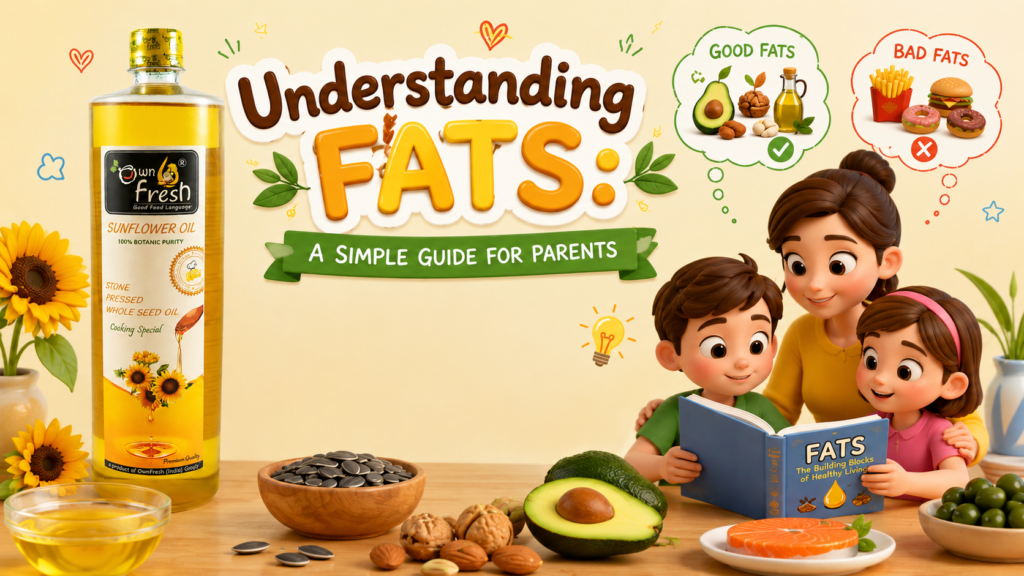
Understanding fats: a simple guide for parents
To make the best choices for your children, it helps to have a simple understanding of the different types of fats found in our food. You do not need to be a scientist to understand this, just a caring parent who wants the best for their family.
Good fats versus bad fats
In simple terms, fats can be divided into a few categories. Monounsaturated fats and polyunsaturated fats are generally considered the “good” fats. They support heart health, brain function, and reduce inflammation in the body. You can find these naturally in nuts, seeds, avocados, and traditional stone-pressed oils like groundnut oil, mustard oil, and sesame oil.
Saturated fats, found in dairy products like pure desi ghee, butter, and coconut oil, have often been misunderstood. In traditional Indian cooking, these fats have been used for centuries and hold a very important place. For growing children, moderate amounts of high-quality saturated fats like pure ghee are excellent for bone health, gut health, and brain development.
The fats you truly need to watch out for are trans fats. These are highly processed, unnatural fats created through industrial processes like hydrogenation. They are often found in packaged snacks, bakery items, and cheap commercial frying oils. Trans fats raise bad cholesterol, lower good cholesterol, and cause inflammation. As a parent, keeping trans fats out of your child’s diet should be a top priority.
Why skipping oil entirely is a bad idea for kids
Sometimes, in an effort to be healthy, parents try to cut out oil completely from their family meals. They might boil vegetables or use zero-oil cooking methods. While this might be a dietary choice for an adult with specific medical conditions, it is not recommended for growing children. Restricting fats can lead to poor growth, dry skin, poor vitamin absorption, and a compromised immune system. The goal should never be to eliminate oil, but rather to choose the highest quality oil possible.
The hidden dangers in everyday cooking oils
Walk into any Indian supermarket, and you will see entire aisles dedicated to cooking oils. They come in shiny packaging, promising everything from weight loss to heart health. But behind these bright labels, there are hidden dangers that every parent should be aware of.
Why refined oils might not be the best choice
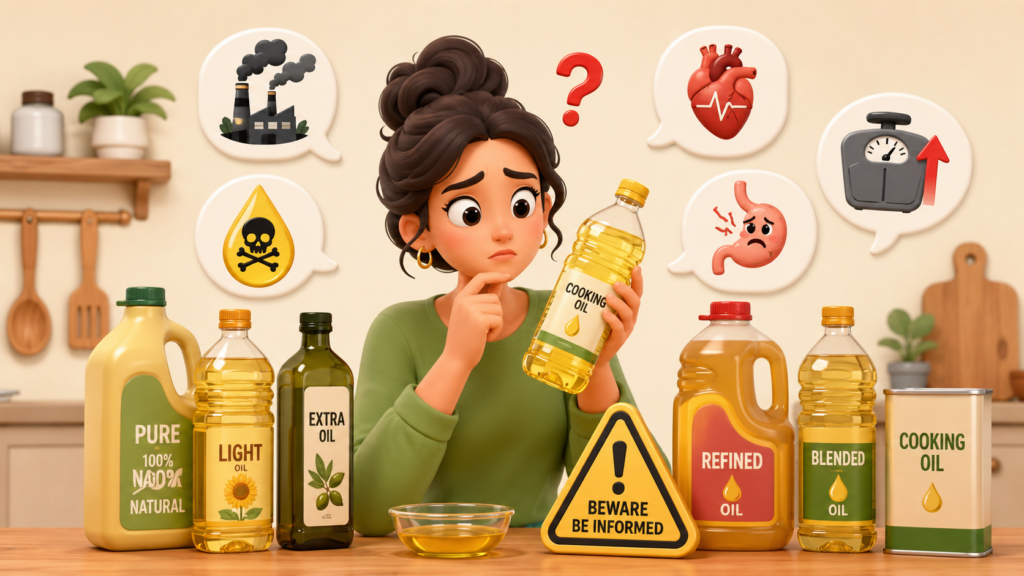
Most households today use refined oils. These oils are clear, have no smell, and look very clean. However, the process of making these oils is something we should question. To extract maximum oil from seeds, commercial factories use high heat and harsh chemical solvents like hexane.
After extraction, the oil is dark, smelly, and bitter. To make it acceptable for consumers, it undergoes a rigorous refining process. It is degummed, neutralized, bleached, and deodorized using more chemicals and extremely high temperatures. By the time this oil reaches your kitchen, almost all of its natural nutrients, antioxidants, and vitamins have been stripped away. What is left is a highly processed liquid that offers empty calories and can cause inflammation in the body over time. For a child whose body is still developing, consuming chemically treated, highly processed refined oil every day is far from ideal.
The harmful effects of reheated and reused frying oil
One of the most common practices in Indian kitchens is reusing oil. After frying pooris, pakoras, or french fries for the kids, it is a natural instinct to save the leftover oil and use it for the next day’s tadka or sabzi. After all, throwing away oil feels like a waste of money.
However, this is one of the most dangerous cooking habits, especially for children. When oil is heated to a high temperature for deep frying, its chemical structure changes. If that same oil is cooled and then reheated again, it undergoes further degradation. Repeated heating creates toxic compounds, including harmful free radicals and aldehydes.
These compounds are highly reactive and can cause oxidative stress in the body. Over time, consuming reheated oil can weaken a child’s immune system, disrupt their digestion, and even damage cellular DNA. It also leads to the formation of trans fats. No matter how high the quality of the oil was when you first poured it from the bottle, reheating it multiple times turns it into a slow poison.
Highly processed oils and long-term health risks
Feeding children food cooked in highly processed or degraded oils does not usually show immediate symptoms. Instead, the damage happens slowly over years. A diet high in poor-quality fats has been linked to an increase in childhood obesity, low immunity, frequent digestive issues, and even early signs of cardiovascular stress. When we build a house, we make sure the foundation is made of the strongest cement. Similarly, the fats our children consume today are the foundation of their future health.
Traditional cold-pressed oils versus modern refined oils
To understand how to fix the problem, we need to look back at how our grandparents and great-grandparents used to cook. Before large factories and chemical refining took over, Indian families relied on local, natural methods of extracting oil.
What exactly are cold-pressed or stone-pressed oils?
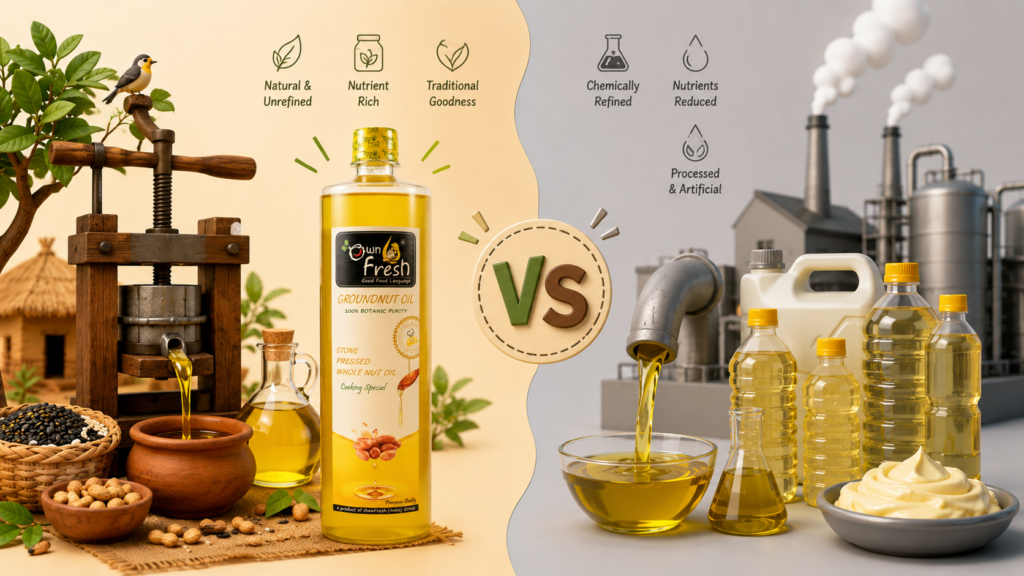
Cold-pressed oils, also known in India as kachhi ghani, chekku, or ghani oils, are extracted using traditional wisdom. The process is beautifully simple. Seeds or nuts, like groundnuts, mustard seeds, or sesame seeds, are placed in a wooden or stone press. A heavy pestle slowly crushes the seeds to squeeze out the oil naturally.
Because the pressing is done slowly, there is very little friction, and therefore, no excess heat is generated. The temperature remains cool, which is why it is called “cold-pressed”. At OwnFresh, we believe deeply in this traditional stone-pressed method. No chemicals are added, no bleaching is done, and the oil is simply filtered through a cloth before being bottled.
How processing changes the nutritional value of oil
The difference between stone-pressed oil and refined oil is like the difference between freshly squeezed orange juice and a powdered orange drink mix.
Because traditional cold-pressed oils are not subjected to high heat or chemicals, they retain all their natural goodness. They are rich in vitamin E, natural antioxidants, and essential fatty acids. These oils have a distinct aroma and flavour that comes from the seed itself. For example, pure mustard oil has a sharp pungency, while groundnut oil has a sweet, nutty scent.
When you cook your child’s meal in stone-pressed oil, you are adding natural nutrition to their food. The antioxidants present in these unrefined oils help fight off infections and support the immune system. Refined oils, on the other hand, have had all these natural benefits stripped away.
The return to traditional Indian cooking wisdom
In recent years, many Indian families have started realising the value of our traditional ways. We are moving away from processed foods and looking for pure, natural alternatives. Switching back to stone-pressed oils is a major part of this journey. It is a way to ensure that the food we cook with so much love actually nourishes our family the way nature intended. It is about trusting the wisdom of our ancestors over the marketing claims of modern factories.
How Indian cooking habits influence oil quality
Indian cooking is unique. We do not just toss salads with a light drizzle of oil; our cooking methods are intense, flavourful, and rely heavily on heat. Understanding how our cooking style interacts with oil is crucial for keeping our children safe.
High heat cooking: tadka, deep frying, and sautéing
Think about a typical Indian meal preparation. We start by heating oil in a kadhai. Once the oil is hot, we add mustard seeds, cumin, dried chillies, and curry leaves to create a fragrant tadka. This process requires the oil to reach a high temperature. Then we have festive days or weekends where we deep fry bhaturas, medu vadas, or samosas.
Because Indian cooking uses high heat, the oil we use must be able to withstand these temperatures without breaking down and becoming toxic.
Why the smoke point matters in our kitchens
Every cooking oil has a “smoke point”. This is the temperature at which the oil stops shimmering and starts to literally smoke. When an oil reaches its smoke point, it starts to break down chemically, releasing harmful free radicals and a substance called acrolein, which gives burnt food its bitter flavour and can cause stomach distress.
For high-heat Indian cooking, it is essential to use oils with a high smoke point. Fortunately, traditional Indian oils like groundnut oil, mustard oil, and pure desi ghee have naturally high smoke points, making them perfectly safe and stable for tadkas and frying. Using delicate oils, like extra virgin olive oil, for deep frying is a mistake because they have a low smoke point and will burn and become unhealthy very quickly.
Safe oil practices for Indian households
Choosing the right oil is only half the battle. How you use and store the oil in your kitchen is equally important for your child’s health. Here are some safe everyday practices that every Indian household should adopt.
Never reuse oil for deep frying
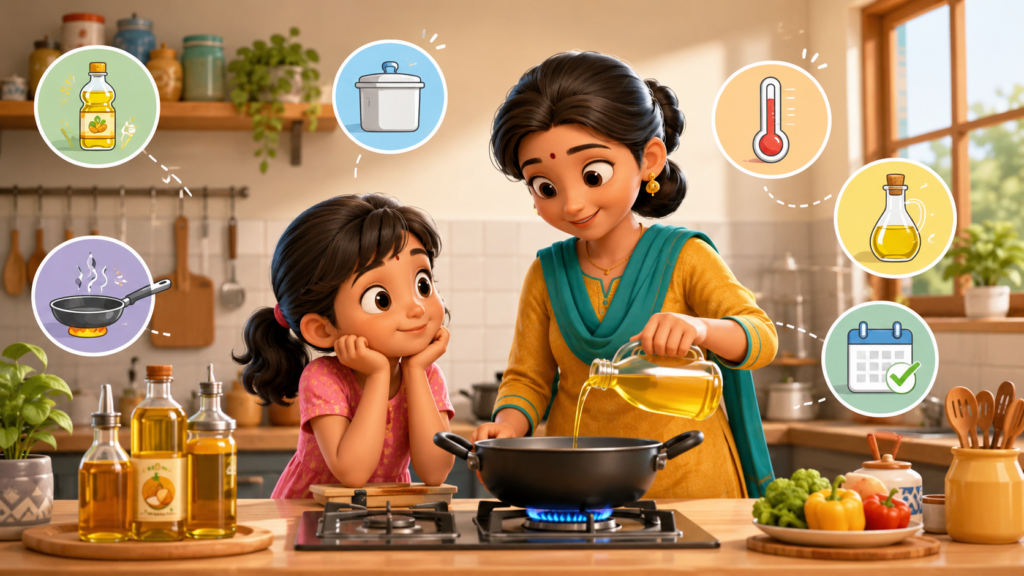
As discussed earlier, reusing oil is incredibly harmful. To protect your children, make it a strict rule in your kitchen never to reuse deep-frying oil for cooking another meal. But how do we avoid waste? The trick is to use a smaller kadhai or pan for frying, so you require less oil overall. Whatever small amount is left over should ideally be discarded. If you absolutely must, you can use the leftover oil within a day or two to season an iron tawa or make a quick sabzi for adults, but never use it to cook a child’s meal, and definitely do not use it to deep fry a second time.
Storing your oils correctly to prevent spoilage
Pure, unrefined oils are natural products. Just like fresh fruits or vegetables, they can go bad if not stored correctly. Exposure to heat, light, and air can cause the oil to oxidize and turn rancid. Rancid oil not only tastes and smells bad, but it is also toxic and can cause severe stomach upset in children.
Always store your stone-pressed oils in a cool, dark place, away from direct sunlight and away from the heat of the gas stove. Keep the bottle tightly sealed when not in use. Since pure oils do not contain chemical preservatives, it is best to buy them in smaller quantities that you can consume within a couple of months, rather than hoarding large cans for the whole year.
Using the right quantity: balance is key
While healthy fats are important, moderation is always necessary. Drowning your food in oil does not make it healthier. The goal is to use just enough high-quality oil to cook the food properly, release the flavours of the spices, and aid in vitamin absorption. A balanced diet for a child should include fats from cooking oils, but also naturally occurring fats from nuts, seeds, milk, and curd.
Common mistakes parents make while selecting cooking oils
With so much confusing information out there, it is easy for parents to make mistakes when buying cooking oil. Here are a few common traps to avoid.
Falling for marketing buzzwords on packaging
Many commercial refined oils use terms like “light”, “cholesterol-free”, or “heart-friendly” to attract buyers. As parents, we see these words and think we are making a healthy choice. The truth is, all plant-based oils are naturally cholesterol-free because cholesterol is only found in animal products. A “cholesterol-free” label on a bottle of sunflower oil is just a marketing gimmick. Similarly, “light” often just means the oil has been heavily chemically refined to remove all colour and odour. Do not let shiny labels dictate your child’s health; look for words like “cold-pressed”, “stone-pressed”, or “unrefined”.
Sticking to just one type of oil all year round
Different oils have different fatty acid profiles. Some are high in monounsaturated fats, while others are higher in polyunsaturated fats. No single oil is absolutely perfect. A common mistake is using the exact same oil for every single meal, 365 days a year.
To give your child a well-rounded nutritional profile, it is a great practice to rotate your cooking oils. You might use groundnut oil for your daily sabzis, mustard oil for cooking heavy curries or fish, and pure ghee for spreading on rotis or making dal tadka. This balanced approach ensures your child gets all the different types of healthy fats they need.
Buying in bulk and storing for too long
We often buy large 5-litre or 15-litre cans of oil to save money. While this makes sense for large joint families, for a smaller nuclear family, it means the oil sits in the pantry for many months. Pure, unrefined oils lose their freshness over time. It is much safer and healthier to buy smaller bottles of freshly extracted stone-pressed oil and restock every month.
Choosing better oils for your children’s meals
So, what should you actually buy? For everyday Indian cooking, traditional, locally sourced oils are your best bet. At OwnFresh, we encourage families to look at the oils their ancestors used in their specific geographical region.
Best traditional oils for Indian families
If you live in North or East India, mustard oil (sarson ka tel) is a fantastic choice. It is warming, rich in monounsaturated fats, and has powerful antibacterial properties that support a child’s immunity. For families in West and South India, groundnut oil (moongphali ka tel) and sesame oil (til ka tel) are incredibly healthy. Groundnut oil has a lovely sweet flavour that kids usually love, and it is very stable for all kinds of Indian cooking.
Coconut oil is another excellent choice, especially in southern states. It is rich in medium-chain triglycerides (MCTs), which are very easy for a child’s delicate stomach to digest and provide instant energy.
The magic of pure desi ghee for kids
No conversation about healthy fats for Indian children is complete without mentioning pure desi ghee. Ghee is an absolute superfood for growing kids. It is packed with fat-soluble vitamins A, D, E, and K2. Ghee is deeply nourishing for the gut lining and helps in smooth digestion.
Ayurveda places massive importance on ghee for improving memory, intelligence, and a child’s overall physical strength. Adding a spoonful of pure cow’s ghee to your child’s hot rice and dal, spreading it on their morning paratha, or using it to make their sweet treats is one of the best things you can do for their daily nutrition.
Practical Indian cooking examples for your children
Understanding the theory is great, but how does this translate to your daily kitchen routine? Here are some practical ways to incorporate healthy, pure oils into your children’s meals throughout the day.
Healthy toddler meal ideas
Toddlers are notoriously picky eaters, but their rapid brain development means they need high-quality fats desperately. When making a simple moong dal khichdi, avoid cooking it in highly refined oil. Instead, slow-cook the khichdi and finish it with a generous tempering of cumin seeds in pure desi ghee. If you are making small ragi or wheat dosas for them, use a few drops of traditional cold-pressed sesame oil around the edges. Sesame oil is rich in calcium and zinc, which are vital for a toddler’s bone growth. For a vegetable puree or soup, roasting the carrots and pumpkins lightly in stone-pressed groundnut oil before blending helps release their fat-soluble vitamins, making the meal far more nutritious.
School tiffin recipes with the right oils
School lunches need to be healthy, filling, and stay fresh for hours. If you are packing paneer bhurji or dry aloo sabzi, cook it in stone-pressed mustard oil. The natural preservatives in mustard oil help keep the food fresh until the lunch bell rings. When making parathas for the tiffin box, avoid folding them with commercial refined oils. Use a little ghee or cold-pressed groundnut oil. It keeps the parathas soft and provides the slow-releasing energy your child needs to stay active and focused during school hours. If you are packing a little treat, like a homemade carrot halwa or besan ladoo, strictly use pure ghee. Commercial sweets are often loaded with harmful trans fats and cheap vegetable oils, making homemade treats cooked in safe fats a much better alternative.
Evening snacks that don’t compromise on health
When children come home from school or play, they are always hungry for a snack. This is when parents often resort to opening a packet of chips or frying frozen snacks in refined oil. Instead, try making healthy snacks at home using safe oil practices. You can roast makhana (fox nuts) in a teaspoon of ghee with a little salt and turmeric. You can shallow fry homemade vegetable tikkis using stone-pressed groundnut oil on a cast iron tawa. If they are craving something crunchy, you can make homemade poha chivda by roasting the ingredients in a small amount of pure mustard oil with curry leaves and peanuts. These snacks provide genuine nutrition without the hidden dangers of reheated commercial oils.
Embracing the OwnFresh way of family-focused healthy living
At OwnFresh, we believe that the kitchen is the heart of the home, and the food prepared there is the ultimate expression of care. Providing safe everyday nutrition for your family should not be complicated. It simply requires a return to our roots.
Our philosophy is built around pure stone-pressed oils and traditional Indian cooking wisdom. We believe that an oil should look, smell, and taste like the seed it came from. By choosing unrefined, chemically free oils, you are taking a massive step toward protecting your child’s health.
When you replace a plastic bottle of highly processed refined oil with a bottle of pure, traditional stone-pressed oil, you are doing more than just changing an ingredient. You are actively supporting your child’s brain growth, boosting their immunity, ensuring their digestion stays strong, and keeping their bodies safe from harmful toxins.
Conclusion
Parenting is full of difficult choices, but choosing the right cooking oil does not have to be one of them. We know that children need healthy fats to thrive. They need them for their brains to develop, for their cells to grow, and for their bodies to absorb the essential vitamins that keep them strong.
The dangers of refined oils, reheated oils, and highly processed fats are real, even if the effects are not visible immediately. By stepping away from these commercial products and embracing the pure, natural goodness of traditional Indian stone-pressed oils and desi ghee, we can provide a safer, healthier foundation for our kids.
Remember to store your oils properly, never reuse frying oil, and rotate your oils to give your family a balanced diet. Simple changes in your kitchen habits today will lead to a lifetime of good health for your children tomorrow. Choose wisely, cook safely, and let every meal be a step towards healthy living.
FAQs Section
Which cooking oils are safest for children?
The safest oils for children are pure, unrefined, and traditionally extracted. Cold-pressed or stone-pressed oils like groundnut oil, mustard oil, sesame oil, and pure desi ghee are excellent choices as they retain natural nutrients and healthy fats without harmful chemicals.
Is reheated oil harmful for kids?
Yes, extremely harmful. Repeatedly heating oil breaks down its chemical structure, producing toxic compounds like free radicals and trans fats. Consuming reheated oil over time can negatively affect a child’s immunity, digestion, and long-term health. Always discard leftover deep-frying oil.
Are cold-pressed oils better for children?
Absolutely. Cold-pressed (or stone-pressed) oils are extracted naturally without high heat or harsh chemicals. This preserves vital nutrients, antioxidants, and vitamin E, all of which support a growing child’s brain development and immune system compared to highly processed refined oils.
How much oil should children consume daily?
While children need more fat than adults for growth, moderation is key. A balanced diet should include 3 to 4 teaspoons of high-quality added fats (like cold-pressed oil or ghee) per day, alongside naturally occurring fats from nuts, seeds, milk, and avocados.
Which oils are best for Indian family cooking?
For Indian cooking methods like tadka and shallow frying, oils with a high smoke point are best. Mustard oil, groundnut oil, and pure ghee are ideal for Indian kitchens as they remain stable at high temperatures and offer traditional, culturally suited nutrition.
Can refined oils affect child health over time?
Yes. Refined oils are heavily processed using high heat and chemicals, stripping them of natural nutrients. Regular consumption of these highly processed, nutrient-empty oils can contribute to inflammation, poor digestion, and a weakened immune system in children over the long term.
Why is pure ghee recommended for toddlers?
Pure desi cow ghee is packed with fat-soluble vitamins (A, D, E, K) and essential fatty acids. It supports healthy brain development, strengthens the gut lining for better digestion, and provides clean, sustained energy for active toddlers.